Final Call for Herps!

Our third certification workshop featuring Dr. John Carr and the herpetofauna of northeast Louisiana is ready for you!

Here’s the agenda for the day:

Workshop 3 Flyer

Please note that we convene on the ULM campus in Hanna Hall, Rm 250. For those of you not familiar with campus, approach on University Ave. and look for the large Arkansas stone ULM sign at the entrance of a U-shaped parking area.

GPS users, the official address of the University is 700 University Ave., but Google Maps has that over in Bayou Park somewhere! The Arkansas stone entrance to campus is between Northeast Dr. on the north and Desiard St. on the south. Get into that 3-block stretch and you will see the sign.

When you turn into the entrance to the U-shaped parking lot, Sugar Hall will be on your immediate right and Walker Hall straight ahead at the top of the U. As your drive around the U, Hanna Hall is the third building you come to. Park in the U.
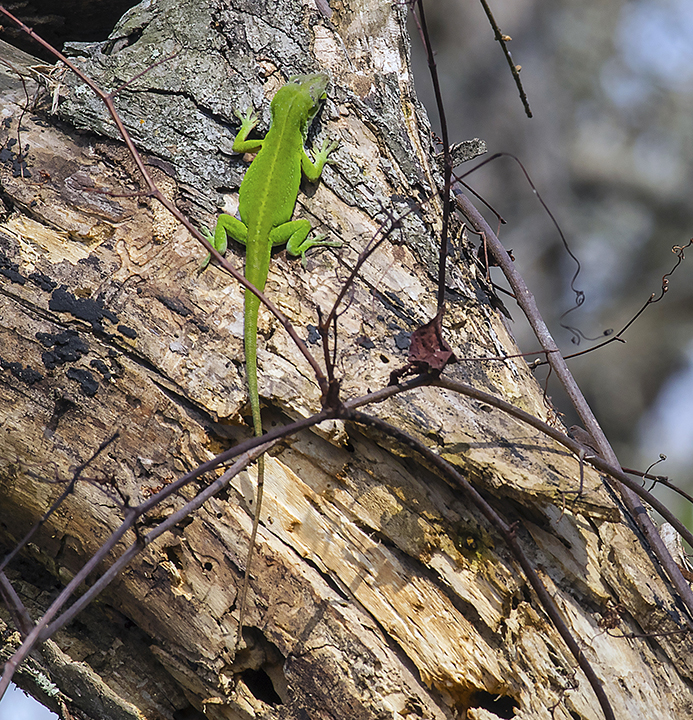
Carolina Anole (Anolis carolinensis)
Remember this cutie! Carolina Anole (Anolis carolinensis)     (photo by Bette J. Kauffman)

We will spend the morning on campus, caravan to Black Bayou Lake for field work, and debrief in the Visitor Center. See details on the flyer.

Now, BIG BONUS! Dr. Carr has offered a special 2nd after-dark trip for the purpose of calling frogs! We would reconvene at the lake at 8 p.m. and spend up to 2 hours seeing what goes bump–or ribbit, as the case might be–in the night. But he has to arrange this in advance, so shoot me an email if you are interested.

BTW, the night part would be totally optional. You will get full credit for the workshop by doing the day. However, if even a half a dozen folks are interested, I’m going to ask Dr. Carr to set it up because I want to do it!
Herpetofauna of NE Louisiana

It’s just around the corner! Our third certification workshop, that is: June 2, 9 a.m. – 3 p.m. The certification page of this website is ready for you to register.

Herpetofauna of NE Louisiana

I just emailed a draft of an agenda with details to Dr. John Carr, our workshop leader, for his input and approval, thus the “Workshop 3 Flyer” link on the Certification page of this website is not yet active. However, the general plan continues to be convening in a biology lab on campus, then at some point caravaning to Black Bayou Lake NWR for field work.

The PayPal registration link is active, so get registered as soon as possible. As usual, I tested the link by being the first to register! Remember: You do not have to have a PayPal account to register via PayPal. You can use any credit card to do so.

If you pay via PayPal, you do not need to submit the workshop registration form. I tried something new last time, specifically creating a workshop roster and having you sign next to your name at the workshop. I like saving paper! So that’s what I’ll do again.

However, if you prefer the old fashioned way of mailing a check, please print the workshop registration form and send it with your check. Again, if you make arrangements with me in advance, you can pay on site.

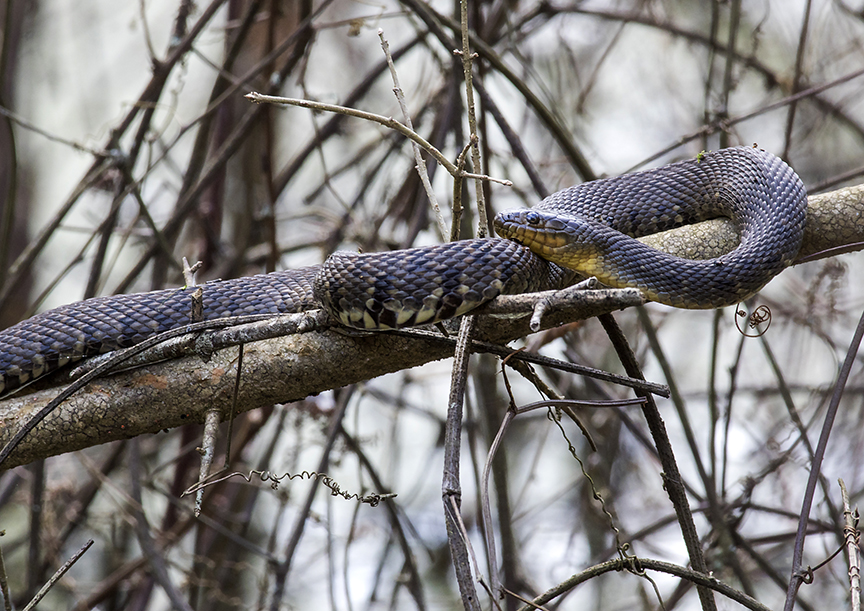
Mississippi Green Water Snake (Nerodia cyclopion)
Mississippi Green Water Snake (Nerodia cyclopion)     (photo by Bette J. Kauffman)

Given our subject matter, I had to share another of the magnificent snakes we saw on our first field work experience at BBLNWR. But it is important to remember that “herpetofauna” is about a lot more than snakes. I’m personally hoping to see some salamanders. At last year’s BioBlitz at the ULM Biological Station, Dr. Carr found a marbled salamander under a log, but I failed to get a decent photo of it!

Next 3 Workshops Scheduled!

Yes! For real, I have the next three workshops scheduled:

amphibiansandreptilesbookcoverJune 2, Herps with Dr. John Carr – We will meet in a Biology classroom on campus in the morning, then go to Black Bayou Lake NWR for field work. LSU press has just published Dr. Carr’s “Amphibians & Reptiles of Louisiana.” I’m sure he’d love to sign copies for us!
4ebb373888972.image
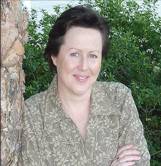
Dr. Anna Hill

June 23, Aquatic Life with Dr. Anna Hill – We will spend the day at Black Bayou Lake NWR collecting samples and looking at them under microscopes in the Education Center. Dr. Hill is seeking to borrow some good scopes for this purpose, but I want LMN – NE to think about raising funds &/or seeking grants to better equip the BBLNWR Education Center for future workshops.

August 4, Ecosystems & Restoration Ecology with Dr. Joydeep Bhattacharjee – We will begin in the pavilion at Kiroli Park and end the day at Restoration Park, both in West Monroe. Dr. Joydeep will have just returned from a summer research trip in the Himalayas, so maybe we’ll get him to tell us a little bit about that, too!

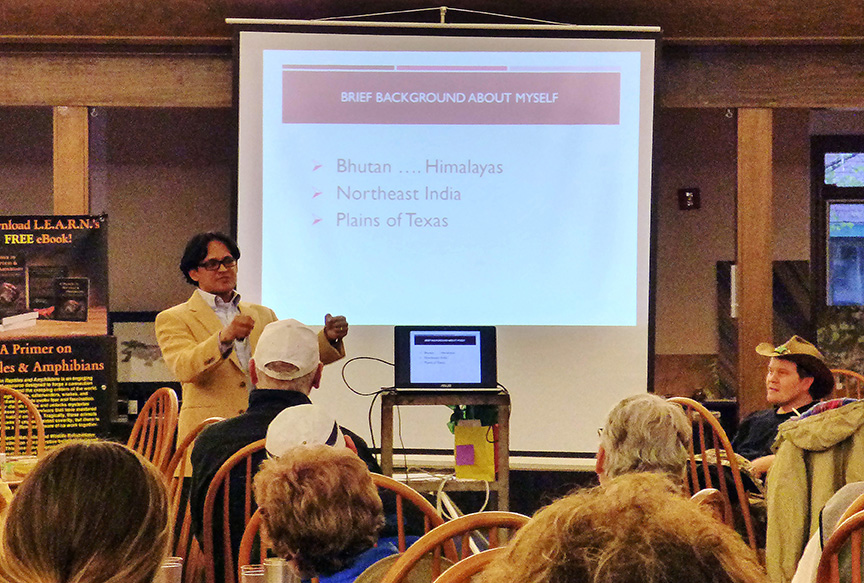
P1360505tmdrjoydeep 72-12
Dr. Joydeep gives the keynote adress on Citizen Scientists at the 2018 LMNA Rendezvous.     (photo by Charles Paxton)

I have posted an updated version of our Certification Curriculum on the Certification tab of this website. Please note a couple of things:

1. We will have a total of 10 workshops if I can find leaders. At this time, “Insects” is most up in the air as I have no leads on a workshop leader.

2. Whether we have 9 or 10 workshops total, 7 will be required for certification. Of course, we hope you won’t want to quit learning after the 7th!

3. We will end this first cycle of workshops in January 2019 because that is when Dr. Terri Maness wants to do the Birds workshop due to the incredible numbers and diversity of birds available to us at Upper Ouachita in January.

Flyers and Registration links for these workshops aren’t up yet, but get them on your calendar now! More later…..

Aquatic Life with Dr. Anna Hill

I am super excited to announce that our Aquatic Life workshop is scheduled June 16, 9 a.m. – 3 p.m. I can’t give you all of the details yet, but put it on your calendar!

What I can tell you is that Dr. Anna Hill will be the workshop leader. She is a retired professor and former department head of biology at ULM, and has long been active in Friends of Black Bayou Lake NWR.

We will use Black Bayou Lake to make field observations and collect specimens. Where we will take those specimens to examine them and do lab/classroom work is yet to be decided. For now, reserve the date!

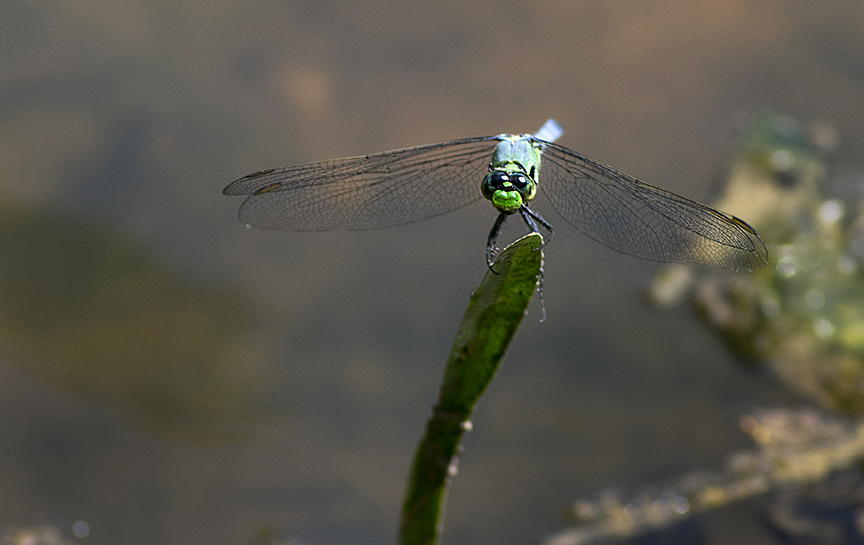
Eastern Pondhawk (Erythemis simplicicolis)
Eastern Pondhawk (Erythemis simplicicolis) (male)     (photo by Bette Kauffman)

And.., why an eyeball to eyeball shot of an Easter Pondhawk with this post? Because dragonflies are one of the many critters that lay their eggs in water. Not this particular one, actually, because… a) it’s a male, and b) it’s too far from the water to be ovipositing. But, as a dragonfly stalker, I’ll be hoping to see dragonfly eggs and/or nymphs in our workshop.

Plants of Louisiana

Our second certification workshop will be Plants of Louisiana, with Dr. Charles Allen, who has literally written the books on Louisiana plants!

We will meet at the Chevron gas station and Excel Mart on Hwy 165 in Georgetown at 9 a.m. April 28, have class under their canopy, then caravan into the Kisatchie to look at plants. We’ll come back to the station for lunch and a pit stop, go back into the Forest for more plants, then wrap up back at the station no later than 3 p.m.

Here is a link to the agenda for the day (also uploaded to Certification page):

Workshop 2 Flyer

Folks, please read the agenda/flyer carefully. It contains important instructions. Everything you need to know to be prepared for the day is there.

The link to pay for this workshop is on the certification page. If you want to pay on site, please be sure to make arrangements with me in advance via email.

It would be extremely helpful if you would print the registration form that is linked to the Certification page, fill it out, and bring it with you. (It cannot be completed online.) I will have some blank forms with me, but the more that can be done in advance, the more time we’ll get to spend in the field looking at plants!

Now for good measure, here’s a plant we saw at Rendezvous:

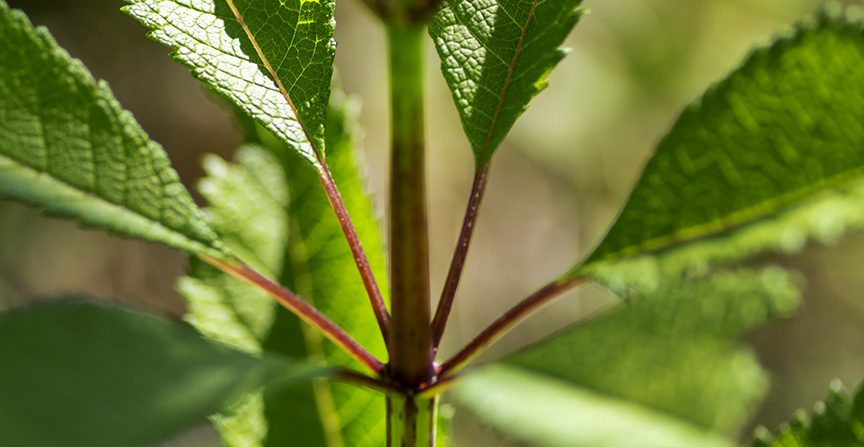
Joe Pye Weed (Eutrochium fistulosum)

This plant is in a distinct minority of plants with this type of leaf attachment to the stem. You will learn about this, as well as terminology for describing everything you can see in the photo–plus the name of the plant. So I’m not going to spill the beans now!

See you the 28th.