What a great day! Dr. Terri Maness walked us through 23 orders of birds that occur in Ouachita Parish, Louisiana, then some ways of identifying birds.
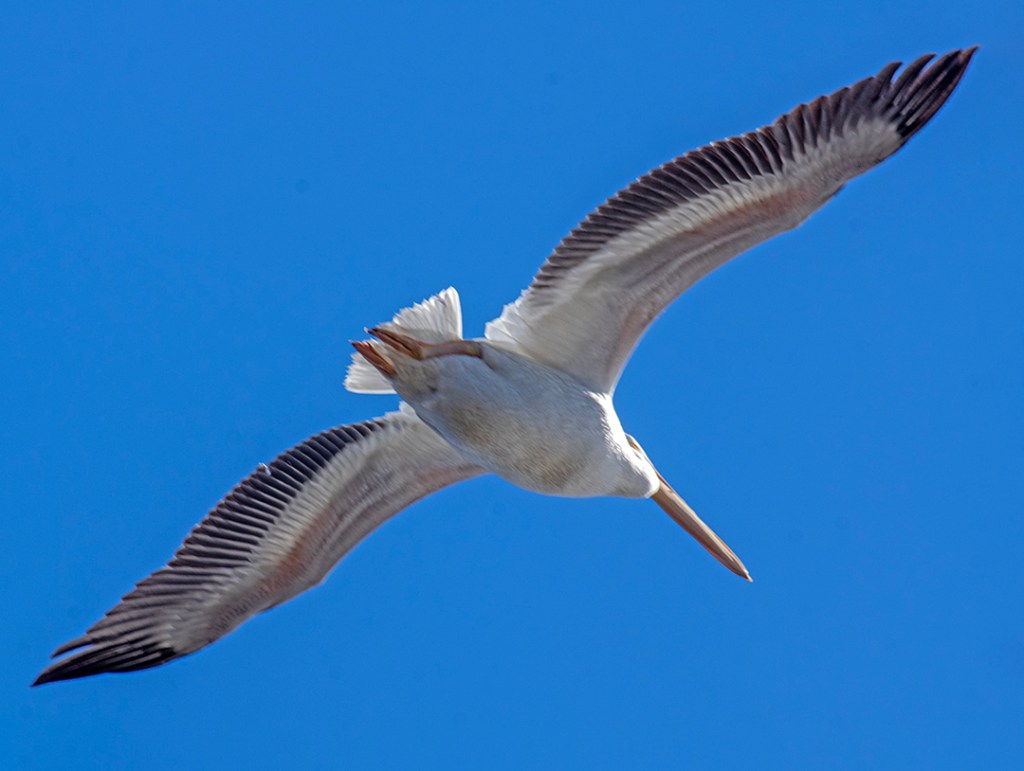
While my group was standing on the boardwalk out on the lake, a flock of maybe 20 American White Pelicans (Pelecanus erythrorhynchos) glided onto the water. This was my biggest surprise. I have seen White Pelicans before but never at BBLNWR.
She also showed us 3millionbirds.org’s video about the huge decline of birds since the 1970s, which identifies several sad and shocking truths about why it’s happening, from loss of habitat to cats, both pets and feral, that roam freely outside.
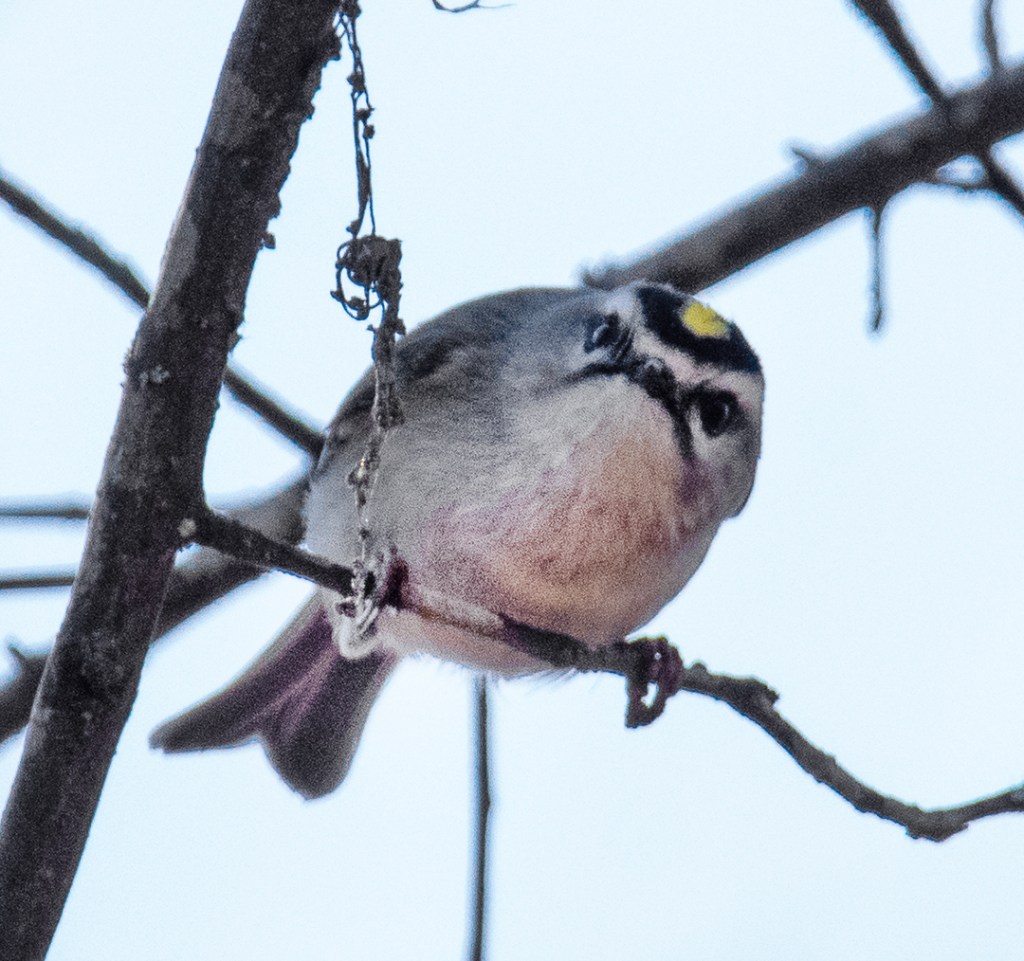
This little Golden-crowned Kinglet (Regulus satrapa)appears to be scowling at me. I think it is just the bandit mask it wears that makes it look that way!
Then we added some layers against a somewhat cold but sunny day and went out to count birds. Terri gave us a scoring system: 5 points for an order, 2 points for a family and one point for a species. Two teams then walked off in opposite directions from the Conservation Learning Center at Black Bayou Lake NWR.
At the end of the afternoon, one team had accumulated more points than the other, but… it was a totally friendly competition and it really didn’t matter. We all learned and had a great time!
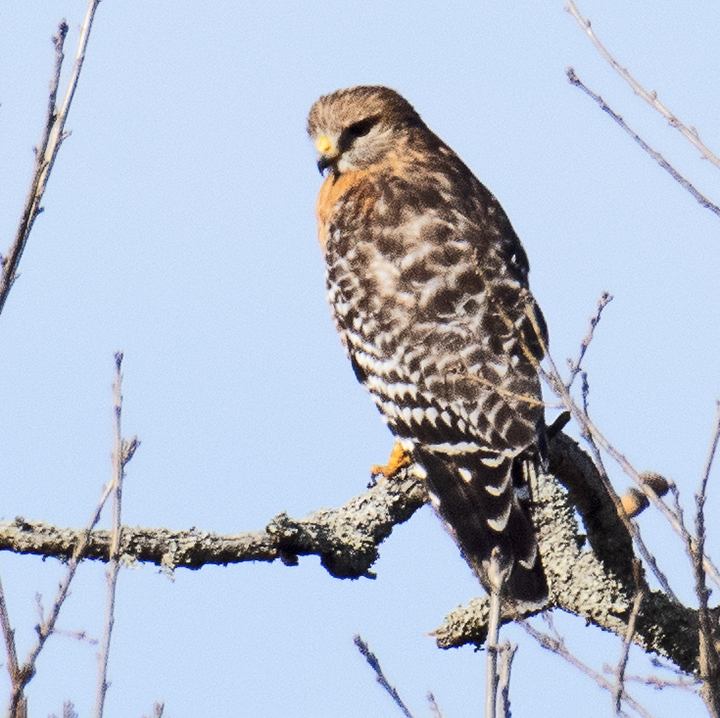
While we were standing in front of the Conservation Learning Center tallying our scores, this Red-shouldered Hawk(Buteo lineatus) soared in and perched at the top of a tree nearby. My group had heard a Red-tailed during the count, but this was the first look we got.
That’s what Dr. Anna Hill subtitles her “Aquatic Life” workshop, and getting to see “the little things” is always fun and informative. It’s kind of hard to believe how much is going on in water until you take a closer look.
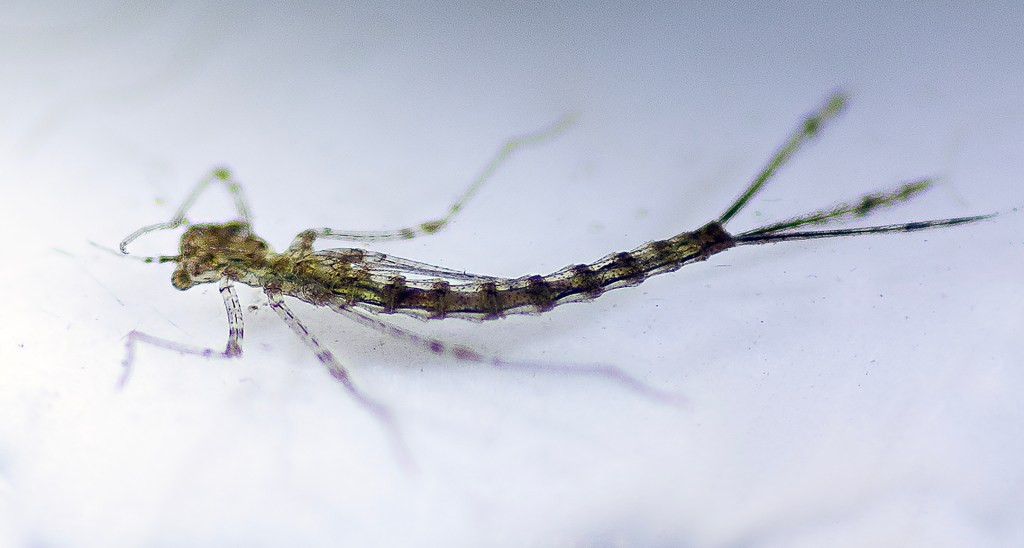
Damselfly Naiad
Among my favorites are the damselfly and dragonfly naiads. At our workshop two weeks ago, we captured one of each. I was able to get this reasonably good photo in part because LMN-NE made a good investment in a fiber optic lamp to use with one of the simple microscopes at Black Bayou Lake NWR.
This little critter is maybe an inch long. Those three blades at the end of its abdomen are gills for its watery life only. They will be shed when the naiad crawls out of the water and onto a cypress knee or plant, where the exoskeleton will split down the back and an adult damselfly with wet, crumpled wings will emerge and sit to dry before flying off. Out at BBL you will see cypress knees sticking out of the water with several damselfly exoskeletons still stuck to them.
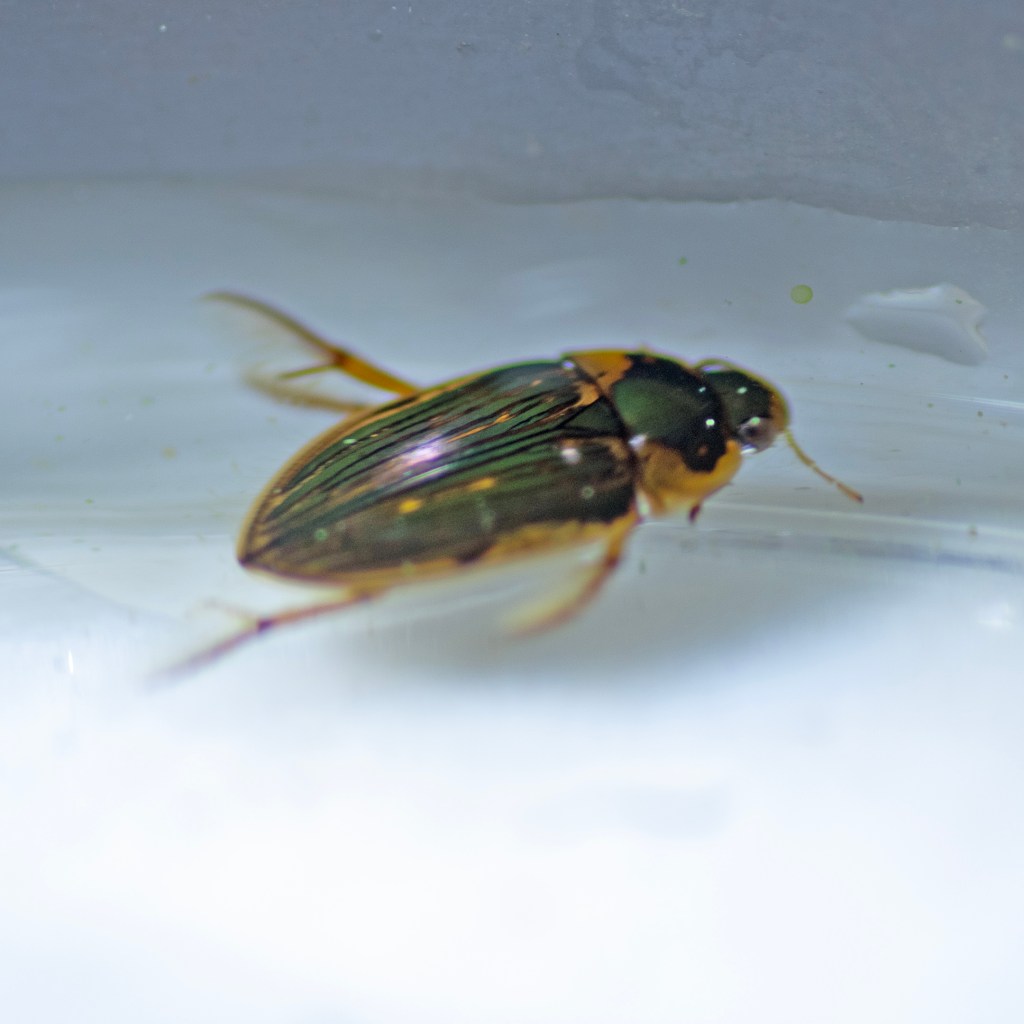
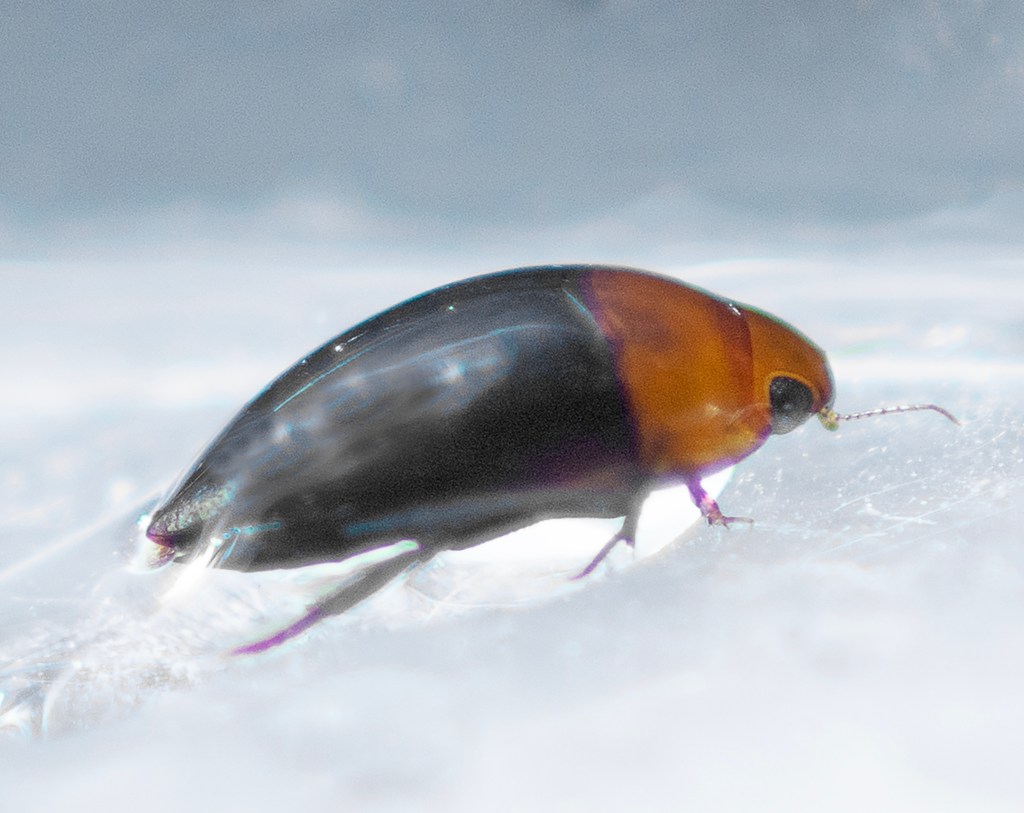
Our nets yielded a multitude of grass shrimp and water beetles, plus a few water mites, isopods, and other critters. Again with the help of the fiber optic light, I was able to get good enough photos of two of the beetles for them to be conclusively identified at species level on iNaturalist. Too cool! BTW, these full-macro photos are deceiving. These guys are tiny: black dots swimming around in your collecting bucket.
One specimen I pulled out of the water was spared the trip into the Environmental Learning Center for fear it would not survive. It was a large tadpole with fully developed hind legs but not yet front legs. We oo’d and ahh’d and put him right back in the lake. A tiny crawfish survived the trip indoors, but within seconds of being put in the fish tank, he became a large-mouth bass snack.
A good and educational time was had by all. Next up: Ecosystems and Restoration Ecology with Dr. Joydeep Bhattacharjeeee, May 13, 9-3, at Kiroli and Restorations Parks in West Monroe. Stay tuned for details.
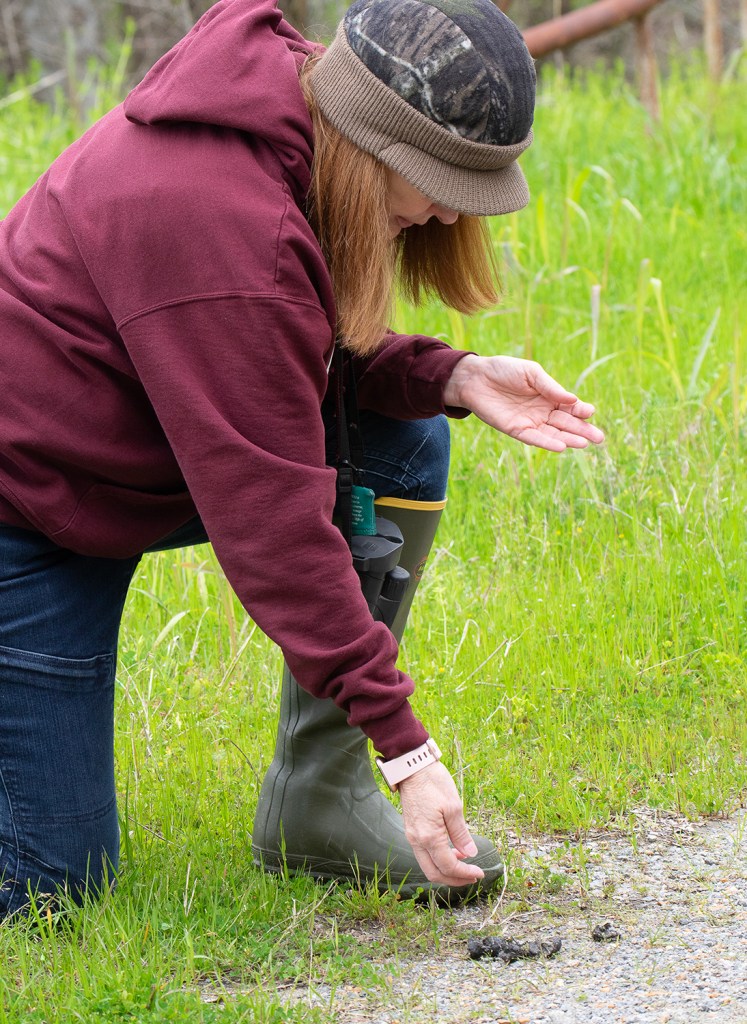
We didn’t find any skulls, so we didn’t get to practice one of our newest skills, namely creating a dental formula that could take us a long way in identifying a mammal species. But we did get to examine poop, and, yes, it was fun!
Dr. Kim Tolson identified this scat as coyote (Canis latrans) because it was full of hair. Of course. Coyotes eat small mammals.
Indeed, we could tell that the hair was “agouti” hair, which we had just learned in class means that the hair featured horizontal bands of color. Rabbits and some rodents have agouti hair and both are common meals for coyotes. We followed this coyote straight down the trail on top of a levee, seeing a nice big print in the soft, damp soil every few yards.
Getting to observe something in the field right after learning it in the classroom is gratifying and fun. The new “sticks” so much better!
We also learned to make a “taxonomic key” to help with identifying species. A key is a series of pairs of questions called “couplets,” with each pair featuring one characteristic of a species. The questions must have mutually exclusive answers, like present/absent or yes/no.
For example, if we had before us several rats, we could begin with a couplet like 1a. Does it have agouti hair? and 1b. Does it have solid color hair? And with that one question you could sort your rats into two groups and then go on to the next couplet, and on to the next. For rats, we learned, we might need 6 or 7 couplets to match one rat with a specific species.
Maybe you must have a fondness for mind-bending puzzles to say doing such a thing was fun. But I thought it was. I’ve become a bit obsessed with knowing the species of things!
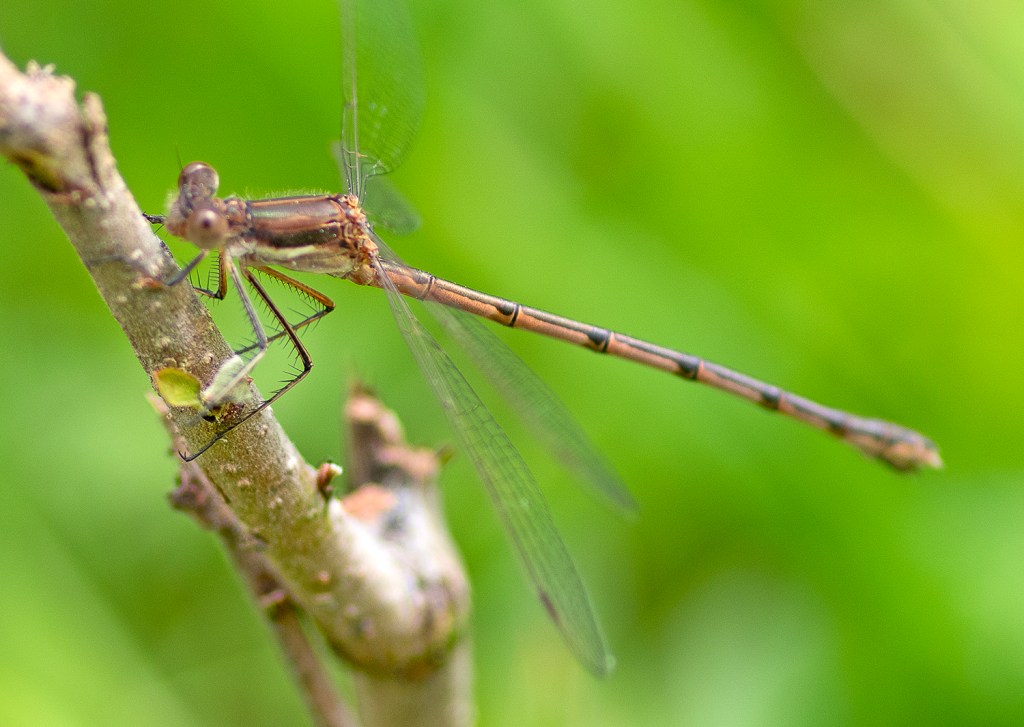
Southern Spreadwing (Lestes australis)
Of course, although our focus for a mammals workshop was mammal sign, a bunch of naturalists does not wonder through Russell Sage Wildlife Management Area without noticing many other things. So at one point the trees nearby filled with cedar waxwings. At another we were down on our knees examinging small fungi on a log. And at another point, I fell way behind photographing a damselfly, which iNaturalist says is a Southern Spreadwing (Lestes australis). Cool! I don’t see very many spreadwings.
Our first certification workshop of Spring 2023 was a great success. About a dozen people came together in the Environmental Learning Center out at Black Bayou Lake NWR for a fun and educational experience.
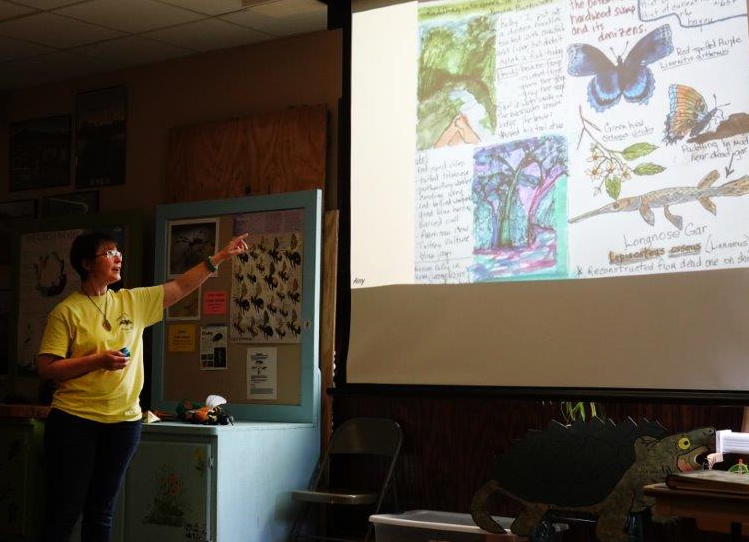
Kim Paxton illustrated her talk on nature journaling with photographs of pages from Amy Ouchley’s nature journalis, as well as from her own. Photo by Charles Paxton.
We spent the first hour and a half on nature journaling, with Kim Paxton standing in for Amy Ouchley. We missed Amy, but Kim did a great job.
After Kim’s presentation, everyone went outside to make some observations and try sketching and writing about those observations.
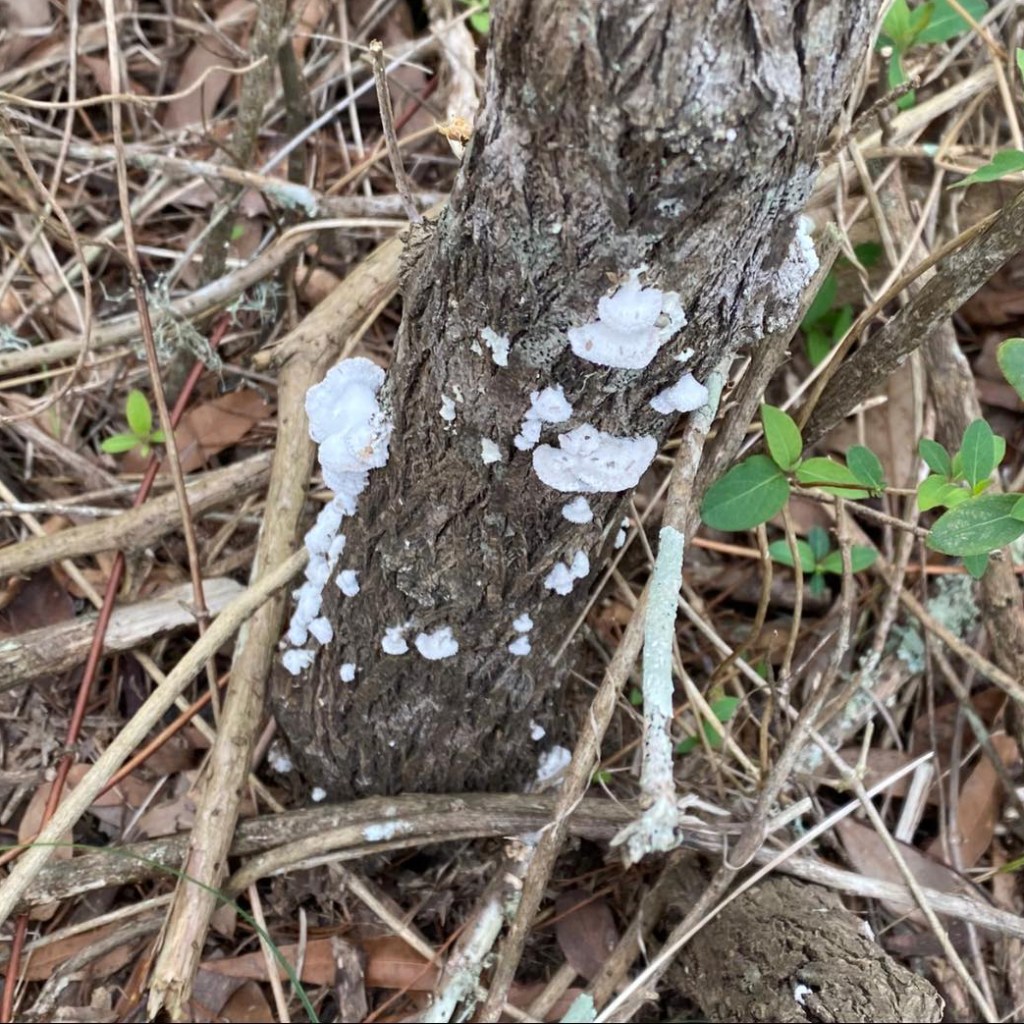
A split gill mushroom, observed and photographed by Linda Norwood.
Bette Kauffman focused on making observations to be shared with the research community via online platforms like eBird and iNaturalist. Numerous examples show how these databases contribute to scientific understanding of such things as climate change and declining bird populations worldwide. It is thus important that citizen scientists, like Master Naturalists, are thorough and accurate in making and submitting observations. We have a direct impact on the quality of those databases.
We ended the day with instruction on some principles of interpreting nature to various audiences and a quick review of projects the Master Naturalists of our chapter have done to complete their training and become certified.
Coming next: Mammals with Dr. Kim Tolson, March 18, 9-3. Look for a blog post soon. Check the “Events” list in the right hand sidebar of this page for the entire series.
It was a very hands-on workshop. Our classroom was Marty Earnest’s farm in Caldwell Parish. Marty has a long history of experimenting with conservation farming methods that have enriched his soil and reduced the cost of farming, for example by reducing the number of tractor passes on his fields.
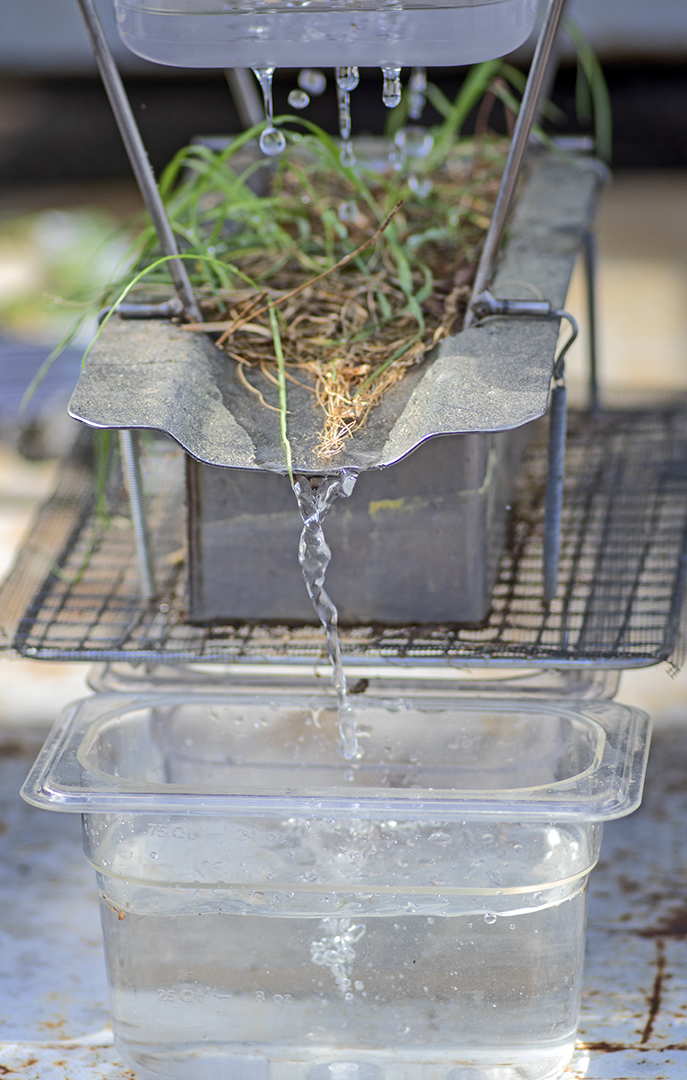
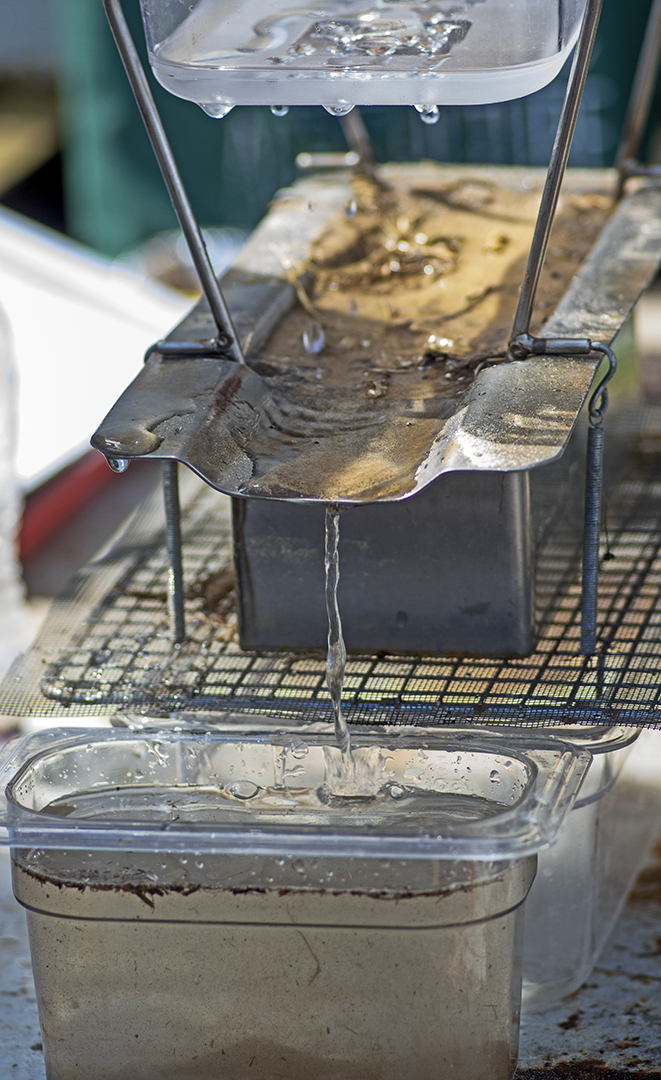
Runoff from soil with plants is virtually clear (left image); runoff from bare soil is muddy and full of sediment (right image).
Rachel Stout-Evans, soil scientist with the USDA Natural Resources Conservation Service, laid out the basic principles of conservation farming that will improve soil health:
minimize disturbance
keep roots in the soil year-round
rotate crops
maximize plant diversity
incorporate livestock (the newest addition to the list)
Anne Frazer focuses on evaluating the texture of the ball of mud in her hand.
Most people know that soil erosion is a problem. Using simple field set-ups–like water in a tall cylinder–Rachel demonstrated the difference following these principles can make. The secret is protecting and feeding soil microbes that enable soil to absorb water rather than be washed downstream by every rainfall.
We dug our own soil plugs, and examined and rated them on a chart of soil qualities. Then La Tech forestry professor Bill Patterson taught us how to identify soil type from texture by making mud in our hands. I haven’t had so much fun since making mud pies as a child growing up on an Iowa farm!
We conducted a simple infiltration test in a field by pounding an aluminum ring a few inches into the soil, pouring in a measured amount of water, and timing how long it took to disappear into the ground. Marty Earnest’s soil performed pretty well.
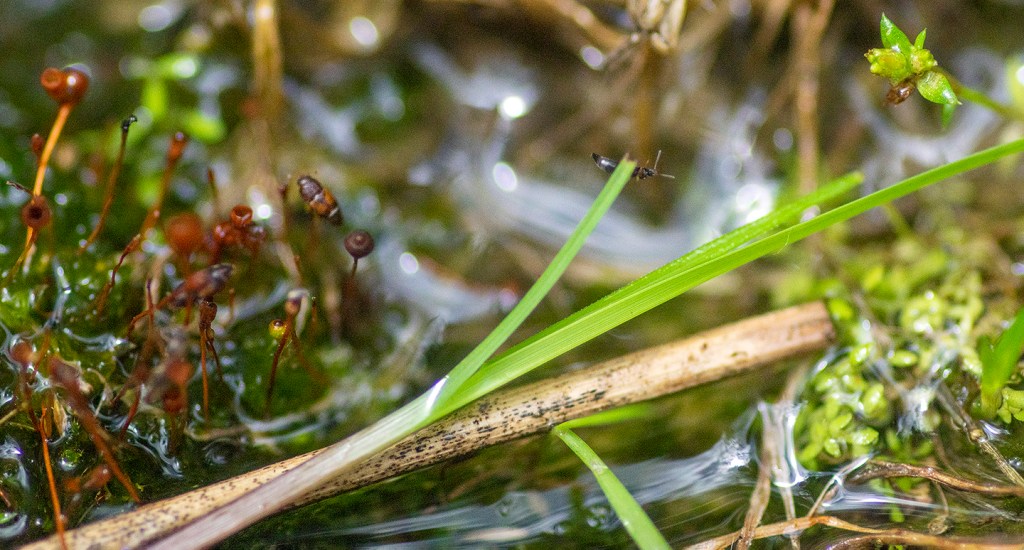
While waiting for water to disappear into the soil in our infiltration test, I focused my macro lens on the critters popping out of the ground. You should see two in this photo.
It was, all in all, a most interesting morning, and we came away with knowledge and simple tests we can conduct to improve soil health in our own gardens and yards.

 Louisiana Master Naturalists - Northeast