Birds, Birds, Birds!

In fact, we saw thirty-six species in about two hours of birding, with several unexpected treasures among them: An American Bald Eagle (Haliaeetus leucocephalus) and a squadron of American White Pelicans (Pelecanus erythrorhynchos) did fly-overs.
imgp7578 72-15
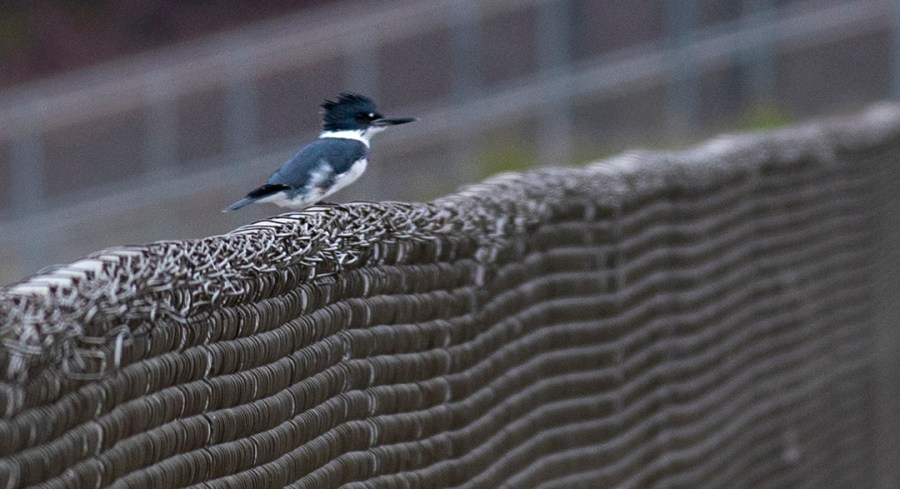
We were met by this Belted Kingfisher (Megaceryle alcyon) sitting on the fence along the top of the Lake D’Arbonne spillway.

A somewhat chill wind drove us off the spillway after awhile, but we then moved along the tree line surrounding the parking area. The little birds were there: juncos, sparrows, nutchatches and more.
imgp7683 72-13
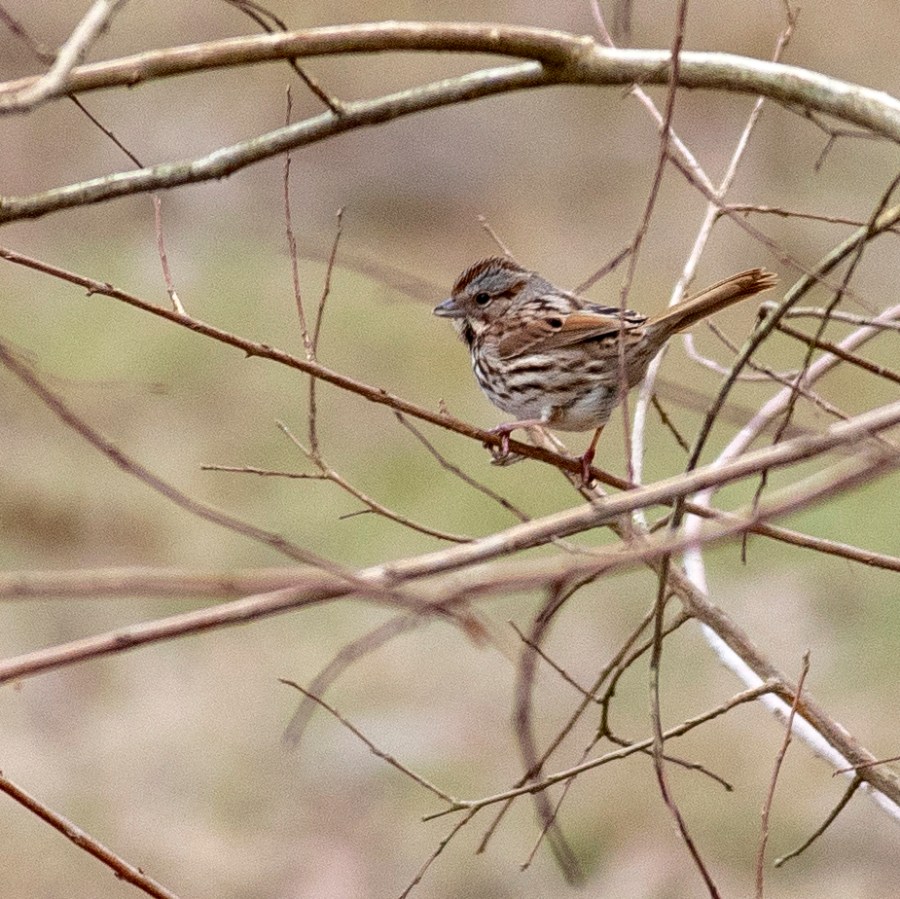
Song Sparrow (Melospiza melodia)

Here’s the list:

bird species list

Thanks, Kim Paxton, for keeping a list in the field.

Our two hours at the spillway came after a super-informative morning in a LaTech classroom where Terri Maness walked us through an intimidating diagram of bird taxonomy in an impressively coherent, easy-to-follow fashion.

I enjoyed the taxonomy, at least as much as one can enjoy taxonomy! But the physiology discussion that followed was fascinating. Birds are truly amazing creatures. Did you ever wonder how ducks stand on ice in their bare feet and don’t freeze to death? I did, and Terri explained it today.

How about migratory birds traveling long, long distances without getting lost? They can see magnetic fields and navigate by them! How do birds get enough oxygen to not pass out, indeed, to fly at great altitudes? They have a 2-stage breathing system that enables them to take a much higher percentage of the oxygen out of the air they breath than we can.

Bird brains are much more densely packed with neurons than those of other critters, so go ahead, call me a “bird brain”! But don’t tell me I eat like a bird because if I ate as much of my body weight per day as a bird does, I’d soon be dead from morbid obesity.

Terri ended her classroom presentation with a few words about conservation. At some level we know this, but… we need to become more vocal and active. Cats–domestic cats–and plastic are two hazards birds face that we all should do whatever we can about.

It was a glorious day, but a frustrating one for me photographically. These are okay, but I have a folder full of “not quite sharp” ones, among them the eagle, the red-shouldered hawk, and many more.

imgp7658 72-15
Zoom in on the lead pelican and you will see that it has a bump on top of its bill. It’s a male and that’s a breeding bump.


1 Ecologist, 2 Parks, 16 Naturalists

And it all added up to a fabulous Ecosystems and Restoration Ecology certification workshop!


IMGP3237 72-12
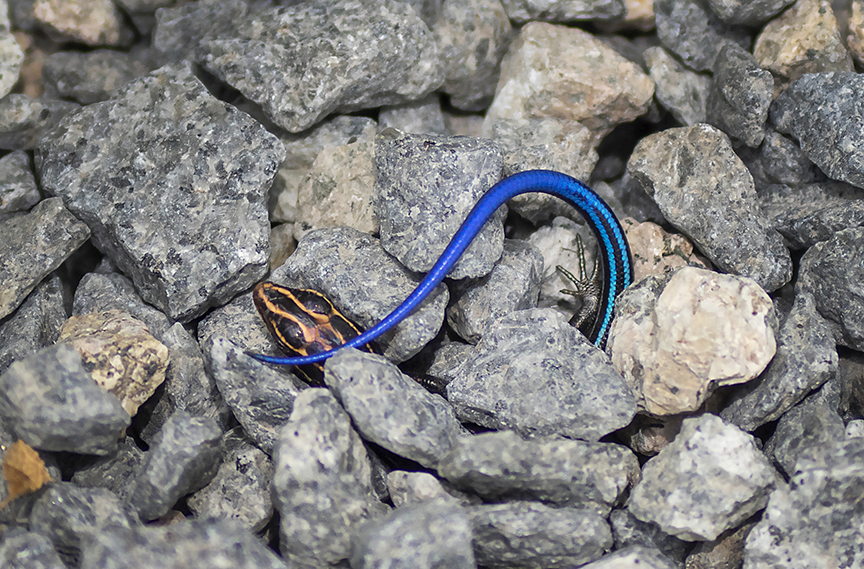
A baby skink (Plestiodon sp.) tries to hide in the gravel of the path in Restoration Park. Sorry, not enough info here for a species ID.     (photo by Bette J.Kauffman)

We met Dr. Joydeep at Kiroli Park and hiked the Wildflower Trail, then went to the Ouachita Valley Branch Library to learn some basics of ecology, and ended the afternoon at Restoration Park just south of I-20, all in West Monroe.

And we came away with new questions to ask about the natural world. What happens over time when a hole opens in the forest canopy and shrubs and vines are allowed to grow unchecked? How does a beaver dam affect not only the flow of water but the plant and animal life that surrounds it?

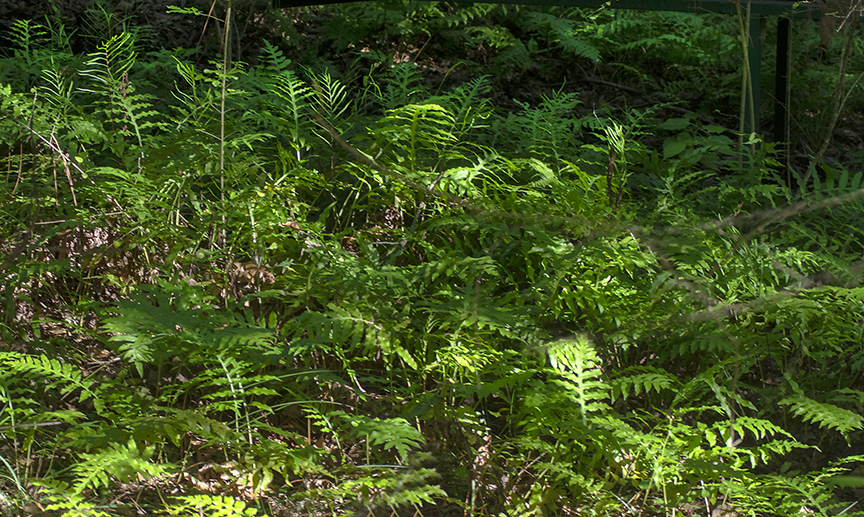
Netted Chain Fern
Netted chain fern (Woodwardia areolata) in Kiroli Park.     (photo by Bette J. Kauffman)

Most specifically, why is Kiroli Park experiencing an “invasion of ferns”? It’s not that they are an invasive species, although Kiroli does have some of the dreaded Japanese climbing fern (Lygodium japonicum). But the “invasion” is by the native and lovely netted chain fern (Woodwardia areolata). We saw several large patches of this fern that has not historically been a feature of Kiroli Park.

These are the kinds of questions ecologist asks. And along with the questions came a barrage of new terms and concepts: canopy gap dynamics, canopy shyness, arrested succession, edge effect, and more.

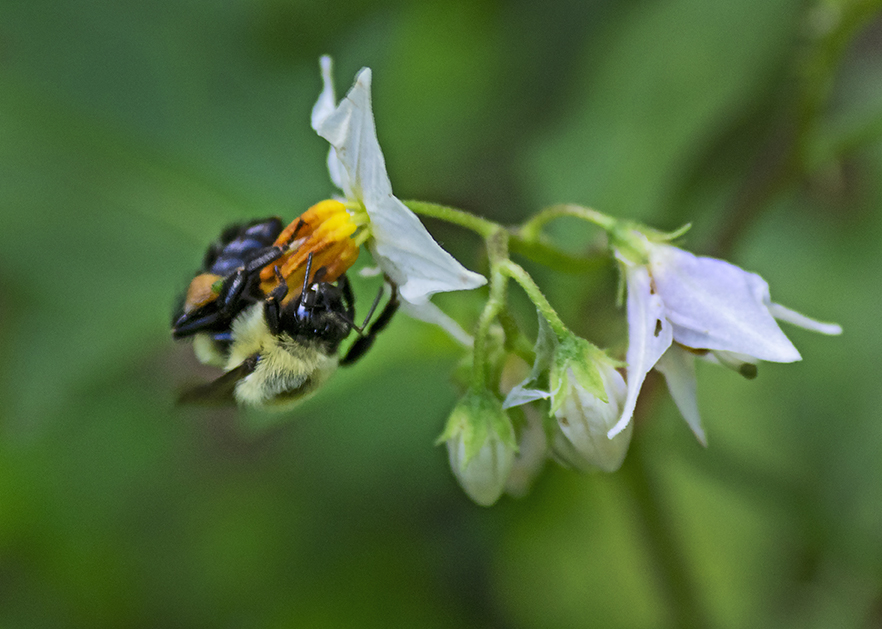
Horse Nettle (Solanum carolinense) w bee
Horsenettle (Solanum carolinense) being ravaged by a bee. Note the “saddlebag” full of pollen on the bee.    (photo by Bette J. Kauffman)

Ecology is about how organisms interact with their neighbors. And they do. No creature is an island. Everything is interconnected and interacting. Here’s one of my fave John Muir quotes to illustrate the point: “When we try to pick out anything by itself, we find it hitched to everything else in the universe.”

BTW, all of this sounded a little familiar to a communication scholar! I think I know the topic of my certification final interpretive project. Now to identify an “ecological niche” to focus on…

And, yes, we saw many plants and critters. There will be two species lists, one for each location. I’m counting on Suzanne Laird and Roselie Overby to send me bird lists, and I’m still going through my photos.

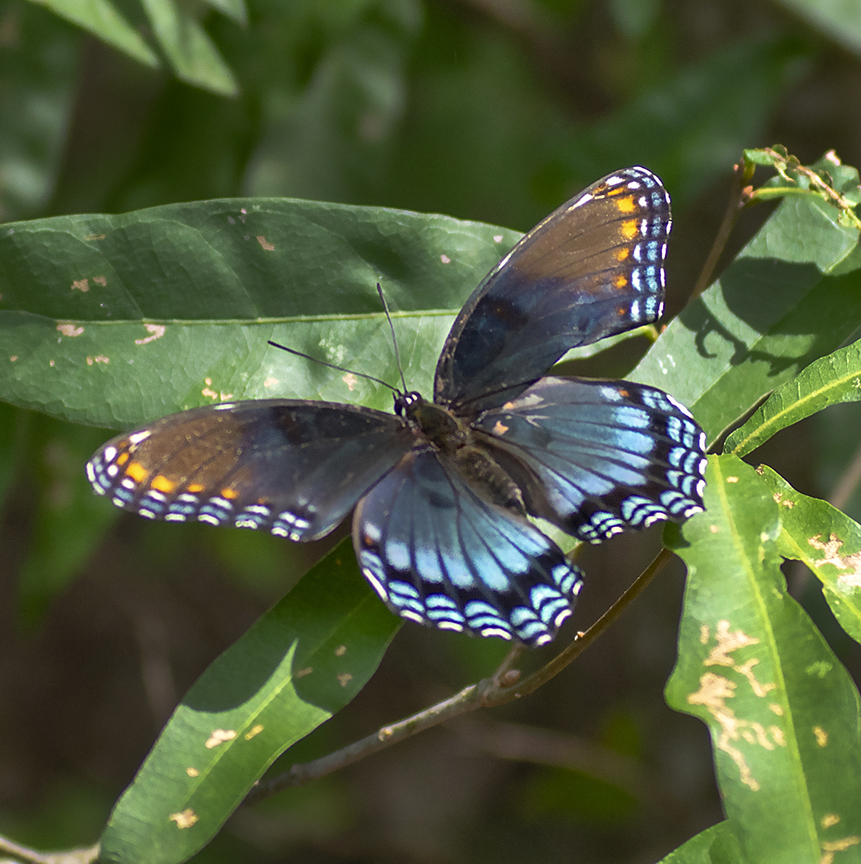
Red-spotted Purple
Red-spotted purple (Limenitis arthemis) in Restoration Park.     (photo by Bette J. Kauffman)


The Awesome Little Things

What is it? Wow, look at that!

That is what you heard, over and over again, Saturday afternoon in the Conservation Education Center at Black Bayou Lake NWR as eleven excited Master Naturalist wannabees went through the contents of their collection pails. Our workshop leader, Dr. Anna Hill, went from microscope to microscope patiently answering our questions.

IMGP0043 adj
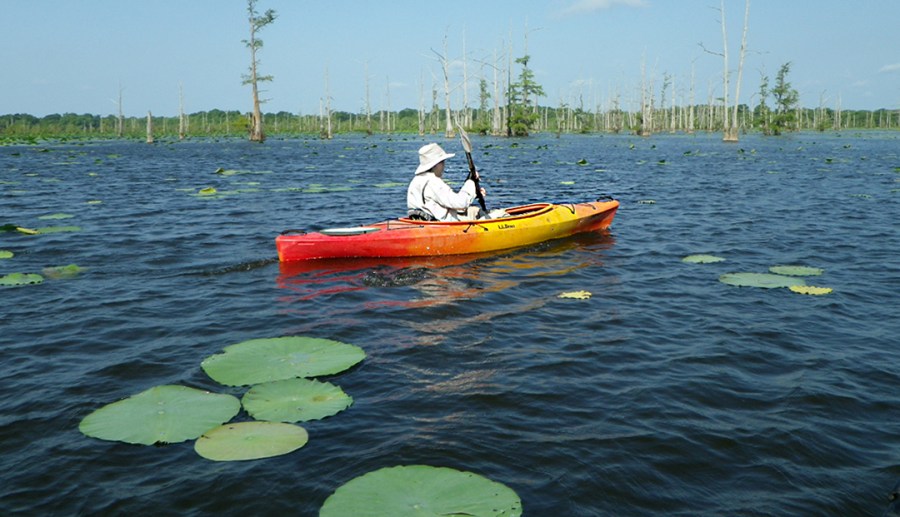
Dr. Anna Hill leads our little armada of canoes and kayaks across Black Bayou Lake for our early morning collecting field work.     (photo by Bette J. Kauffman)

At the same time, Kris Kelley of FoBB sat behind a microscope hooked up to a camera and projector. We all took pictures of the critters in our petri dishes and projected on the screen, but the photos Kris took with the microscope camera are excellent. He created a cache of them on Google Docs for us. Click here and enjoy:

MasterNaturalist Aquatic Life June 2018

Note that one of the frames on that page is a video that has been uploaded to YouTube. Here’s a direct link to the video:

Master Naturalist Microscope Video

The point of interest in the video is the white, lacy critter in the upper half of the frame. Not much happens for the first 45 seconds, but then you will see the entire critter convulse as it responds to something in the petri dish environment–food, most likely! And from there to the end of the video, various parts of the “ciliate colony” react every few seconds in similar fashion. I hope it was having a good meal!

A species list will be forthcoming, but be forewarned that most of what we saw we could not identify to the species level. Nevertheless, we learned some categories, I satisfied my long-time desire to see dragonfly and damselfly naiads in living color, and all the critters were truly amazing to behold.

IMG_6995 72-10
A predacious diving beetle larva (Dytiscidae sp.) appears to threaten a fishing spider.      (iPhone photo by Bette J. Kauffman)

As we were preparing to empty our collection pails in the pond in front of the Education Center, I captured a little drama happening in mine. I had collected a fishing spider and a predacious diving beetle larva–a critter that looks about as scary as its name. It had kept its pincers closed throughout its several minutes of fame under the projecting microscope, but now they were open and the creature was turning its head toward the spider, which was on the surface of the water nearby. Of course, I have no idea what was actually going on in that pail, but it sure looked sinister!

And here’s a link to another cache of photos from the day, created by Charles Paxton:

Aquatic Life Photos on Facebook

Important Note: Black Bayou Lake is a National Wildlife Refuge. Collecting specimens from the lake requires a permit, which our workshop leader had gotten for us. To do this without a permit is strictly against the law. (BTW, Dr. John Carr also had to have a permit for his work with us a few weeks ago.)

The Case of the Mad Snappers

We came away with stories to tell!

Our day began in a ULM classroom. Dr. John Carr patiently walked us through the major families of amphibians and reptiles of northeast Louisiana with the help of an illustrated PowerPoint and a couple of great handouts. We had many questions.

Common Snapping Turtle (Chelydra serpentina)
Common Snapping Turtle (Chelydra serpentina)     (photo by Bette J. Kauffman)

Armed with our new knowledge, extensive notes and phones/cameras, we then headed to Black Bayou Lake NWR and reconvened near the Visitor Center. We were greeted there by Ryan, McKenzie and Ben, Dr. Carr’s graduate students, and… two turtles!

One of the two was a Map Turtle (Graptemys sp.), who had been rescued off a road on the way to the Refuge. She was quickly determined to be bearing eggs that Dr. Carr and his students wanted to incubate and hatch for research purposes, so she was placed in water in a tub. By the time we returned from our field work, she had laid one egg in the tub!

The other turtle that greeted us at BBLNWR was a male Common Snapping Turtle (Chelydra serpentina). It was a scorching day and we were hot, but the snapper was hotter! We kept a healthy distance from his darting head and beak-like jaws while Ben held the turtle and Dr. Carr notched his shell for identification purposes before releasing him back into the wild.

Herps@BBL
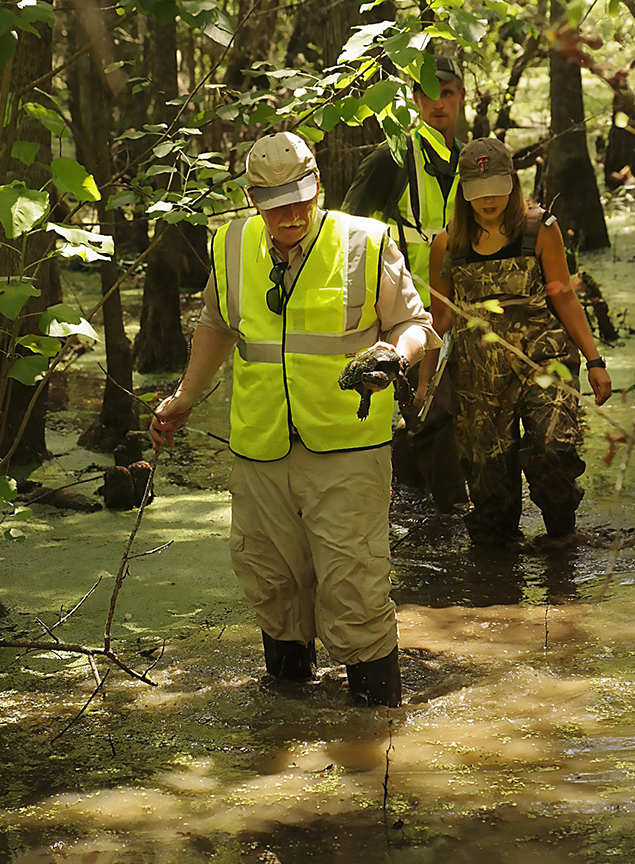
Dr. Carr, Ryan & McKenzie (photo by Charles Paxton)

Later, Dr. Carr and his students emerged from the swamp carrying a female Common Snapping Turtle (photo above), who was equally hot under the carapace! Of course, we also got to see Louisiana’s favorite Red-Eared Slider (Trachemys scripta elegans), plus a couple of skinks, and–momentarily–a tiny escape artist Eastern Narrow-mouthed Toad (Gastrophryne carolinensis).

A hardy handful of us returned to the Refuge at 8 p.m. and were met again by Dr. Carr, his graduate students and Dr. Kim Tolson, who will lead a mammals workshop for us later this year. Back down the trail we went, to be greeted first by a deafening chorus of insects. The closer we got to the lake, the more the frogs took over.

What a wonderful cacaphony! We heard everything from tiny cricket frogs to deep-throated bullfrogs and several sizes in between, including bird-voiced tree frogs, bronze frogs, green tree frogs and more.

Bronze Frog
A bronze frog (Lithobates clamitans) sits on Ryan’s wrist. It’s call sounds like a chord struck on a banjo.     (photo by Bette J. Kauffman)

Hearing frogs and seeing them are quite different things, but with many eyes looking and several people willing to leave the boardwalk and wade, we were also able to see and photograph several species.

Did I mention snakes and ‘gators? Yes, we saw those, too. It was a fabulous day.


Plants, Plants, More Plants!

This post was written by Charles Paxton:

The Louisiana Master Naturalist Northeast’s botanical workshop group convened at the Chevron gas station in Georgetown, right by the Kisatchie National Forest, an easy day trip from Monroe. We were blessed with very fine Spring weather.

The Kisatchie is exemplary of Louisiana’s amazing biodiversity, with at least 56 reptile, 30 amphibian, and a huge range of bird and plant species recorded. Our plant check-list for the event had over 480 species and we added to it over the course of the day.

Focused
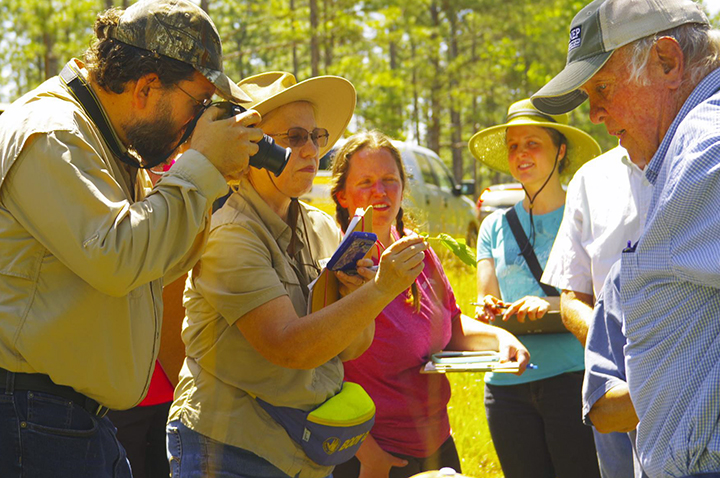
Master Naturalists in training focus on the mission.     (photo by Charles Paxton)

I think it is fair to say that my brain is still reeling from the event. It will take a while to digest the wealth of information. I particularly enjoyed the way Dr. Allen gave us extra information about the plants we encountered, especially about their roles as food plants for wildlife and their human applications.

Dr. Allen
Dr. Charles Allen on leaf arrangement: 80% vs. 20%!
Loupe
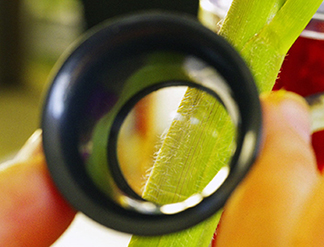
The loupes given to us by Amy Ouchley were great for seeing the identifying features of plants!     (photos by Charles Paxton)

We encountered a great many different plants. Dr. Allen is very knowledgeable and his enthusiasm for the subject is contagious. He made a superb expert guide and was very patient with all our questions. Though his workshop did much to lift the veil of mystery and convey the wonder of these plants, we were keen to buy his book on wildflowers to follow this up and for future explorations.

It was great to spend a fun day of learning in the outdoors with a very nice and friendly group of people.

Kauffman’s addendum: We identified and talked about 46 species of woody plants, 61 species of herbaceous plants, 3 grasses, 1 sedge, 1 rush and 1 fern, a total of 113 plants! The species list has been uploaded to the “Observe…” tab of this website.

Landscape
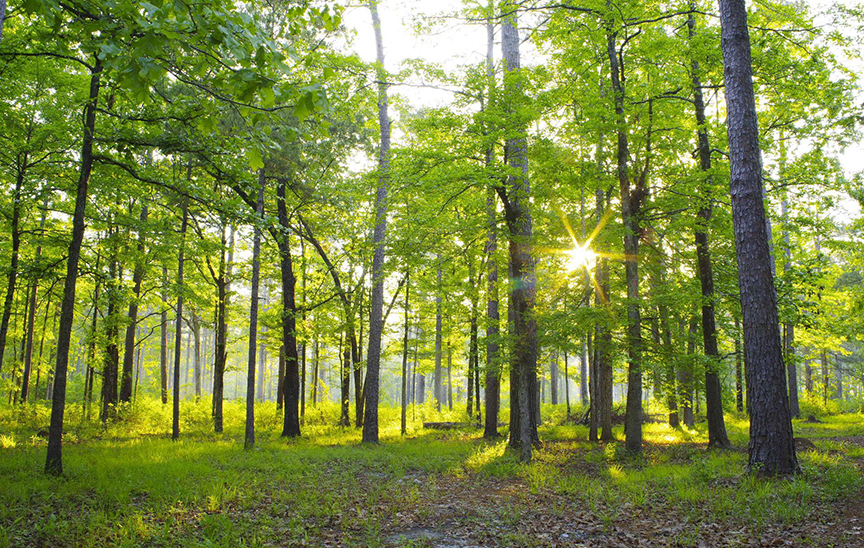
The Kisatchie National Forest, a 600,000 acre treasure right here in Louisiana.     (photo by Charles Paxton)