
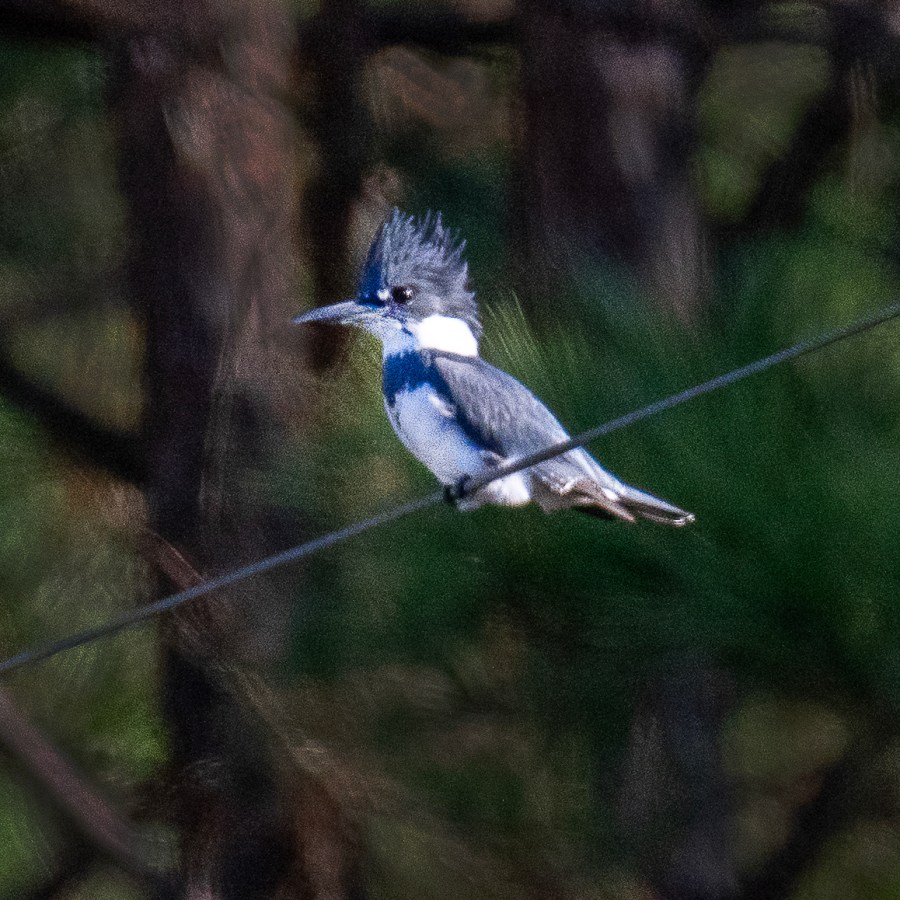
is always a good day. And we saw a Belted Kingfisher (Megaceryle alcyon), a male perched on a wire over a pond. As one of my counting companions noted, seeing a Kingfisher always makes it a good day!
Saturday, December 20, was the Audubon Christmas Bird Count at D’Arbonne NWR. My counting partner and the expert of our team was Certified Naturalist Roselie Overby, who astounds me with her ability to identify birds by their call.
She was already standing in the parking lot listening and jotting down bird names when I pulled in a few minutes late. Day was still dawning and it was cold. By early afternoon after a short lunch break, we were shedding the layers we had needed that morning.
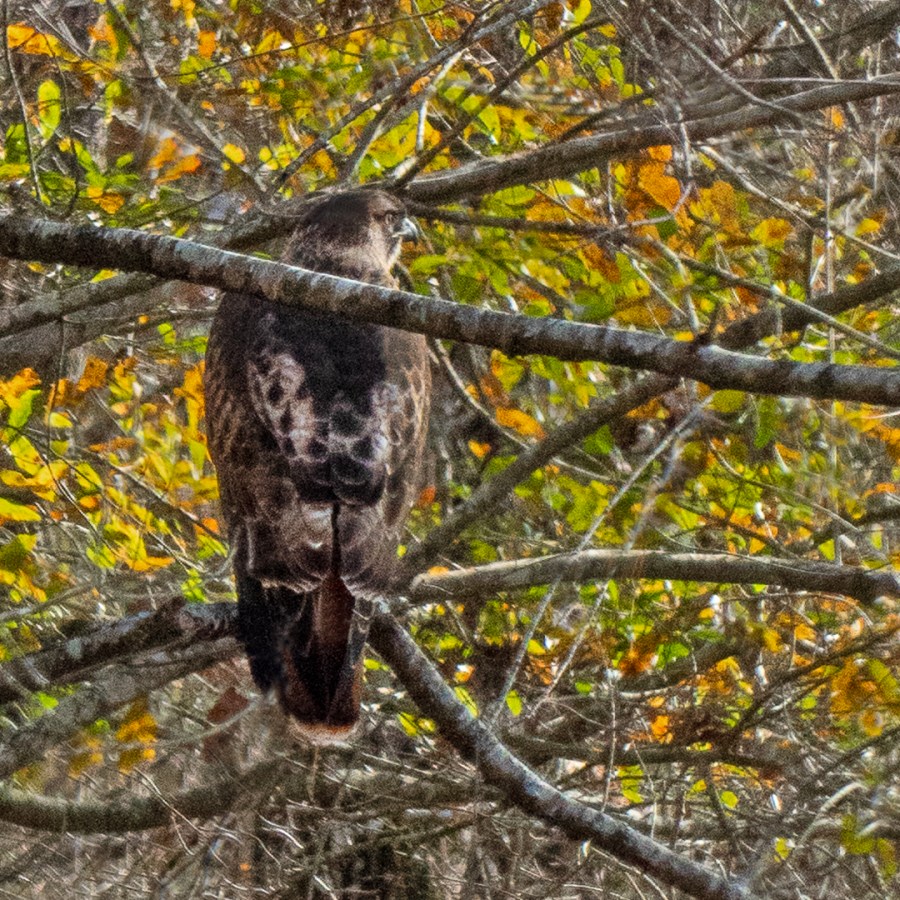
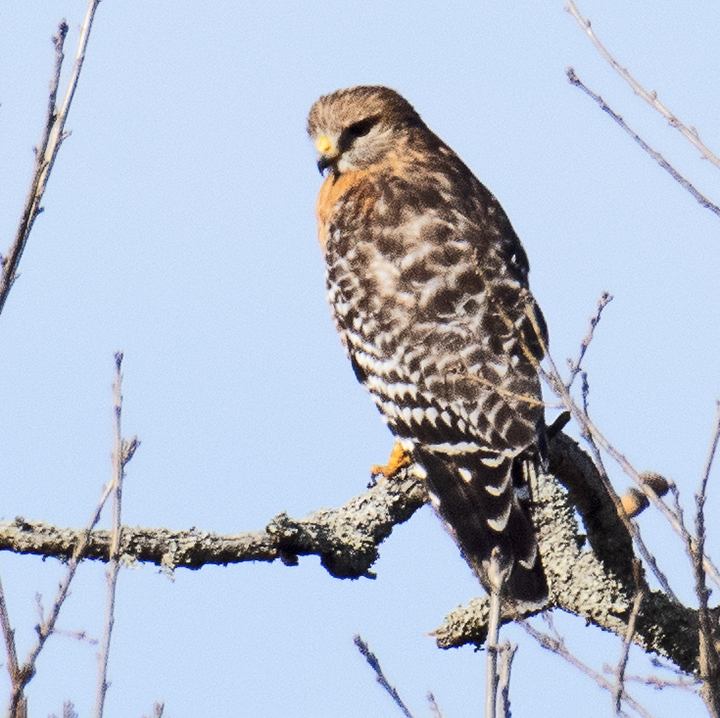
The Red-tailed Hawk (Buteo jamaicensis) was a second highlight of the day. We spotted it in a small wooded area between houses and it did not immediately fly away when we pulled to the side of the road. It seemed to be interested in something on the ground we could not see. But it sure knew how to make life hard for the photographer! Finally, it turned its head just right for one decent click.
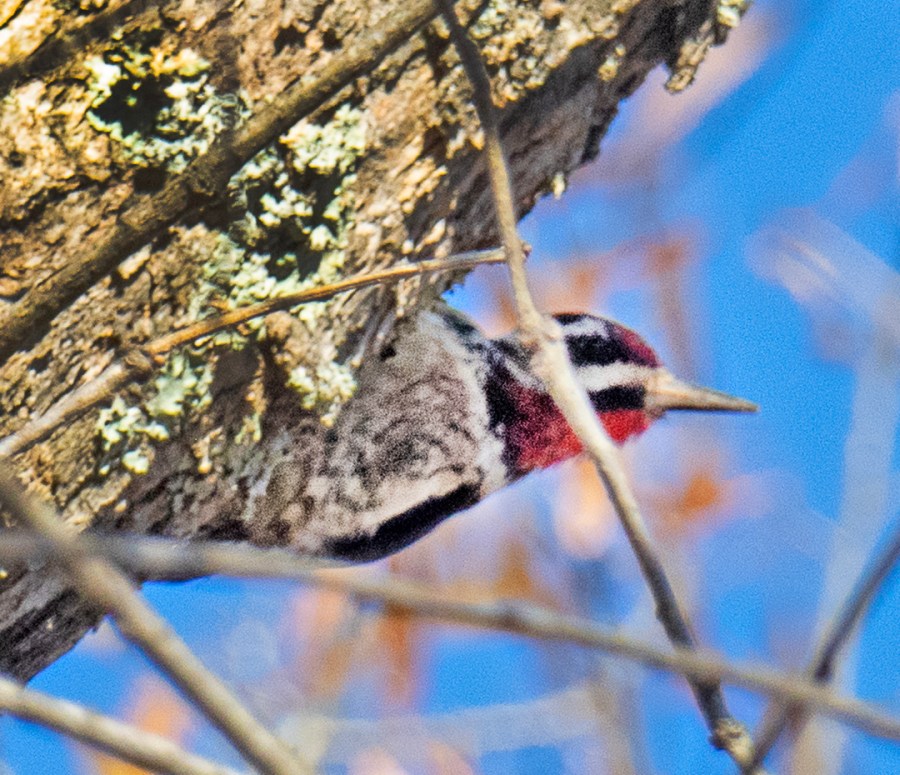
Likewise, the Yellow-bellied Sapsucker (Sphyrapicus varius) knew just exactly how to foil the photographer by staying behind a branch. But it too turned its head just right for a split second!
Overall, it was a glorious day to be out birding, but results were mixed. Roselie and I counted 35 species. Not bad, but not particularly good either. We’ve had as many as 40 previous years.
More noticeably, the numbers of individual birds were down. For example, we saw exactly 3 Dark-eye Juncos (Junco hyemalis), a typically plentiful bird. Roselie counted a few White-throated Sparrows (Zonotrichia albicollis) she heard but did not see, but we neither saw nor heard any of the several other species we expected to see.
At the end of the day, we joined another 5 or 6 teams of counters at Heartwood Natural Area to “call the count.” The tentative total number of species was 91, and that’s a pretty good number. The bird of the day was a Broad-winged Hawk (Buteo platypterus), a new species for this count. Yay!
In spite of the good number of species, all of the teams reported numbers of individual birds to be down. One count does not a trend make, of course. But it certainly is in keeping with national and global trends, and cause for concern. Most humans profess to love birds. We must match our love with decisive conservation action.



 Louisiana Master Naturalists - Northeast