
“Did you say 19,000 acres?”
I had to interrupt Kelby Ouchley to confirm the number. Having been raised in Iowa where farming is huge, I had never heard of a 19,000 acre field. Preposterous! But that’s not the only preposterous fact in the story of the Mollicy Unit.
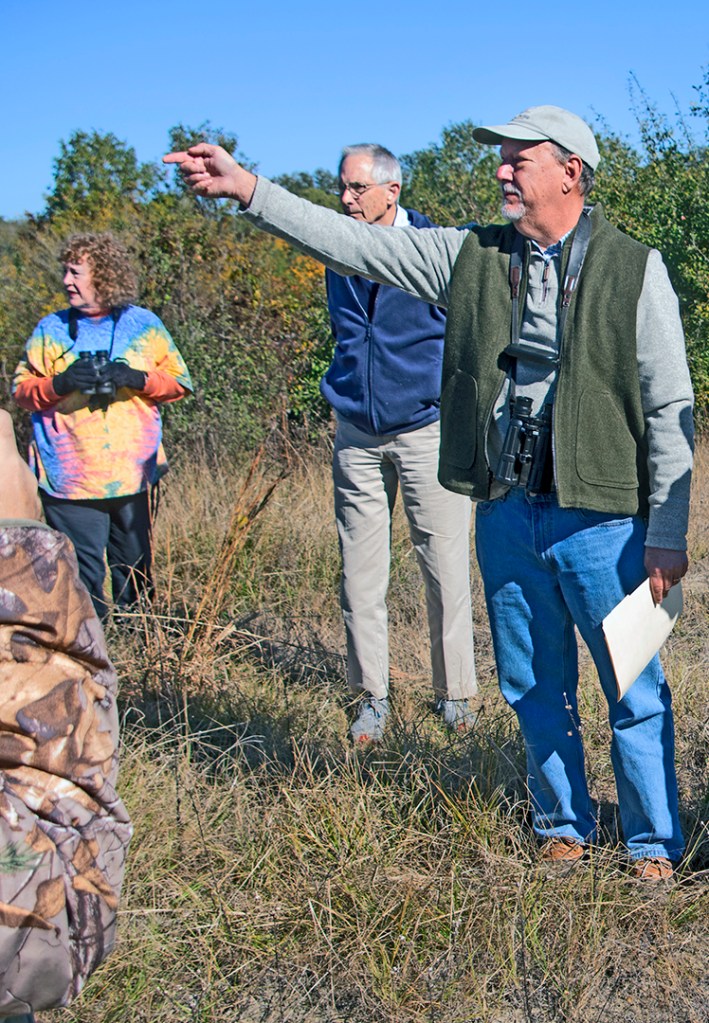
Here it is, as told to LMN-NE and guests by Kelby and Keith Ouchley, architects of the largest restoration project of its kind in the U.S.
Beginning in 1969, some folks bitten by the soybean craze with BIG dollar signs in their eyes began investing millions and millions in converting a 3×12 mile floodplain (aka swamp) of the Ouachita River into a 19,000 acre field. They built miles and miles of levee to keep out the river, thereby creating a huge basin that filled with water every heavy rain. So they built massive pumps to pump the water–now full of soil and agricultural chemicals–back into the Ouachita River, creating a sediment plume that extended downriver for miles.
Of course, they had begun by bulldozing thousands of trees–bottomland hardwoods–into huge windrows and burning them. And they scraped the entire 19,000 acres as flat as they could, destroying all of the natural plumbing–streams, bayous, sloughs–by moving dirt.
It didn’t work. It was a waste of money and natural resources, especially trees, that killed a prodigious amount of wildlife, polluted the river for years, and threatened everyone downstream–especially Monroe, La., our home–with much greater potential for flooding due to the loss of the floodplain. Preposterous.
Then along came the Ouchley brothers. Kelby was a refuge manager for the U.S. Fish & Wildlife Service. Keith was director of the Louisiana Nature Conservancy. They formed an unstoppable partnership. Twenty years later, all 19,000 acres form the Mollicy Unit of the Upper Ouachita National Wildlife Refuge.
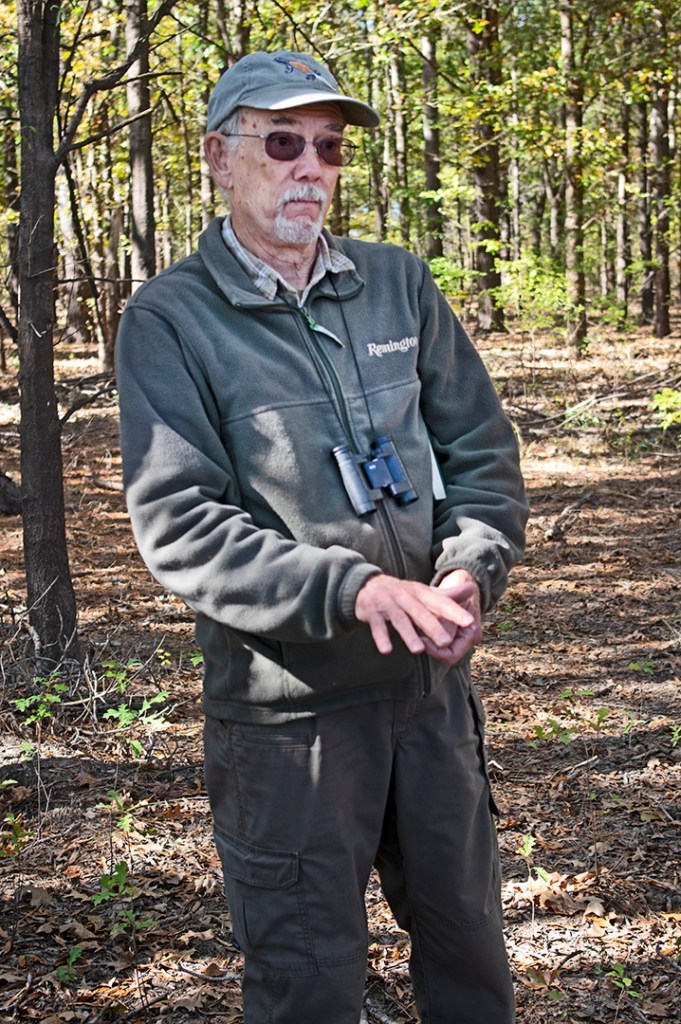
We stood on this day in 2021 in the shade of bottomland hardwoods–nuttall oak, green ash, and more–that were among the first planted when the restoration effort began. We also visited an observation tower near the north end of the project, from which we could see the Ouachita River meandering by a few miles to the west. Between us and the river, the restored floodplain is dotted with saplings that will survive and thrive with the river’s annual and natural temporary incursions.

We stood on a remnant of the levee system and learned about the lengthy planning and careful process of opening five strategically placed half-mile wide breaches that allow the river and the floodplain to give life to each other as they are intended to do.
But this story would not be complete without mentioning that after the restoration process had begun, the river and its floodplain did not wait patiently for human minds and hands to complete the work. In 2009, the Ouachita River was seriously threatening Monroe when it began to overtop the 30-foot Mollicy levee. That night, the river blew a 100-foot hole in the levee and reclaimed its floodplain, putting a halt to reforestation for a time. In Monroe, the river level fell 6 inches in 24 hours.
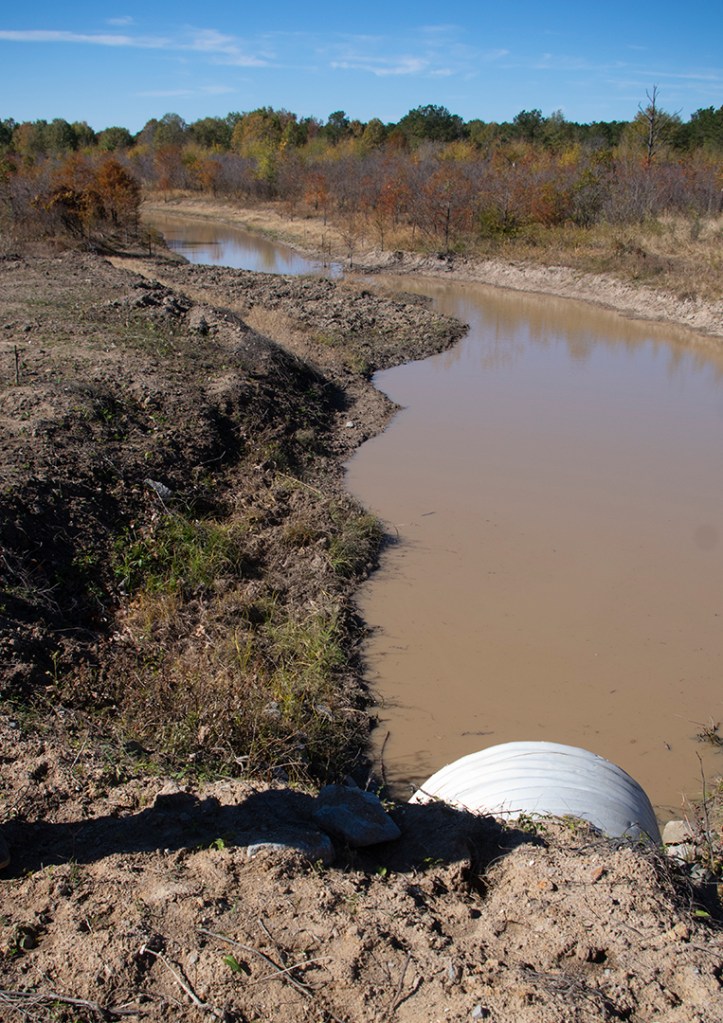
Today, the work continues. The natural plumbing of the area is being restored to the extent possible. Mollicy Bayou was one of those natural features completely filled in and leveled off by the bulldozers. Now it flows again, from the east side of the unit all the way into the Ouachita River on the west, using the exact same footprint, including meanderings and bank slopes, that it had before its desecration.
Wildlife is returning. We saw tracks and scat. The skilled birder in our ranks recorded 26 birds of 11 species, among them 2 bald eagles. Creation has an amazing capacity for healing when humans stop abusing and offer instead a helping hand.
Who would have thought such a reversal possible? Preposterous.
The Mollicy Unit and the Upper Ouachita NWR are a few miles due north of Monroe and they extend northward to within a few miles of the Arkansas border. The Mollicy Unit is to the east of the Ouachita River, while the bulk of the UONWR lies to the west of the river.
Now is a good time to visit. It is dry, but it will flood again–exactly as it is intended to do. Please be a gracious visitor. Go. Drink in the healing that is happening all around you. Take nothing but peace. Leave nothing but footprints.
 Louisiana Master Naturalists - Northeast