Mammal Fun, Really!

We didn’t find any skulls, so we didn’t get to practice one of our newest skills, namely creating a dental formula that could take us a long way in identifying a mammal species. But we did get to examine poop, and, yes, it was fun!
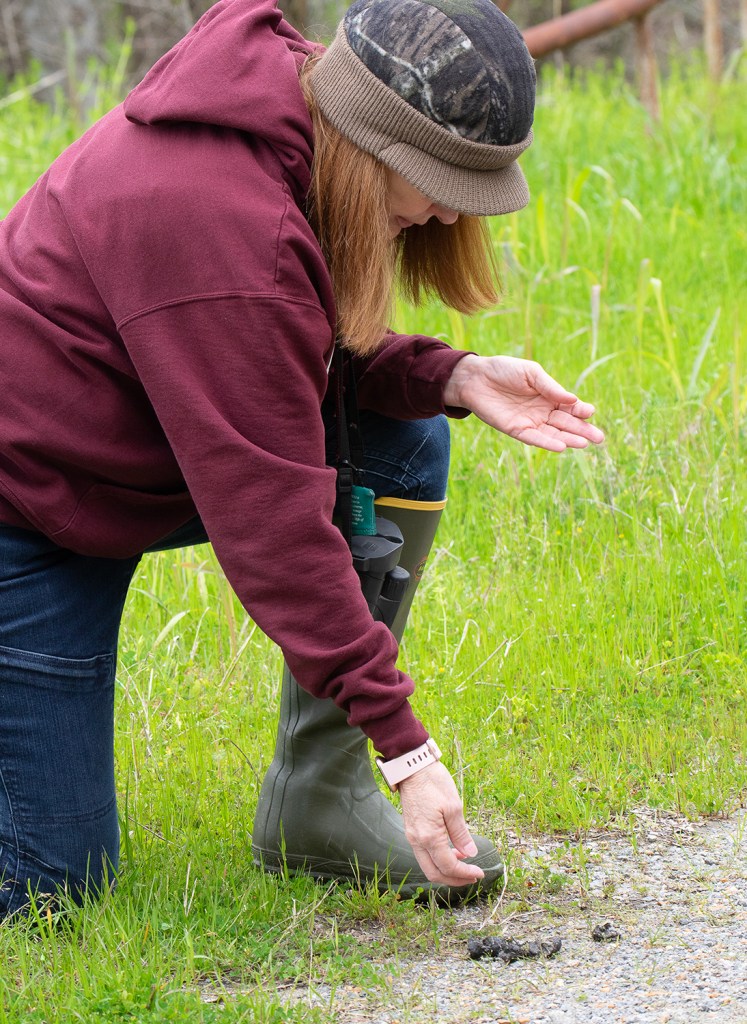
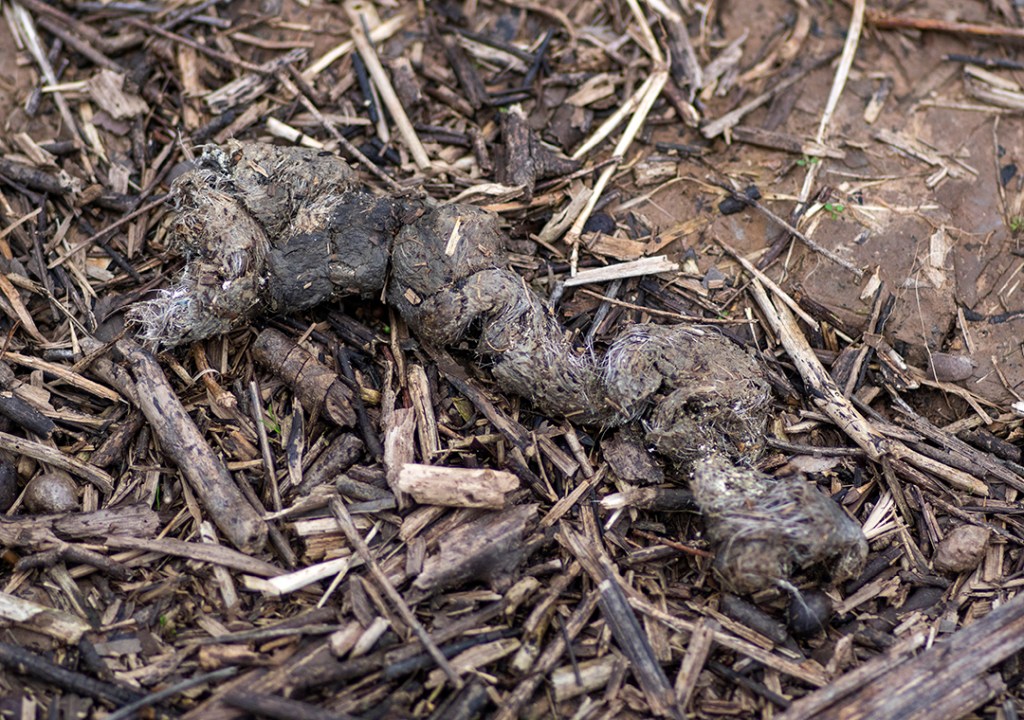
Dr. Kim Tolson identified this scat as coyote (Canis latrans) because it was full of hair. Of course. Coyotes eat small mammals.

Indeed, we could tell that the hair was “agouti” hair, which we had just learned in class means that the hair featured horizontal bands of color. Rabbits and some rodents have agouti hair and both are common meals for coyotes. We followed this coyote straight down the trail on top of a levee, seeing a nice big print in the soft, damp soil every few yards.

Getting to observe something in the field right after learning it in the classroom is gratifying and fun. The new “sticks” so much better!

We also learned to make a “taxonomic key” to help with identifying species. A key is a series of pairs of questions called “couplets,” with each pair featuring one characteristic of a species. The questions must have mutually exclusive answers, like present/absent or yes/no.

For example, if we had before us several rats, we could begin with a couplet like 1a. Does it have agouti hair? and 1b. Does it have solid color hair? And with that one question you could sort your rats into two groups and then go on to the next couplet, and on to the next. For rats, we learned, we might need 6 or 7 couplets to match one rat with a specific species.

Maybe you must have a fondness for mind-bending puzzles to say doing such a thing was fun. But I thought it was. I’ve become a bit obsessed with knowing the species of things!
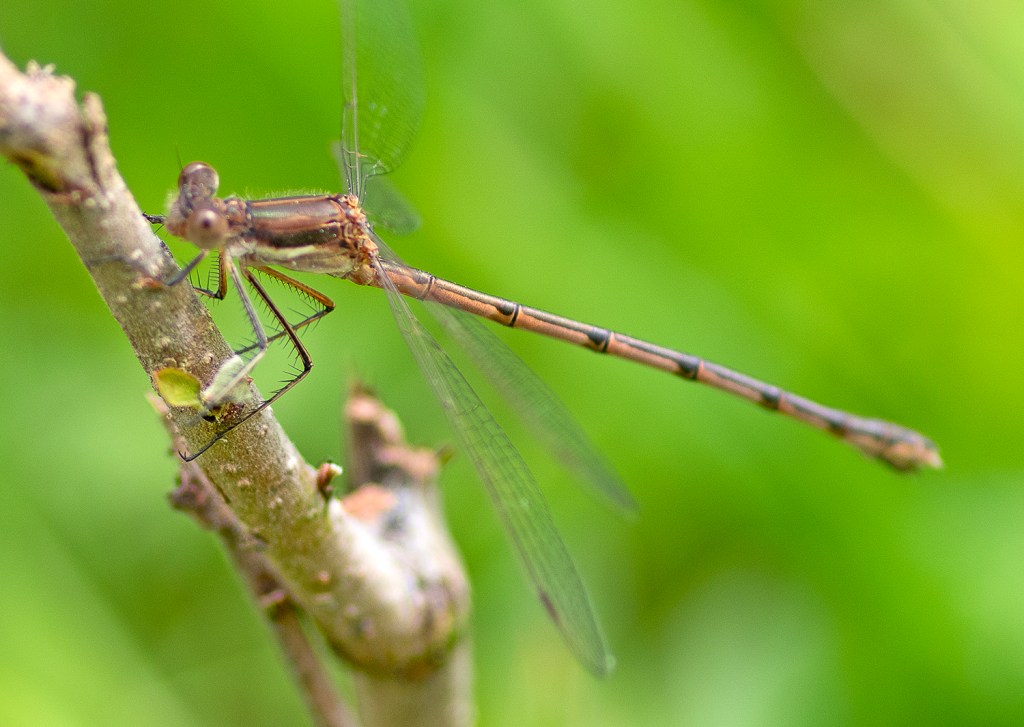
Southern Spreadwing (Lestes australis)

Of course, although our focus for a mammals workshop was mammal sign, a bunch of naturalists does not wonder through Russell Sage Wildlife Management Area without noticing many other things. So at one point the trees nearby filled with cedar waxwings. At another we were down on our knees examinging small fungi on a log. And at another point, I fell way behind photographing a damselfly, which iNaturalist says is a Southern Spreadwing (Lestes australis). Cool! I don’t see very many spreadwings.
Mammals Workshop

This Saturday, March 18, we will gather at the Natural History Museum in Hanna Hall on the ULM Campus at 9 a.m. Biologist Kim Tolson is our workshop leader, a member of the ULM Biology faculty, and the director of the Museum.

Not to be overlooked: Kim will have a pot of coffee waiting for us caffeine addicted! I’ll pick up a box of donuts.

Canine, ursine, feline, or…? Studying mammals involves looking at lots of poop.

We will do our classroom work in the Museum, which has many wonderful mammalian specimens to study. We’ll break for lunch and reconvene somewhere in Russell Sage WMA for field work. A downloadable flyer with times and a few more details has been posted on the “Certification” page of our website.

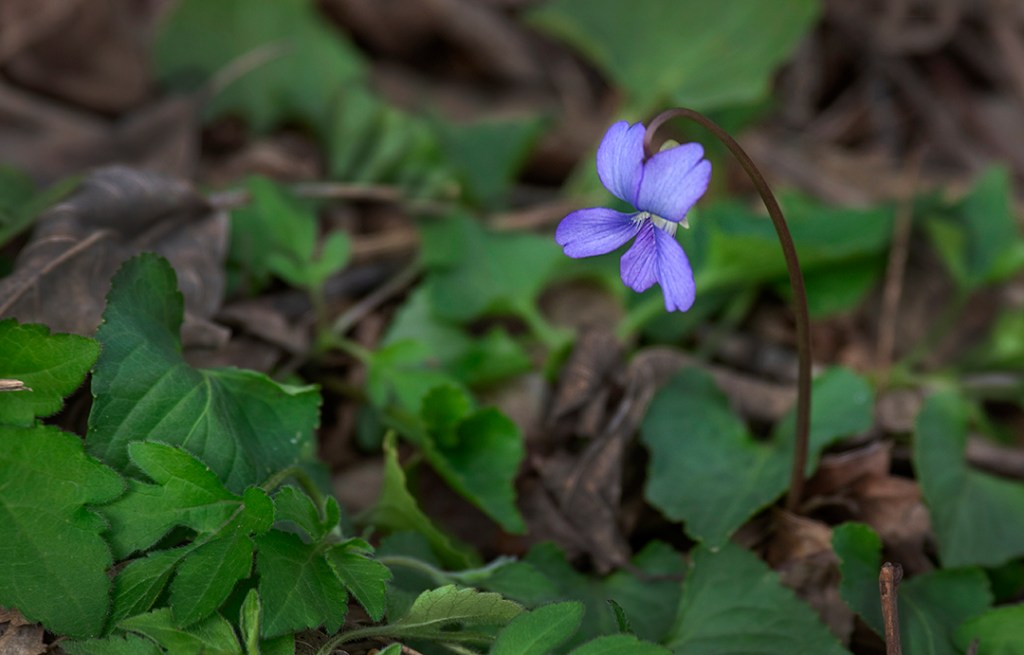
We will see pretty things, too, like this Viola that was blooming Feb. 2019 when we did our field work in Russell Sage.

Carpooling to the WMA is advised, as long as carpool companions can agree on how to do lunch on the way! Boots will be needed, as well as the usual field gear: water, snacks, notebook, pencil, camera/phone. The weather is predicted to be partly sunny with only a 3% chance of rain, but it will rain Thursday and Friday.

Also important from the LDWF website: Either a WMA Access Annual or 5-day Permit is required for all users of LDWF administered lands, including wildlife management areas, refuges and wetlands conservation areas (LDWF website).

Hanna Hall is at the main entrance to the ULM Campus that has the huge Arkansas stone sign. It’s at 708 University Ave. and on a Saturday, parking in the u-shaped lot in front of the building should be readily available. The door to enter is marked with a “Natural History Museum” sign.

1Q Event

Calling all members and friends: Join us tomorrow (Saturday, 3/11) at St. Thomas’ Episcopal on the Bayou for our First Quarter meeting and to work on our project there at the church. We begin at 1:30 p.m. in the pavilion next to the church.

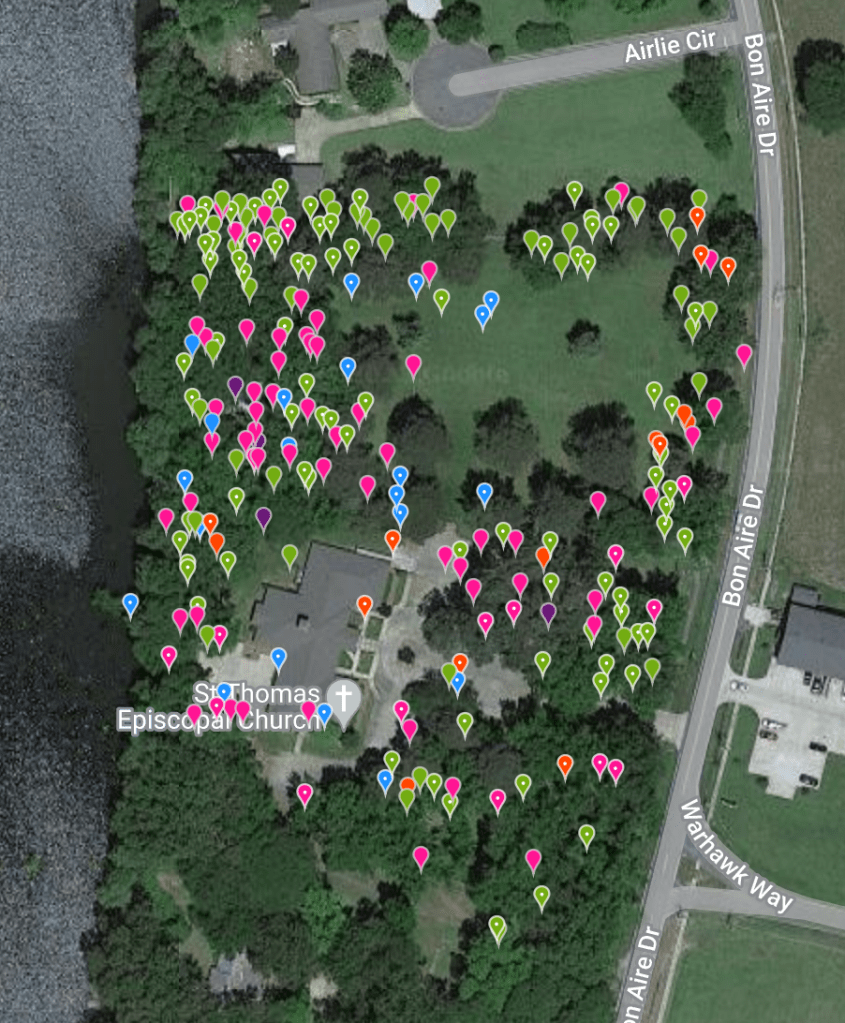
The iNaturalist map of our 330+ observations on this site. St. Thomas’ is at 3706 Bon Aire Dr.

As guest speaker, Bette Kauffman will describe the scope of the project we began last year of adding educational natural history signage to the walking path and will lay out a plan for completion. The part of the project we will do tomorrow is to inventory and map the trees. This data will be used on the signage and be the basis of our decisions about how many trees to label, which ones and where.

LMN-NE will be joined in the day’s work by several members of the church and some students from Canterbury@ULM, the campus group that meets at St. Thomas’ and previously contributed by planting native plants along the walking path. Canterbuy@ULM received a “Care of Creation” grant from the Episcopal Diocese of over $6000 to pay for the signage.

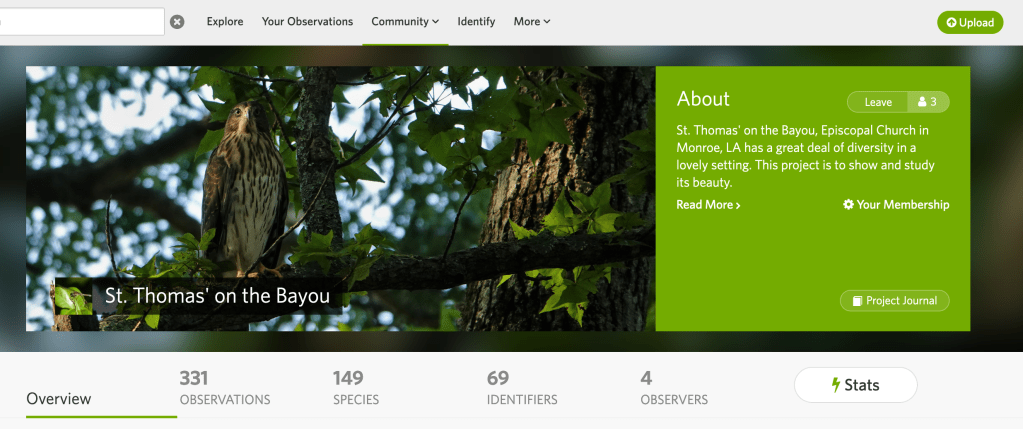
The home page of our assessment project on iNaturalist. Go here to browse the many species we have already identified.

Canterbury@ULM is also providing pizza and beverages to be shared while LMN-NE has its Second Quarter meeting after the work is finished.

The weather tomorrow is supposed to be beautiful, and the site is certainly beautiful. Please come, bring a friend who might be interested in LMN-NE, and join in the adventure of figuring out how to inventory trees on a two-city-lot natural area! St. Thomas’ is at 3706 Bon Aire Dr.

1 Down, 4 To Go

Our first certification workshop of Spring 2023 was a great success. About a dozen people came together in the Environmental Learning Center out at Black Bayou Lake NWR for a fun and educational experience.

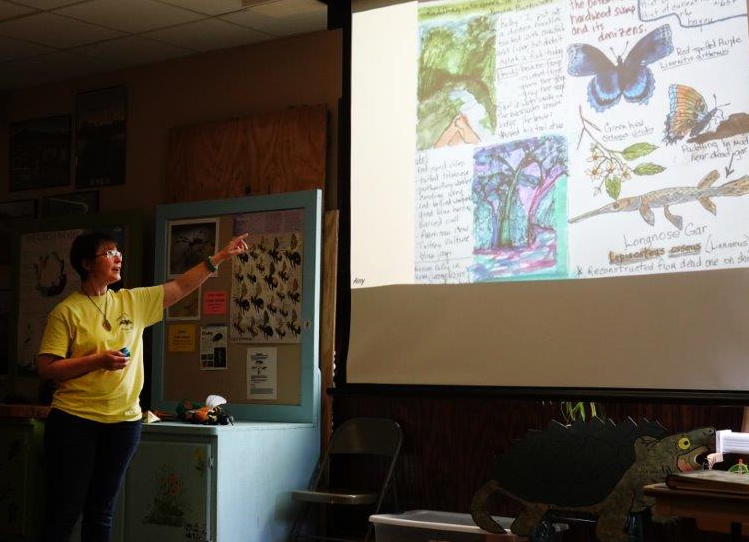
Kim Paxton illustrated her talk on nature journaling with photographs of pages from Amy Ouchley’s nature journalis, as well as from her own. Photo by Charles Paxton.

We spent the first hour and a half on nature journaling, with Kim Paxton standing in for Amy Ouchley. We missed Amy, but Kim did a great job.

After Kim’s presentation, everyone went outside to make some observations and try sketching and writing about those observations.

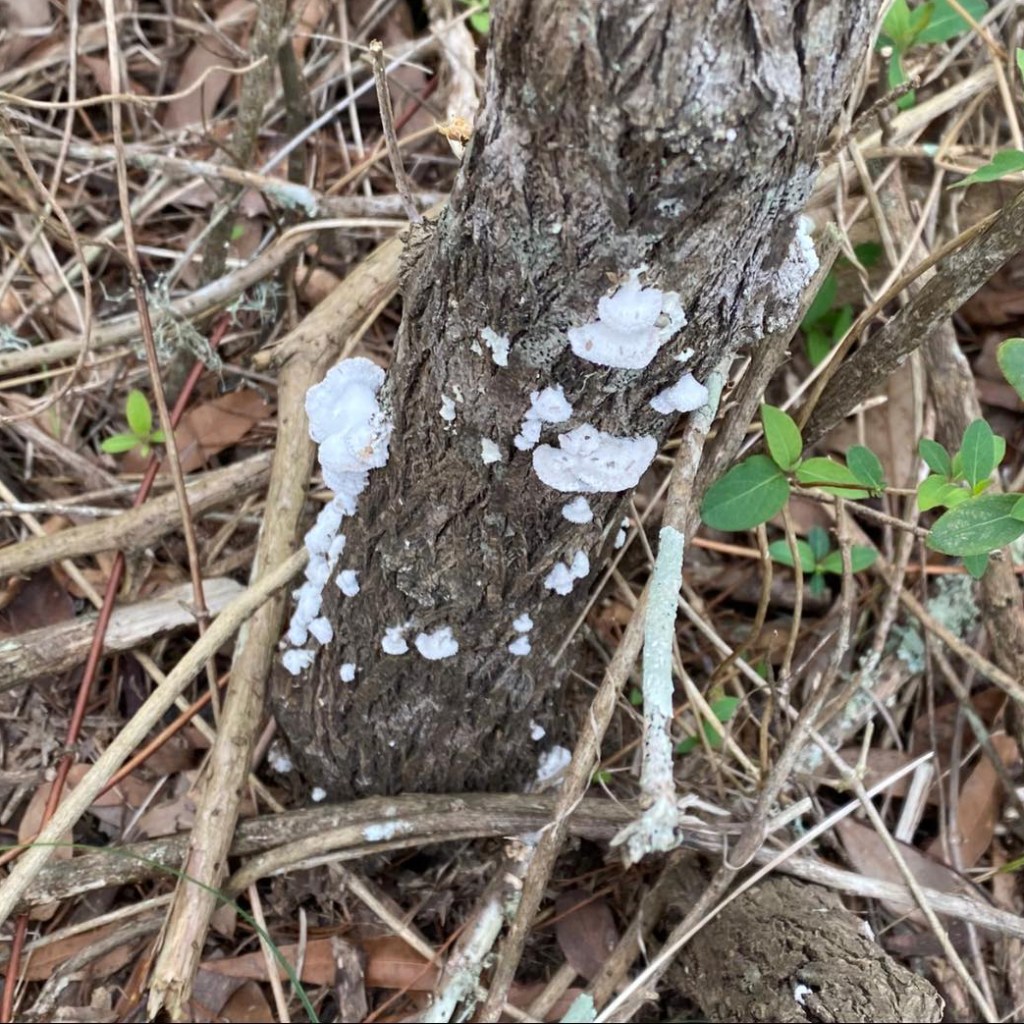
A split gill mushroom, observed and photographed by Linda Norwood.

Bette Kauffman focused on making observations to be shared with the research community via online platforms like eBird and iNaturalist. Numerous examples show how these databases contribute to scientific understanding of such things as climate change and declining bird populations worldwide. It is thus important that citizen scientists, like Master Naturalists, are thorough and accurate in making and submitting observations. We have a direct impact on the quality of those databases.

We ended the day with instruction on some principles of interpreting nature to various audiences and a quick review of projects the Master Naturalists of our chapter have done to complete their training and become certified.

Coming next: Mammals with Dr. Kim Tolson, March 18, 9-3. Look for a blog post soon. Check the “Events” list in the right hand sidebar of this page for the entire series.