A Great Way to Begin a Day!

That was the general sentiment at Lazarre Park in West Monroe this Saturday morning. We had just watched the last of a clutch of about 2 dozen Smooth Softshell Turtles (Apalone mutica) scurry down the beach and bury themselves in the sand of the Ouachita River bed.
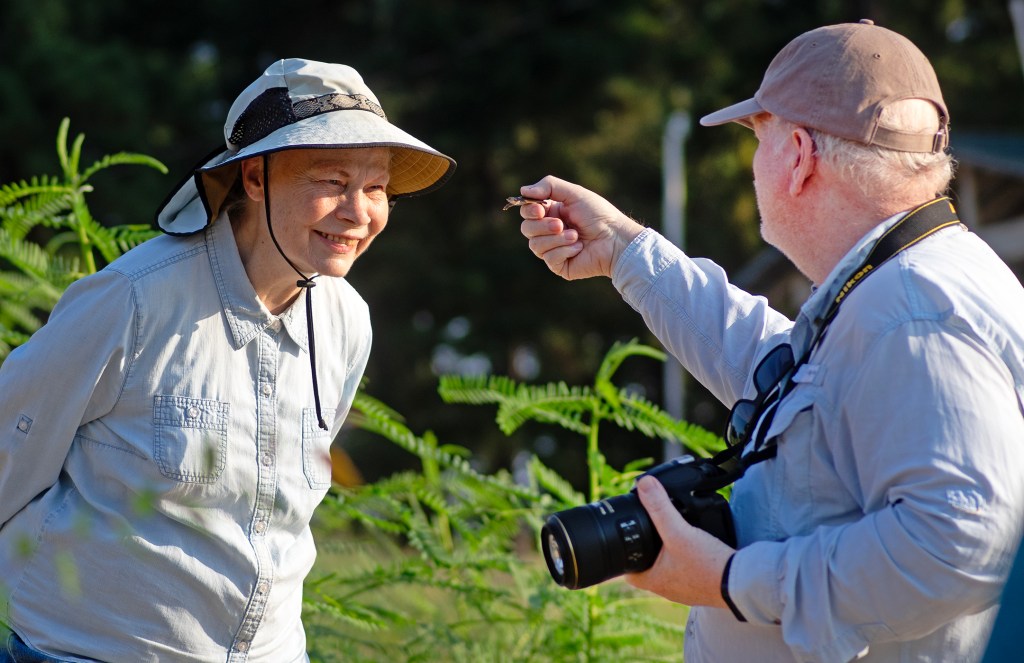
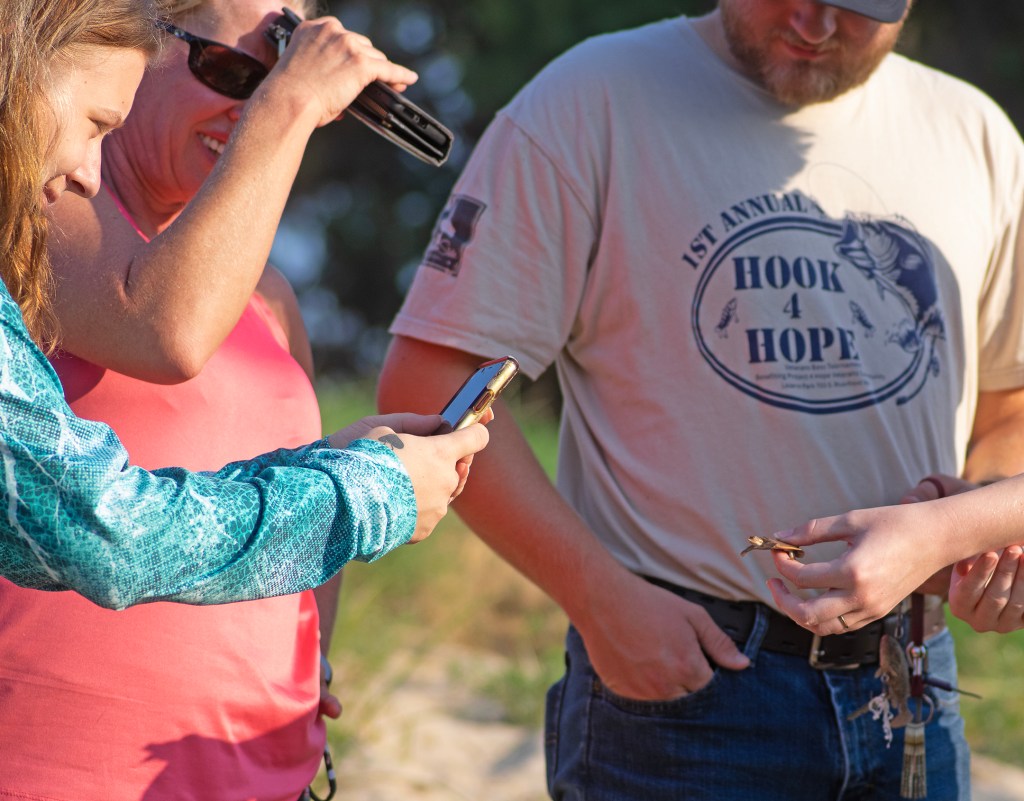
Dr. John Carr, professor emeritus of biology at the University of Louisiana Monroe, made a career of studying, writing and teaching about turtles and turtle conservation. He and his graduate students have a permit from Louisiana Department of Wildlife & Fisheries to gather turtle eggs from the river bank, incubate them in his lab, and release the hatchlings back into the river, thereby saving the eggs from predation by raccoons and giving the turtles a chance to thrive.

The proper way to release a turtle hatchling is to place it on the sand 12–18 inches from the water. Most of the babies make a beeline for the water, swim in a few inches, take a gulp of air at the surface with their snorkel like snout, then dive to the bottom. With just a couple of shimmies, they bury themselves in the sand. It is their best defense against big fish and other predators that would love a turtle snack.
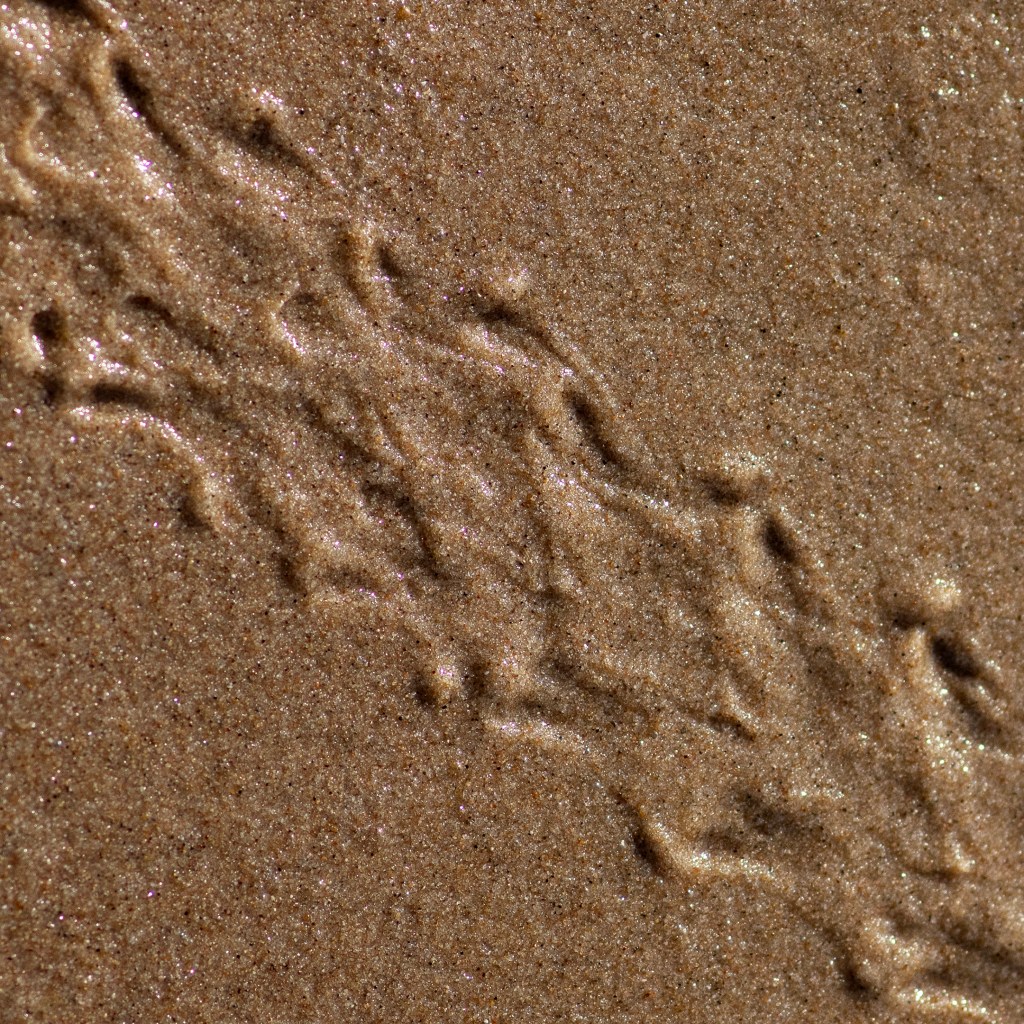
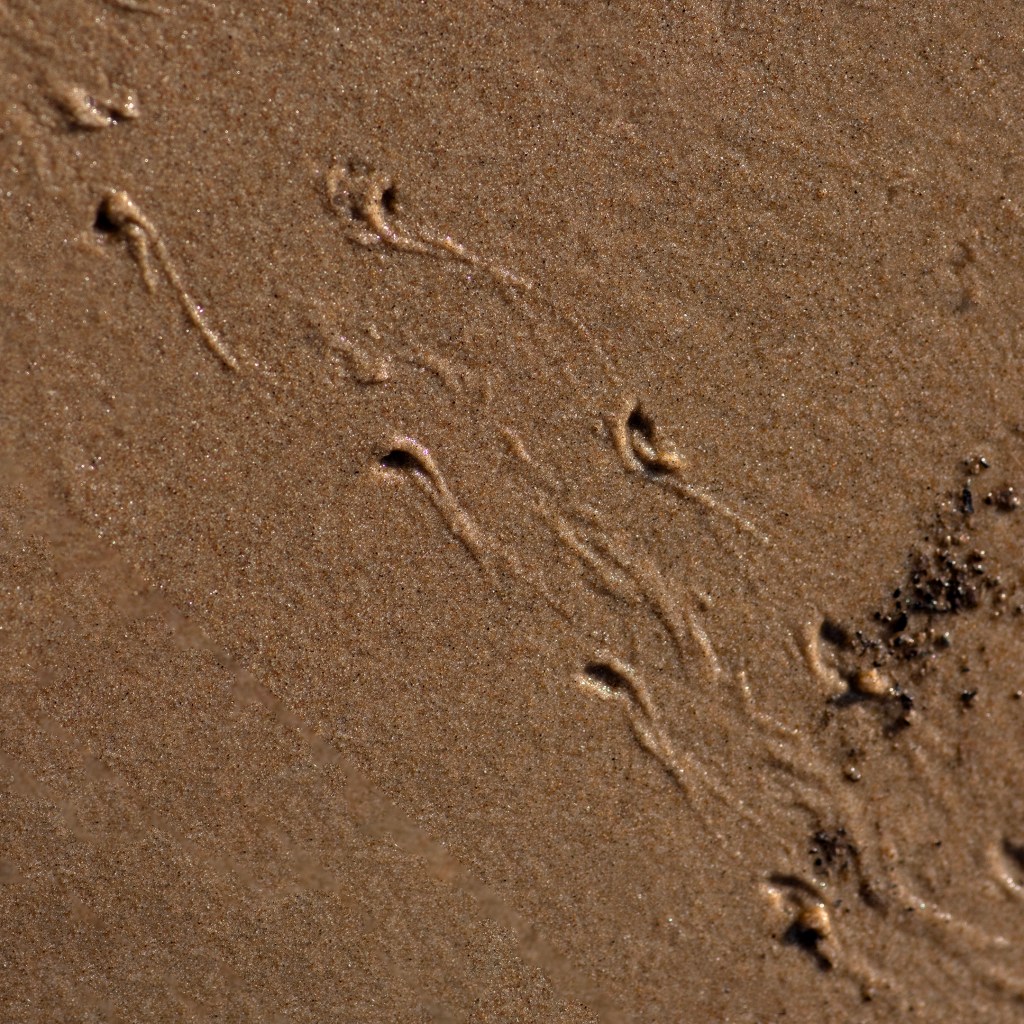
Here’s what’s fascinating. Carr and his students put the hatchlings in shallow water back in the lab so they can practice holding their breath, swimming and diving. But… they never experience sand until they are released on the beach. How, then, do they know all about burying themselves in it? Such are the wonders of nature!

Then there was “Pokey.” Pokey moved to his/her own drumbeat. Whereas most of the hatchlings were in the water and buried in the sand in less than a minute after release, not Pokey. According to the meta-data on my camera, from the moment Pokey was placed on the sand to the moment he/she dove toward the bottom was 8 minutes, 51 seconds!

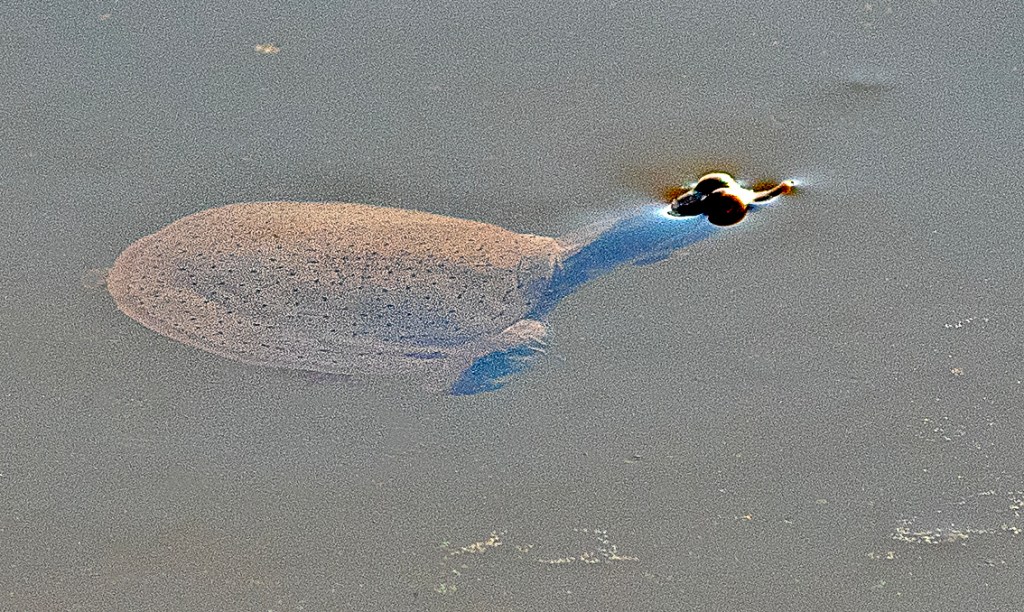
Yes, standing in the water near the bank of the Ouachita River cheering baby turtles charging down the bank and into their natural habitat is a great way to start the day.

BTW, although spiny softshell turtles (Apalone spinifera) are plentiful in Bayou DeSiard and most anywhere, smooth softshells occur naturally in our area only in the Ouachita River.

Special note: Just a few months ago, Southern Naturalist released a special issue titled “Biology and Conservation of Alligator Snapping Turtles (Machrochelys).” It was co-edited by John L. Carr (ULM), Ethan J. Kessler (University of Illinois), and Gerald R. Johnston (Santa Fe College). It is the single largest source of information on this uniquely southeastern USA group of turtles, which are the largest in North America and currently under consideration for listing as “Threatened” under the Endangered Species Act.
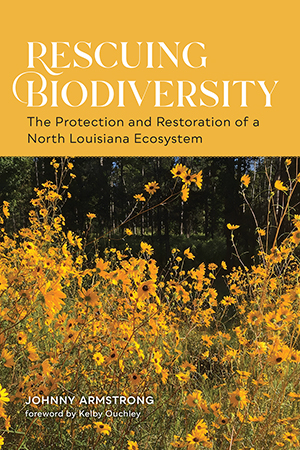
Rescuing Biodiversity

How many species of living thing exists on planet earth? The fact is, we don’t know. Scientists estimate 1 trillion, with only a fraction of them known to humankind. But what we do know is that extinction, in truth a natural phenomenon, is today happening at an unnatural accelerated rate. And we’re pretty much the cause.

Rescuring Biodiversity: The Protection and Restoration of a North Louisiana Ecosystem tells the story of one man’s efforts to make a difference in the conservation of biodiversity. Come hear Johnny Armstrong talk about his work this coming Sunday, Aug. 13, at 2 p.m. at the Union Parish Library, 202 W. Jackson St., Farmerville.

Armstrong, a pathologist by trade, set out to learn everything he could about restoration ecology in order to put it to work protecting and restoring his family property, Wafer Creek Ranch, near Ruston, LA.

In this part of the state, the shortleaf pin-oak-hickory woodland once dominated the landscape. Today, Wafer Creek Ranch is protected by The Nature Conservancy and recognized as the best existing example of this type of plant community. But that doesn’t mean Armstrong is finished!

Come hear about this ongoing saga and be inspired by Johnny Armstrong’s passion for conservation: Sunday, Aug. 13, 2pm, Union Parish Library, Farmerville.

BTW, I’m bringing my copy of the book to get it signed!

Photo at the top of the column: Shortleaf Pine (Pinus echinata)

First Ever!

The heat index was over 100 F, but we persisted. A hardy handful of Louisiana Master Naturalists-Northeast completed the first ever official North American Butterfly Association count at Black Bay Lake NWR Saturday, July 1.

Craig Marks came all the way from Lafayette to instruct us and lead the count. Craig is the author of the definitive guide to Louisiana butterflies* and a member of NABA. He leads counts across Louisiana and in Arkansas every summer.

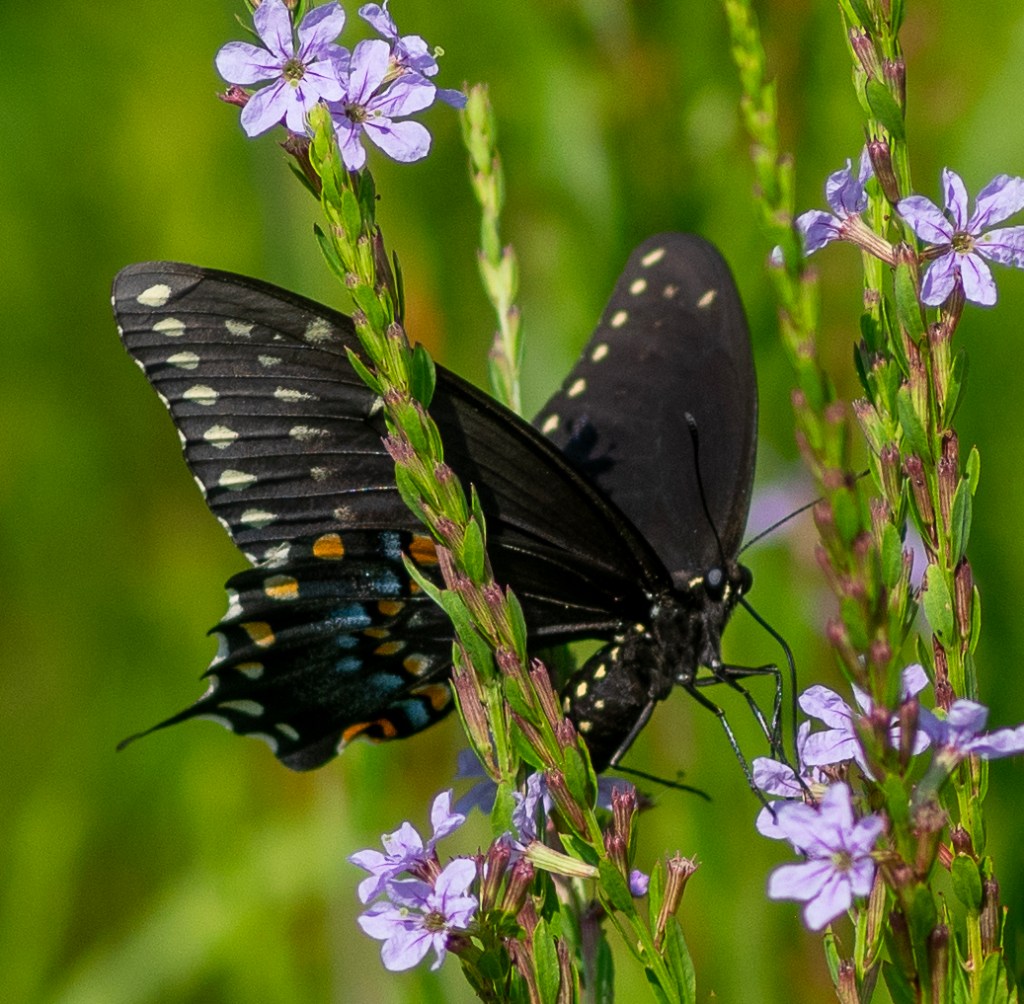
This beautiful female black swallowtail was counted while nectaring on loosestrife on the prairie in front of the BBL Visitor Center.

Royal Tyler, Shreveport, and Annette Parker, Opelousas, both experienced counters, also came to Monroe for the noteworthy occasion. We are grateful for the fun learning experience they helped provide.

Here’s the official results from the count, turned into NABA by Craig:

Species: Black Swallowtail 2, Eastern Tiger Swallowtail 4, Cloudless Sulphur 4, Little Yellow 1, Gulf Fritillary 1, Variegated Fritillary 5, Pearl Crescent 27, Question Mark 5, Red Admiral 11, Common Buckeye 4, Red-spotted Purple 3, Viceroy 9, Gemmed Satyr 8, Carolina Satyr 5, Monarch 2, Silver-spotted Skipper 1, Horace’s Duskywing 2, Least Skipper 1, Fiery Skipper 7. Unidentified: dark grass skipper 1. Total: 20 species, 103 individuals.

Field Notes: The day chosen was very hot and humid. Because of that heat and the lack of butterfly activity, the count was stopped at 2:30. Although the habitat looks proper for significantly more species than were actually counted, the high heat clearly was a major factor in the low numbers recorded. Our plan is to do the next count in mid-August and then in early June to hopefully better explore what species are present here.

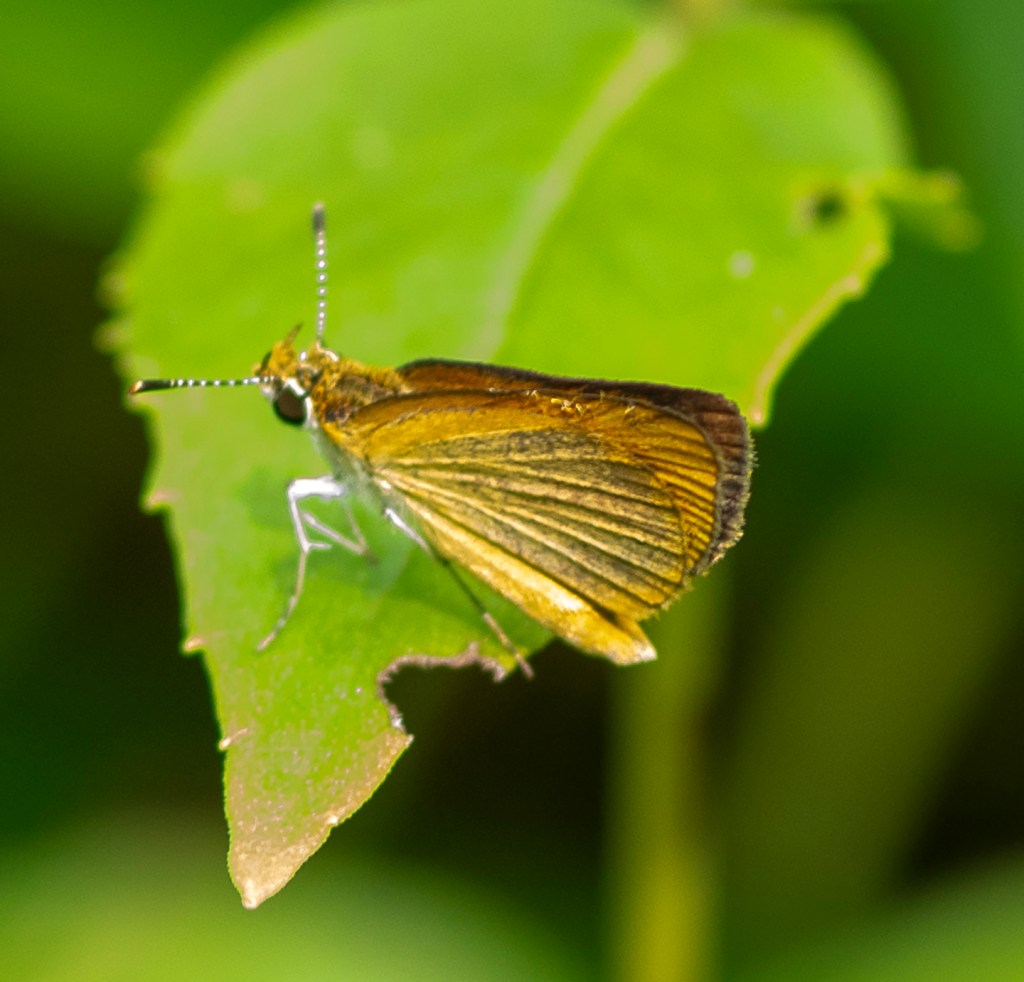
This tiny least skipper was a first for me, and the only one counted that day!

As you can see from Craig’s field notes, we plan to repeat this count at least two more times over the next two years, once in August and again in early June. The habitat at BBLNWR is right for a much higher numbers of species and individuals.

So keep your eye on this space! We’ll announce the next time here and we hope you will join us.

*Butterflies of Louisiana, by Craig Marks. Available from LSU Press and from Amazon.com.

Butterflies Saturday

So… most everyone knows about counting birds, but how about butterflies? Yes! And the butterfly counters are as dedicated at the bird counters.

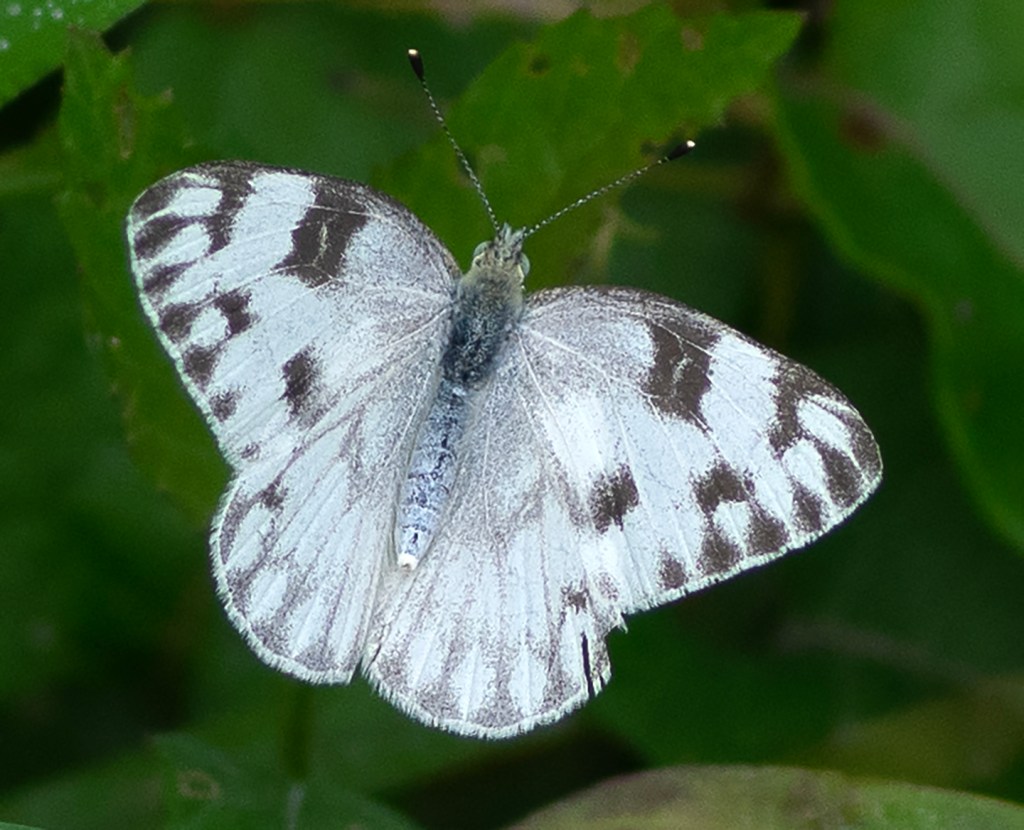
This is a “Checkered White” butterfly, new to me and photographed at an official NABA butterfly count at the Catahoula NWR just about a week ago.

Come Saturday to Black Bayou Lake NWR, 9 a.m., to learn about the North American Butterfly Association and its official butterfly counting system. Craig Marks, who authored the definitive field guide to butterflies in our part of the world, will be our expert instructor.

After an orientation in the Conservation Learning Center at BBL, we’ll get a taste of counting butterflies! Craig says if we identify more than 20 species of butterflies, we’ll turn it into an official NABA count. BTW, there is an expense involved in becoming an official NABA count, so if that happens, we will each chip in $3 to defray that expense.

After counting butterflies, we will gather back at the learning center to finalize the count and get our questions answered by Craig. He will also have a few copies of his book to sell, and if you already have it, I’m sure he’ll sign it for you.

Bring plenty of water. I’m sure it will be hot and butterflies mostly fly in the sun. All the usual outdoor gear you need for BBLNWR, including hat, highly recommended.

This event is the 2Q meeting of Louisiana Master Naturalists–Northeast. Our membership chair, Susan Hoover, distributed an invitation to this event that details the agenda for the day. The afternoon will end with our 2Q business meeting. Visitors are welcome to attend.

Saving the Alligator Snapper

“Biology and Conservation of Alligator Snapping Turtles (Macrochelys)” is out, published June 7 as Special Issue 12, Vol. 22 of Southeastern Naturalist. Our workshop leader and friend John L. Carr, Professor Emeritus at University of Louisiana Monroe, and two colleagues, Ethan J. Kessler of the University of Illinois and Gerald R. Johnston of Santa Fe College (Gainesville, FL), co-edited this collection of the latest science on alligator snappers.

“It is the single largest source of information on this uniquely southeastern U.S.A. group of turtles, which are the largest in North America and currently under consideration for listing as Threatened under the Endangered Species Act,” Carr said.

An alligator snapping turtle (Macrochelys temminckii) lurks in the leaf litter on the bottom of Black Bayou Lake near the boardwalk, it’s mouth open waiting for dinner to wander in. Night photo by Charles Paxton.

Two of the 28 articles in the Special Issue report research conducted at Black Bayou Lake National Wildlife Refuge near Monroe and a third covers the northeastern region of Louisiana. Alligator snappers also occur in Bayou Desiard, which runs through the ULM campus.

Carr and his co-editors note in the introduction to the volume that whether or not alligator snappers receive federal endangered species protection, they are already considered threatened and at risk for extinction in many states throughout their range.

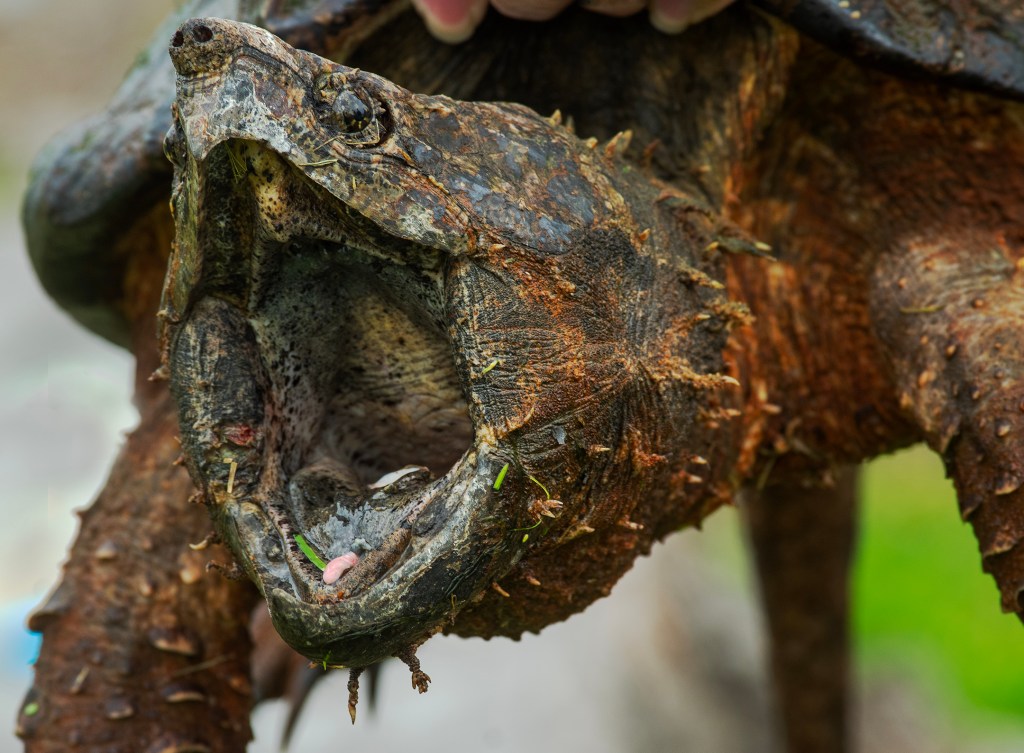
The interior of an alligator snapper’s mouth is dark, except for the pink, worm-like “lure” that entices prey within range of its powerful, sharp beak. Members of LMN-NE were privileged to get a good, close look at this gravid female, captured by Carr’s graduate students in Bayou Desiard and released back into the bayou after our 2021 herps workshop. Photo by Bette J. Kauffman.

“It is truly an impressive volume that should prove to be a valuable resource for all those interested in the natural history and conservation of these iconic turtles,” said Keith Goldfarb, Editor-in-Chief of Southeastern Naturalist.

Louisiana Master Naturalists – Northeast is proud to have supported this project financially. We are even more grateful that John Carr is quick to lead a herps certification workshop for us whenever we ask.