Plan for Poverty Point!

I finalized our 4th Quarter Meeting plans with Poverty Point just a couple of hours ago. It’s going to be a great day. Here’s the skinny:MeetingWe will be met by a Park Ranger who will give us some background on the site, answer our questions and lead us on a hike. Our own Roselie Overby will teach us a thing or two about birds and edible plants. She has helped Poverty Point in this role many times.

C48E31FB-1DD8-B71B-0BC3003A953EA288
Poverty Point World Heritage Site

We will begin our 4th Quarter Meeting no later than 4 p.m., and, although I try to keep meetings to a half hour, we do tend to run over a few minutes. We will end no later than 4:45 because the Park closes at 5 p.m. I want us to be well out of the way so staff can do what they need to do and get out on time.

I do realize that 1:30 p.m. is a bit early for those of us who have a ways to drive. I myself will have to hit the road immediately at the end of my Sunday morning obligations. If you absolutely cannot make it by 1:30, come as soon as you can. We’ll be there and most likely won’t begin our hike until 2 or 2:15 p.m.

We will meet outdoors under a pavilion if weather permits; if not, there’s an indoor space we can use. Please bring your own water, snacks and whatever else you need to spend a few hours outdoors, as you are accustomed to doing. Here’s hoping for glorious weather to explore this amazing site.

Closer to the time, I’ll post Kim Paxton’s t-shirt designs, and I just realized I have another idea I really want her to work on. For the moment, enjoy another shot from our fun ULM Biological Station BioBlitz a couple of Saturdays ago.

Orbweaver (Genus Verrucosa)
Orbweaver (Genus Verrucosa)     (photo by Bette J. Kauffman)


This Saturday….

Two events this Saturday you shouldn’t miss: The Friends of Black Bayou Fall Celebration and the Northeast Louisiana Arts Council Brew on the Bridge.

Fall Celebration happens at Black Bayou Lake NWR. There’s a 5K trail run at 9 a.m., but everything else begins at 10 a.m. And “everything else” includes a long list of fun stuff for the whole family.

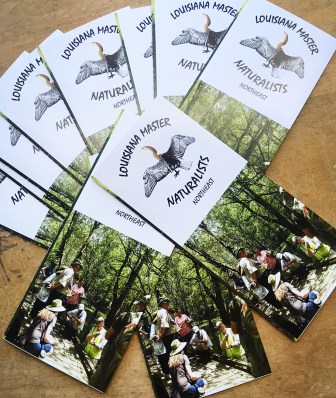
Louisiana Master Naturalists – Northeast will have a table in the Visitor Center alongside Ouachita Green, so stop by and say “Hi!” And if you see Charles and Kim Paxton–as you most likely will–be sure to thank them for this beautiful new brochure we have to hand out!

In addition to the Paxtons, Roselie Overby, Suzanne Laird and David Hoover will help staff our table, and Stuart Hodnett will be nearby at the Ouachita Green table.

Brochures
Our new brochure featuring a terrific photograph from our herps workshop.

Fall Festival happens every year the Saturday of National Wildlife Refuge Week.

Brew on the Bridge runs 11 a.m. to 2 p.m. Saturday. It’s an event of the Northeast Louisiana Arts Councils North Delta Food & Wine Festival and features dozens of craft beers to taste for just $10.

The Endom Bridge across the Ouachita River, from Cotton on the Monroe side to Trapp’s on the West Monroe side, will close early in the morning so that artist, artisan, food and beer vendors can set up booths, tables and the like all along the bridge.

Four Puzzles
Limited Edition puzzles made from Bette J. Kauffman photographs.

I will be there this year as a vendor with framed and unframed prints (some Limited Edition, some not), artist note cards and something new: Limited Edition puzzles! If you don’t spend your entire day at Fall Celebration, I hope you’ll stop by Brew on the Bridge.

BTW, I will also be handing out our new LMN-NE flyers at Brew on the Bridge! Sure do hate to miss Fall Celebration, and please know I have wailed long enough and loud enough that an Arts Council Board member has promised me that these two events will NOT conflict next year.

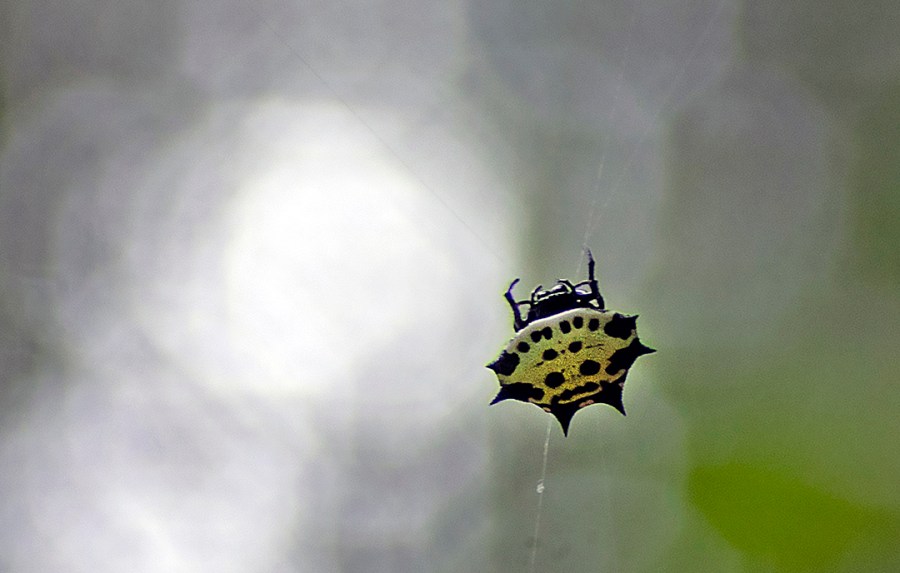
And just for the fun of it, because I need a good header photo, here’s one from last Saturday’s BioBlitz, which was a blast.

Spinybacked Orbweaver (Gasteracantha cancriformis)
Spinybacked Orbweaver (Gasteracantha cancriformis)     (photo by Bette J. Kauffman)

BioBlitz Set!

I just received word from Dr. Joydeep Bhattacharjee that the BioBlitz flooded out last spring has been rescheduled Saturday, Oct. 6! Here’s hoping some Master Naturalists will be able to participate.

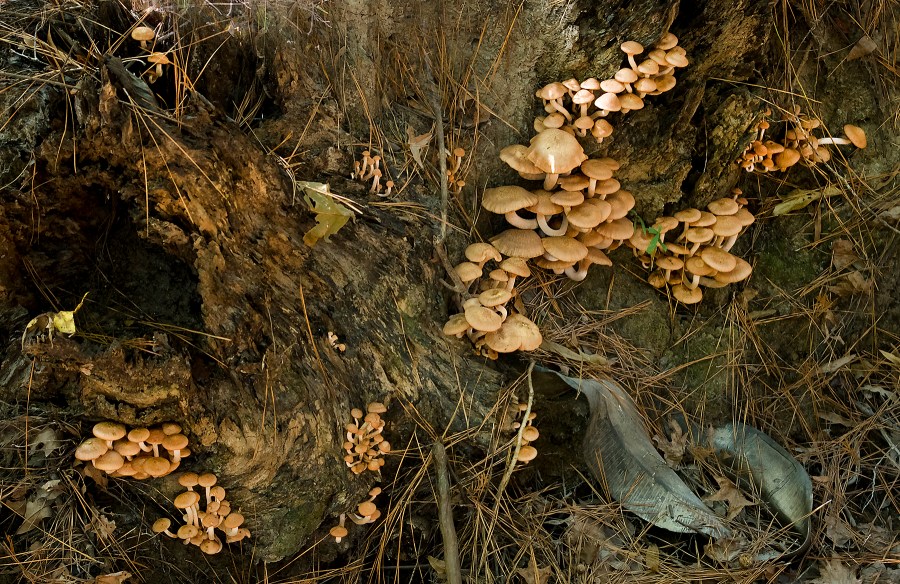
IMGP9609 72-25
An awesome colony of fungi from the 2016 BioBlitz, but I still haven’t identified them!     (photo by Bette J. Kauffman)

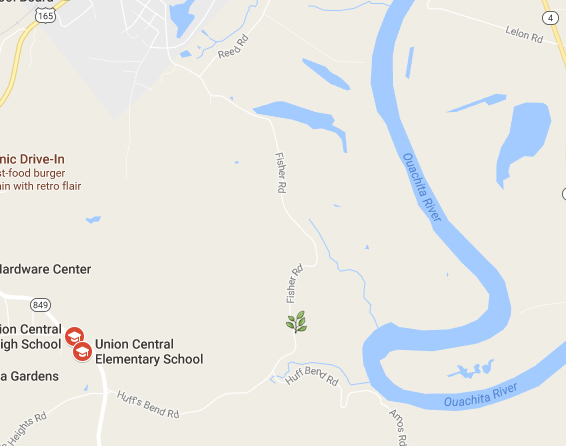
The ULM Biological Station, Charles Allen Nature Trail is near Columbia, La. It is a wonderfully diverse habitat ranging from a low-lying cattail pond along the east side bordered by Fischer Road, to high bluffs overlooking the Ouachita River, and down again to very low ground next to the river.

Google Map
The green twig on this map marks the entrance to the ULM Biological Station, which is the area between Fischer Rd on the west, the river on the east, and bayous to the north and to the south. Fischer Road can be accessed from the southeast corner of Columbia or from Hwy 849 and Huff’s Bend Road.

Several ULM faculty members will participate in the BioBlitz. Details are not yet set, but typically hikes begin about 7 a.m. Graduate students will go down the night before to set live traps in the pond.

Birds, trees, herbeceous plants, reptiles, aquatic life and more will be on the agenda. I will be looking for the crane fly orchid locations I marked a couple of years ago! Of course, the orchids are past blooming, but I might be able to locate the sites that still have spent flower stalks.

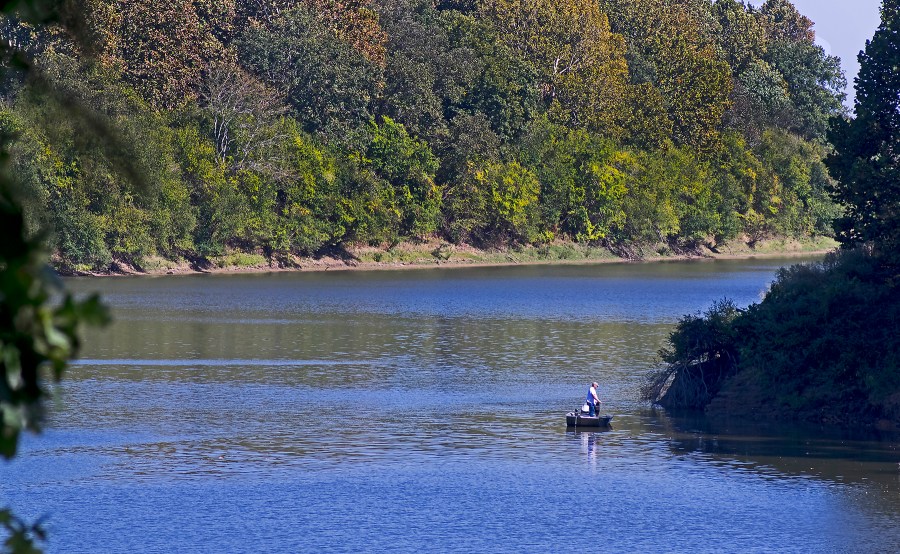
IMGP9566_1 72-25
Getting to the top of the bluff is well worth the effort!     (photo by Bette J. Kauffman)

This will be a great opportunity for a family-fun outing, so bring kids and grandkids who are old enough to do a little hiking. This 100-acre site is a great place to introduce them to the great outdoors, as the trails are wide and relatively easy to walk. Some are a bit steep but not rocky, and you can stay on gentle grades all day if you prefer.

This will be a great opportunity to practice what we’ve been learning in our certification workshops. Not only will we contribute our observations to a BioBlitz Species list, but we can generate one for our group’s observations, and we can add them to the iNaturalist project I started for this location some time ago.

Wading In to Watershed Dynamics

report & photos by Charles Paxton

As the dominant terrestrial species on this planet we naturally have a rather grounded perspective on our environment. We named our home “Earth” despite the fact that about 70% of its surface is covered with water.

Patterson & map
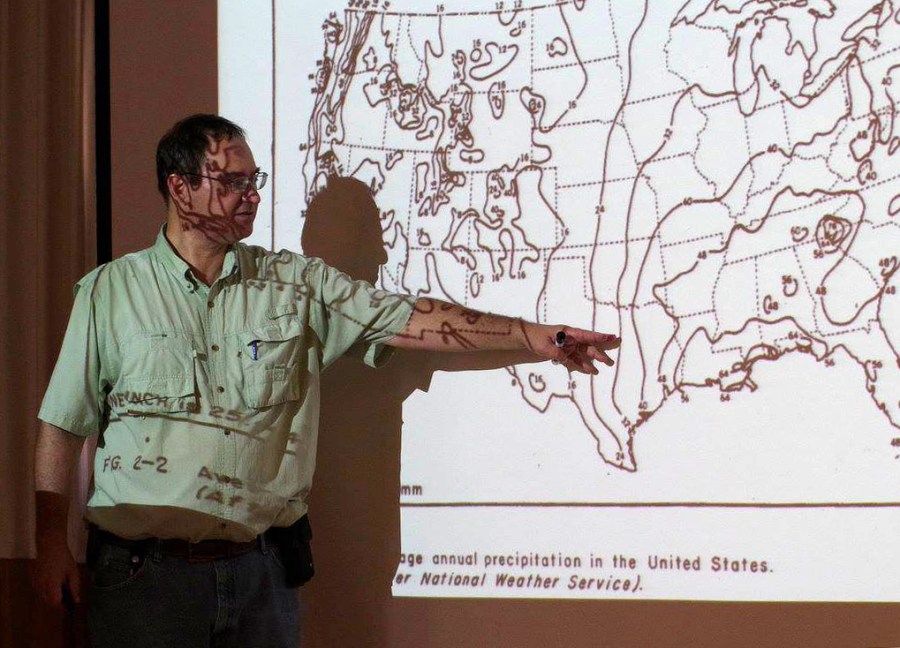
Prof. Bill Patterson of LaTech talks about how climate change is causing arid conditions to creep eastward across Texas.

Saturday, Sept. 25, 12 members of  Louisiana Master Naturalists – Northeast learned more about the crucial relationship between earth and water in a workshop on Watershed Dynamics delivered by Dr. Bill Patterson, Associate Professor of Forest Soils and Watershed Management at Louisiana Tech University.

We gathered at Louisiana Tech University’s Reese Hall, where we met Prof. Patterson unloading boxes of scientific equipment from a sleek minibus and accompanied him to a classroom for an illustrated presentation and discussion.

Redwine checkpoint 1
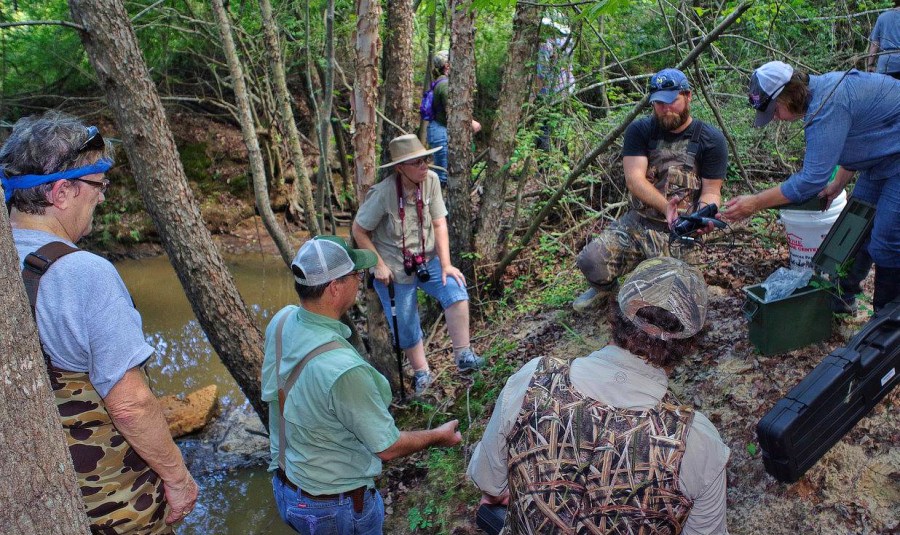
The lecture and discussion continue on the banks of Redwine Creek in Grambling.

He began with a basic introduction to the concept of a watershed, defining the term as any area of land that drains water into lakes and rivers. Watersheds are crucial sources of clean freshwater.

We learned how relatively scarce and precious, clean, fresh, liquid water is on planet Earth. Less than 2.5% of our water is fresh (that is, not saltwater), and of the 2.5%, 68.7% is locked up in glaciers and pack ice. Very little of the remaining surface water is clean enough to be potable.

Laird & crawfish
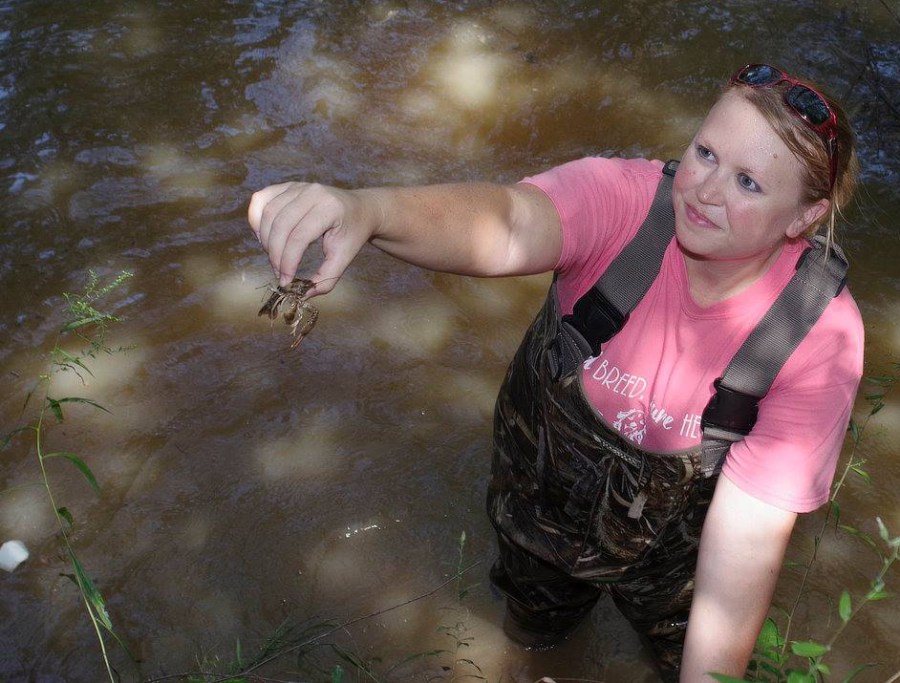
Procambarus clarkii for our species list, captured and released by Suzanne Laird.

Here in northern Louisiana we are blessed with, and dependent upon, the Sparta Aquifer — a pressurized body of fresh groundwater which overlays ‘fossil’ saltwater from our marine pre-history.

The forest soil to the northwest of the twin cities in Webster, Bienville and Winn Parishes, with its natural mixture of invertebrates, bacteria, and fungi underlain by porous sandy soil, makes an excellent watershed to feed the Sparta aquifer. Two thirds of our drinking water is organically filtered through forest.


Searching for Life
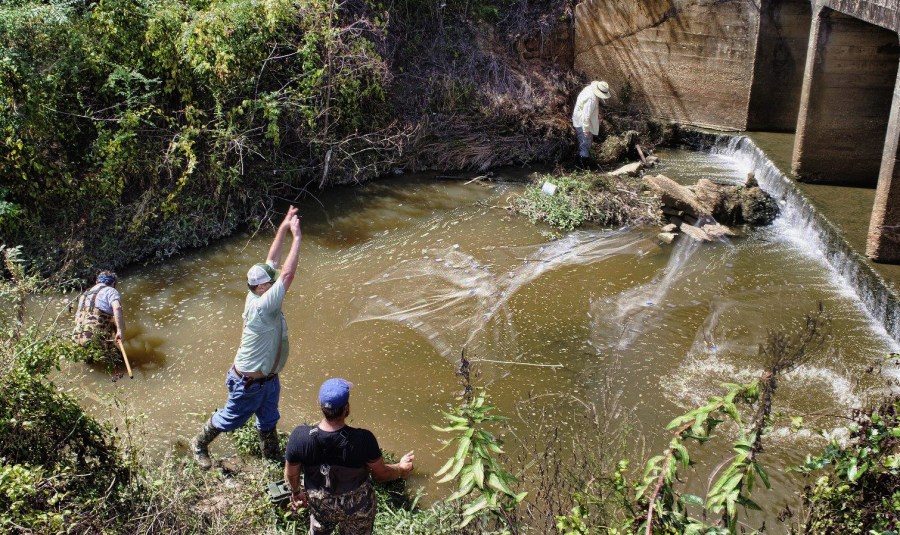
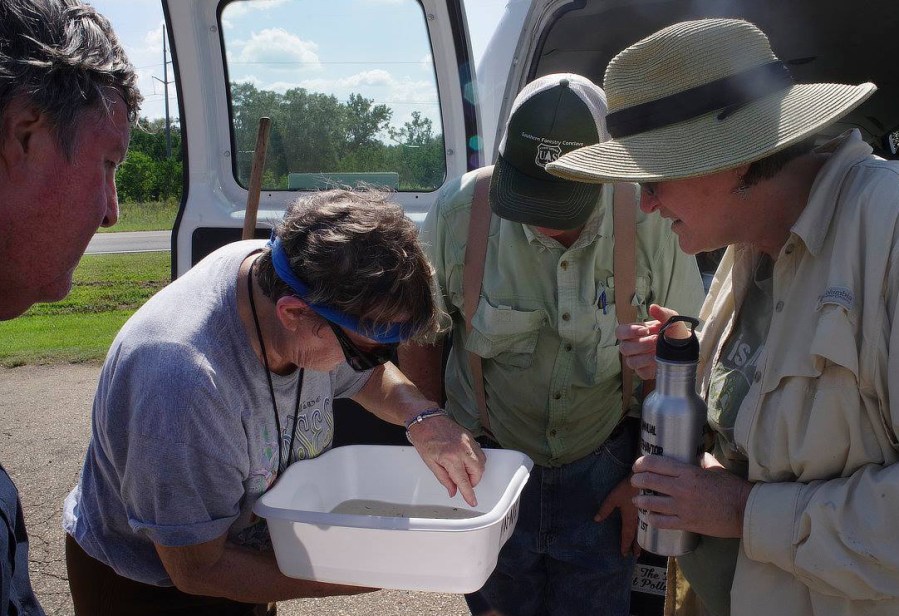
Searching for life at Redwine Creek checkpoint 2. Prof. Patterson has just thrown a cast net.

Nevertheless, the Sparta Aquifer is stressed. Fifteen to twenty years ago, industrial and commercial activities in the twin cities used more water than domestic households, but now domestic use exceeds industrial use. Overall, we are drawing upon the Sparta at an unsustainable rate; the level is dropping two feet per year.

Kauffman et al
Bette Kauffman shows dragonfly and damselfly naiads she collected from under foliage in the water at Redwine Creek checkpoint 2. Prof. Patterson, Terri Maness and Jeff Barnhill look on.

After soaking up information for two hours, we loaded gear and ourselves into the minibus and headed for Redwine Creek in Grambling. There we waded in, testing water quality and searching for marine life at two checkpoints, one above and one below the water treatment plant.

Some had waterproof chest waders. Others just got soaked when their waders leaked! All in all, it was another glorious certification workshop adventure.