Please mark the following dates in your calendars!
The schedule will be updated to include details – timings/places etc. when known. External events More workshops will be added later. Any questions or issues, please contact us.
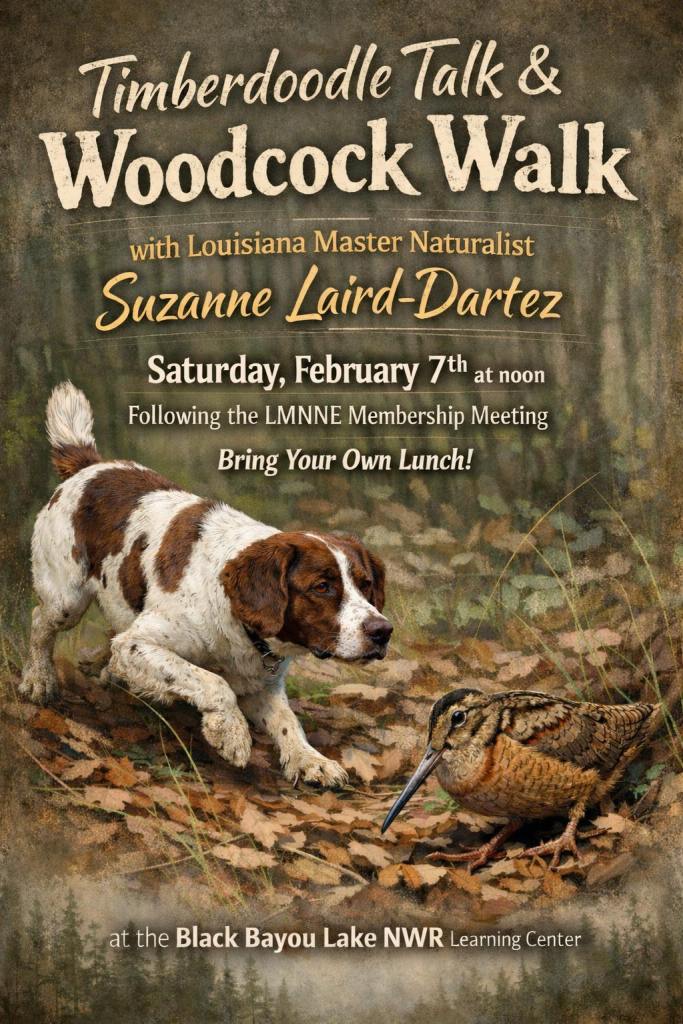
February 7th, 1st Qtr Membership/BoD In-person Meeting Woodcocks Talk & Walk with Suzanne Laird Dartez and Quill.
Suzanne with Quill (and special permit) at Black Bayou Lake NWR, Monroe.
March 28th, Mammals Workshop led by Dr. Ana Couvillon of ULM Biology
March 29th BoD Meeting
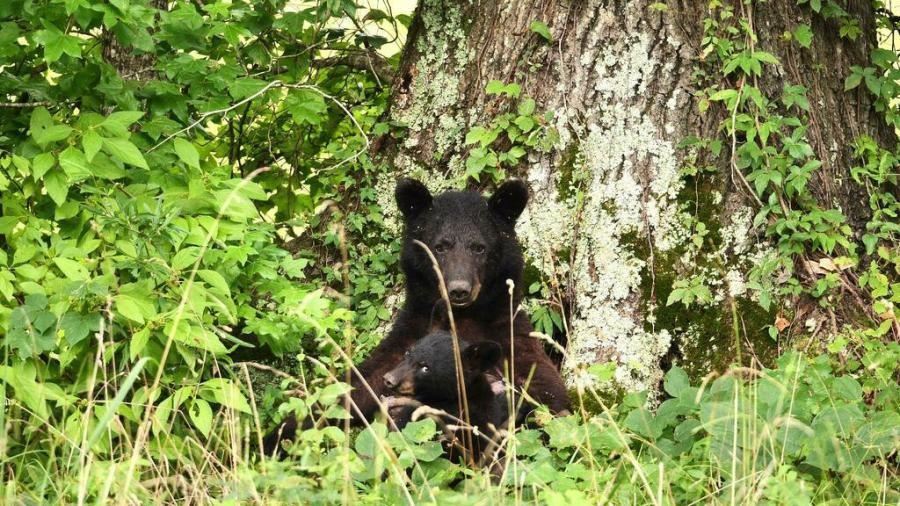
A detailed view of a Louisiana Black Bear skull reveals much about its lifestyle! Learn about Louisiana’s Mammals upcoming Mammals Workshop March 28th!
April 19th: Litter Pick & BoD Meeting at BBLNWR
2nd Qtr/BoD Meeting on May 23rd Focus on Foxes! Gray Fox presentation by Catrina Wiener (ULM Biology Post-grad)
Captivating gaze of a Gray Fox! There’s so much to learn about these mysterious and elusive creatures!
May 30th Watershed Dynamics & Flooding Workshop led by Dr. Bill Patterson of LA Tech
Dr. Bill Patterson discusses the Louisiana Sparta Aquifer during an LMN-NE Watershed Dynamics workshop presentation.
June 28th BoD Meeting
July 19th BoD Meeting
August 16th BoD Meeting
September 20th BoD Meeting
October 18th BoD Meeting
November 15th BoD Meeting
December 13th 4th Qtr Membership/BoD Meeting LMN-NE Christmas Party.
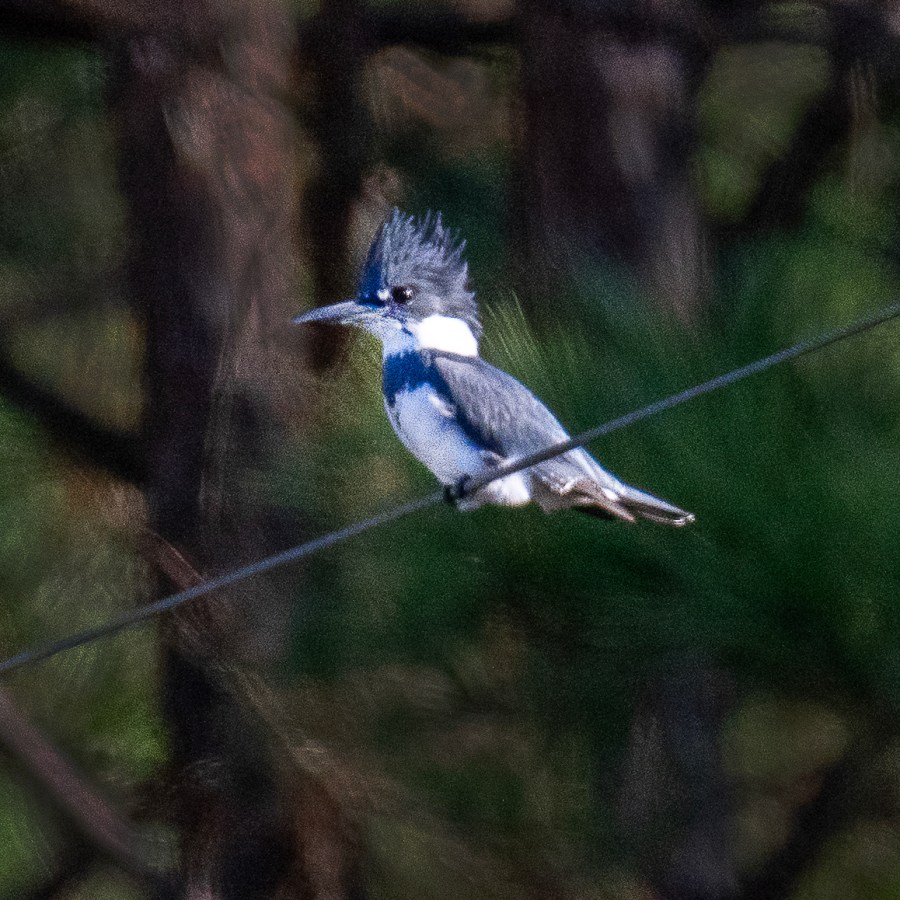
is always a good day. And we saw a Belted Kingfisher (Megacerylealcyon), a male perched on a wire over a pond. As one of my counting companions noted, seeing a Kingfisher always makes it a good day!
Belted Kingfisher (Megaceryle alcyon)
Saturday, December 20, was the Audubon Christmas Bird Count at D’Arbonne NWR. My counting partner and the expert of our team was Certified Naturalist Roselie Overby, who astounds me with her ability to identify birds by their call.
She was already standing in the parking lot listening and jotting down bird names when I pulled in a few minutes late. Day was still dawning and itwas cold. By early afternoon after a short lunch break, we were shedding the layers we had needed that morning.
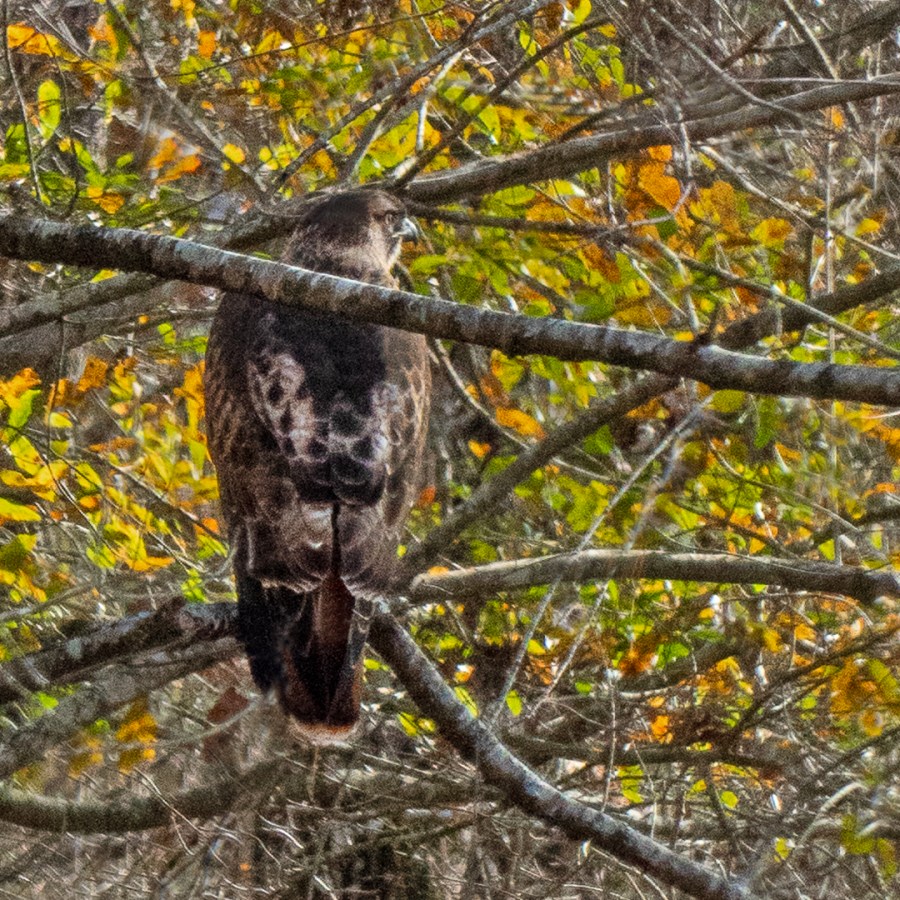
The Red-tailed Hawk (Buteo jamaicensis) was a second highlight of the day. We spotted it in a small wooded area between houses and it did not immediately fly away when we pulled to the side of the road. It seemed to be interested in something on the ground we could not see. But it sure knew how to make life hard for the photographer! Finally, it turned its head just right for one decent click.
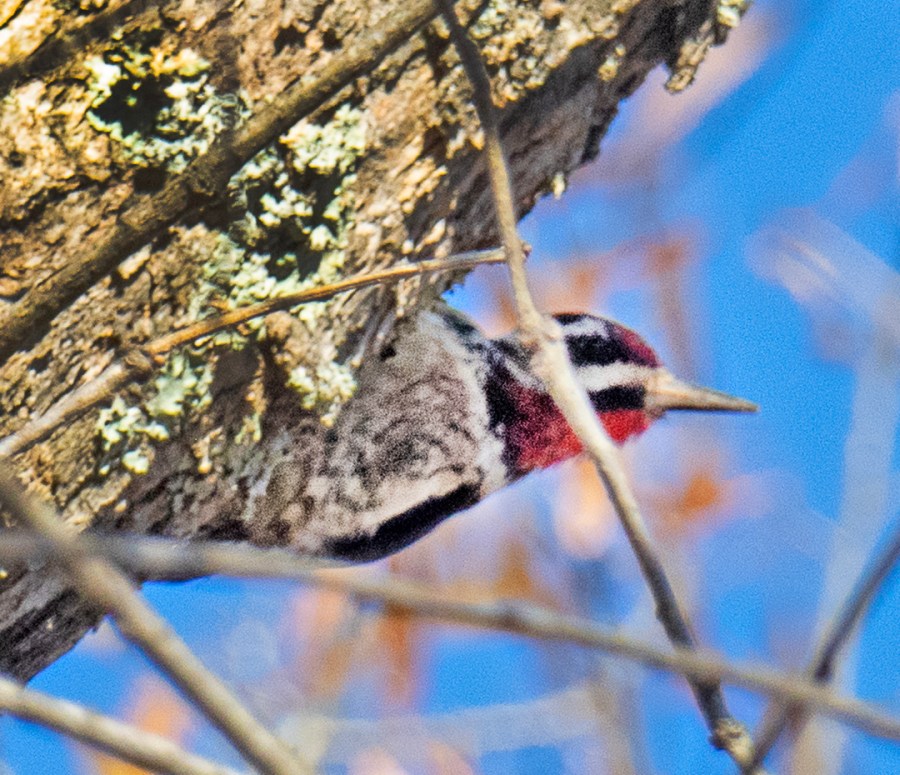
Likewise, the Yellow-bellied Sapsucker (Sphyrapicus varius) knew just exactly how to foil the photographer by staying behind a branch. But it too turned its head just right for a split second!
Overall, it was a glorious day to be out birding, but results were mixed. Roselie and I counted 35 species. Not bad, but not particularly good either. We’ve had as many as 40 previous years.
More noticeably, the numbers of individual birds were down. For example, we saw exactly 3 Dark-eye Juncos (Junco hyemalis), a typically plentiful bird. Roselie counted a few White-throated Sparrows (Zonotrichia albicollis) she heard but did not see, but we neither saw nor heard any of the several other species we expected to see.
At the end of the day, we joined another 5 or 6 teams of counters at Heartwood Natural Area to “call the count.” The tentative total number of species was 91, and that’s a pretty good number. The bird of the day was a Broad-winged Hawk (Buteo platypterus), a new species for this count. Yay!
In spite of the good number of species, all of the teams reported numbers of individual birds to be down. One count does not a trend make, of course. But it certainly is in keeping with national and global trends, and cause for concern. Most humans profess to love birds. We must match our love with decisive conservation action.
🌿 Discover the Rhythms of Nature: A Day of Phenology
Saturday, October 18 | 9:00 a.m. – 3:00 p.m. 📍 West Monroe Branch Library & Trails at Black Bayou Lake
Have you ever noticed how the first blooms of spring or the turning of autumn leaves seem to follow a rhythm? That’s phenology—the study of nature’s cycles—and we’re inviting you to spend a day exploring it with us!
📚 Morning Session: Learning Together
9:00 a.m. | West Monroe Branch Library 315 Cypress Street, West Monroe, LA 71291
We’ll kick off the day at the library with an introduction to phenology, led by Dr. Joydeep Bhattacharjee, Professor of Biology. You’ll also get hands-on guidance with the Nature’s Notebook app, a powerful tool for recording seasonal changes in plants and wildlife.
🚗 Midday: Caravan & Lunch
11:30 a.m. We’ll travel together to our field site at Black Bayou Lake. Pack your own lunch and enjoy it on the way or once we arrive.
🌳 Afternoon: Field Work & Observations
12:30 p.m. | Black Bayou LakeNational Wildlife Refuge
Now it’s time to put our learning into practice! We’ll head outdoors for guided fieldwork and observations, exploring the seasonal patterns of the plants and animals around us.
🕒 Wrap-Up
3:00 p.m. We’ll conclude our day of discovery and reflection.
🌞 A Few Notes Before You Come
Facilities: Please note that the Black Bayou Lake National Wildlife Refuge visitor center and conservation learning center are currently closed due to the government shutdown. Plan ahead for restroom and water needs.
Weather: The forecast looks great—mostly sunny with a high near 88°F and no rain expected.
What to Bring: Your own lunch, plenty of water, and anything else you’ll need to stay comfortable outdoors. Cameras encouraged!
📩 Questions?
Reach out to David Hoover at: 📧 dhoover7969@sbcglobal.net 📞 318-605-2548
This is a wonderful opportunity to connect with nature, learn from an expert, and contribute to citizen science. We hope you’ll join us for a day of curiosity, community, and discovery! 🌎✨
🌊 Update on the Watershed Dynamics & Flooding Workshop
We were so excited to bring you a day of learning and exploration on Saturday, September 27, diving into the fascinating world of watersheds, flooding, and stream ecology. Unfortunately, due to low registration numbers, we’ve made the difficult decision to cancel this event.
Workshops like this thrive on participation and shared curiosity, and while we won’t be gathering this time, we’re grateful for the interest and support we’ve received. Dr. Bill Patterson and our team remain committed to creating opportunities for hands-on learning about water, land, and the environment—and we hope to see you at a future program.
💡 What’s next? We’re already brainstorming new ways to bring watershed science to life for our community. Keep an eye out for upcoming events, field days, and workshops where you’ll have the chance to explore, ask questions, and connect with others who share your curiosity about the natural world.
Thank you for your understanding, and for being part of our learning community. Even though we won’t be wading into Shepherd Creek this weekend, the conversation about water, land use, and resilience continues—and we’d love for you to be part of it.
— David Hoover, President, Lousiana Master Naturalists Northeast