Blog

Wings, Wings, More Wings

For the first time ever, I spent two and a half days out with my camera last week and took virtually NO plant photos! Instead, it was wings, wings and more wings. And, of course, I have a new obsession….
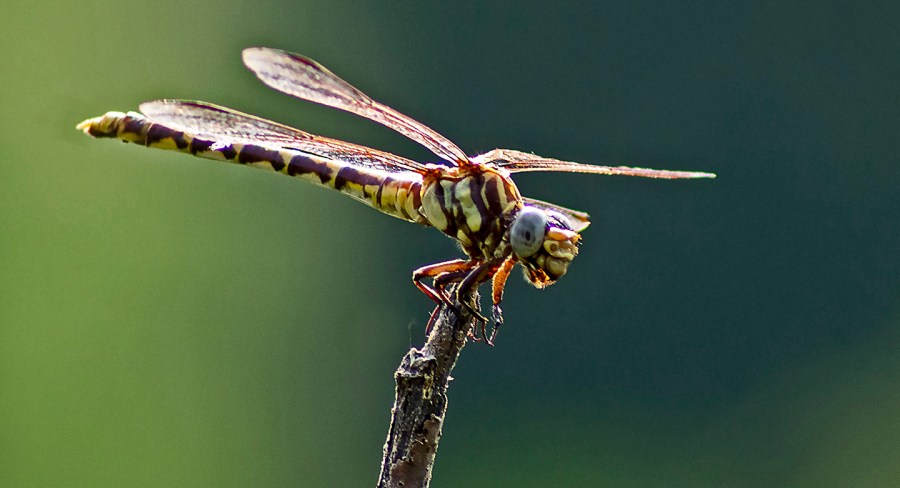
Common Sanddragon (Progomphus obscurus) (female)
Common Sanddragon (Progomphus obscurus) (female)     (photo by Bette J. Kauffman)

I arrived at Allen Acres a few miles south of Cravens, La., last Thursday afternoon at about 4 p.m. At 5 p.m., I started the dragonfly count with my first hour and a half to two-hour walk in the natural areas and gardens that surround the Bed & Breakfast and the Allen home.

On that very first circuit of the property, I focused totally on dragonflies. Thereafter, I found myself unable to resist the butterflies and other winged critters, and began to photograph whatever perched near me, without losing my focus on dragonflies. These other winged critters included numerous robber flies, a few bees and wasps, and, of course, the plentiful butterflies.
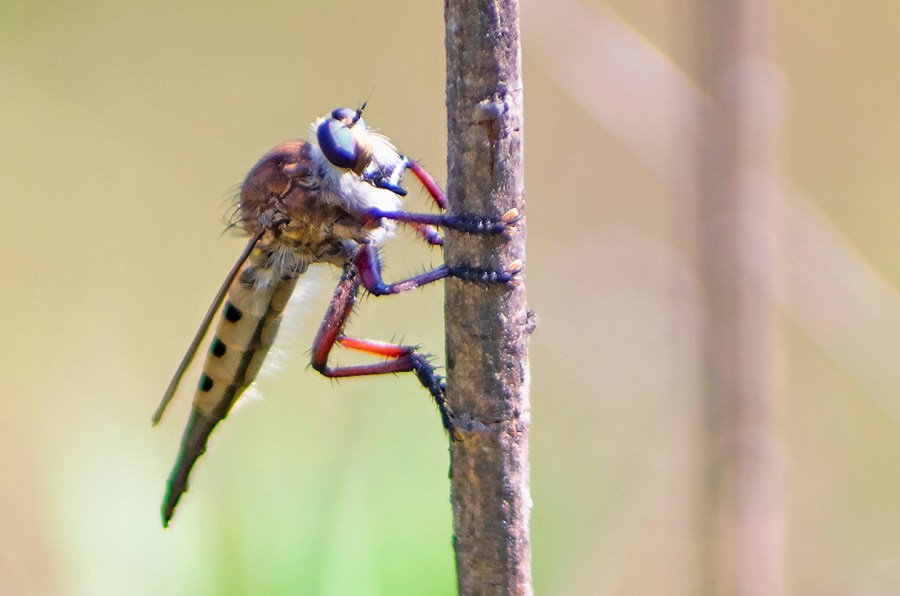
Indiana Robber Fly (Promachus hinei) (female
Indiana Robber Fly (Promachus hinei) (female)     (photo by Bette J. Kauffman)

If I saw a dragonfly while out with Dr. Allen checking his moth sheets or just walking between the house and B&B, I made note of them as well. The results are gratifying! I documented nine species of dragonfly, both male and female of six of the species. Several of the species had not been observed at Allen Acres before. A few were new to me, too, like the Common Sanddragon above.

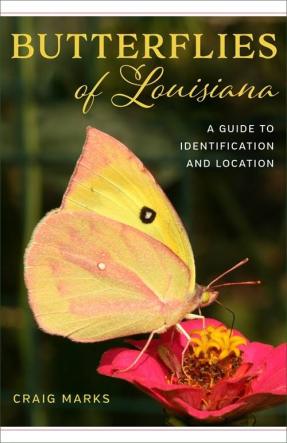
Saturday I was joined at Allen Acres by a lot of folks there to help with a butterfly count lead by Craig Marks, who has just published a wonderful guide, “Butterflies of Louisiana.” Of course, I continued to count dragonflies as well.

I spoke with Craig about coming to Northeast Louisiana to do a butterfly count with Master Naturalists and he is eager to come. We just have to come up with a good place to do it! So be thinking about that and we’ll talk about it at our 3rd Quarter meeting, now on the events calendar. More on that later!

I’m still processing photos, but if you want to see more dragonflies, plus the many other critters I documented, go to iNaturalist and search for Allen Acres BioBlitz 2018. More to come!
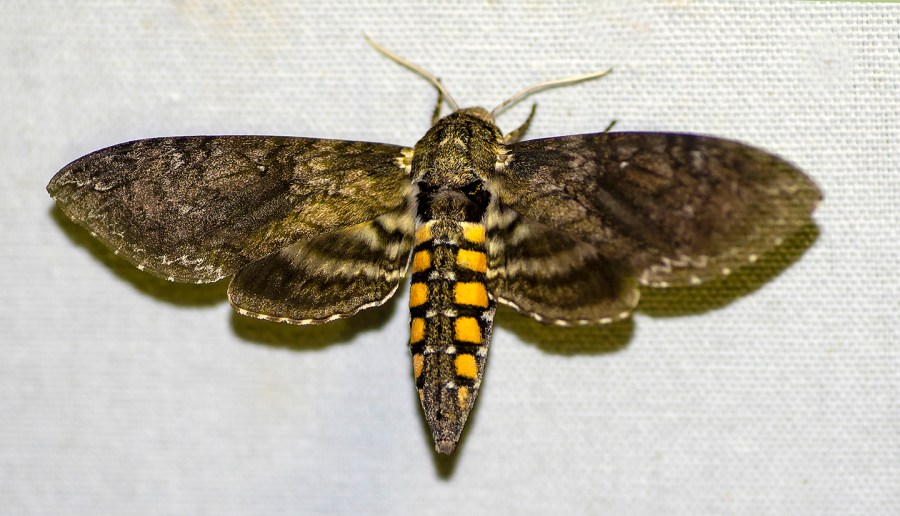
Carolina Sphinx (Manduca sexta)
Carolina Sphinx (Manduca sexta)     (photo by Bette J. Kauffman)

BioBlitz at Allen Acres

This is National Moth Week and for the third or fourth year running–can’t remember for sure–Charles Allen is running a week-long BioBlitz at Allen Acres, located a few miles south of Cravens, La. on Hwy 399.

The week’s events started last Saturday with a fungi inventory lead by experts David and Pat Lewis. It’s been a bit dry, but as Charles says, the Lewises could “find mushrooms in a desert.”

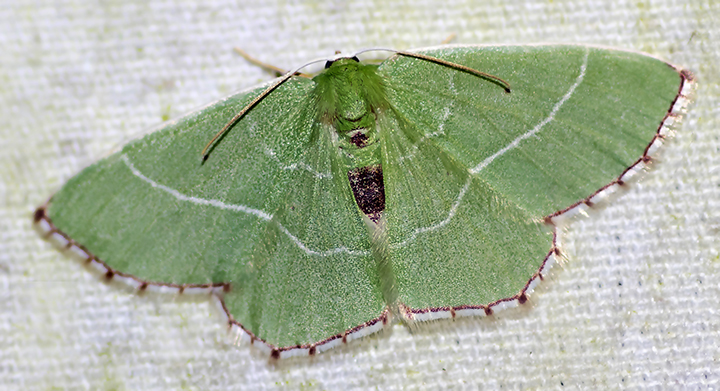
Red-patched Emerald (Nemoria saturiba)
Red-patched Emerald (Nemoria saturiba) on sheet at Allen Acres     (photo by Bette J. Kauffman)

Of course, the week long event really began at 5:30 a.m. last Saturday when Charles checked his numerous mothing sheets to see what the night had brought. Last I heard, Charles had identified over 700 species of moths at Allen Acres, faithfully checking his sheets most evenings and early mornings.

images

This coming Saturday, Craig Marks will conduct a butterfly count, first at Allen Acres, then at a couple sites in the Kisatchie National Forest. Craig does this every year and can use lots of help. I will take my copy of his new book along to get signed.

I am heading to Allen Acres Thursday and will be there through Saturday late afternoon. In addition to mothing, plant identifying and helping count butterflies, I will count dragonflies and damsel flies, recording species and numbers to the best of my limited ability, until I leave some time late Saturday afternoon.

Yes, it’s hot. So we will take plenty of breaks indoors, keep hydrated, and have a blast, I’m sure!

BTW, Allen Acres includes a lovely B&B at a reasonable price and Susan Allen’s meals are beyond delicious. Lunch and dinner are just $10 a pop. And if you prefer, you can camp on the grounds for a very modest price. Check it out here.

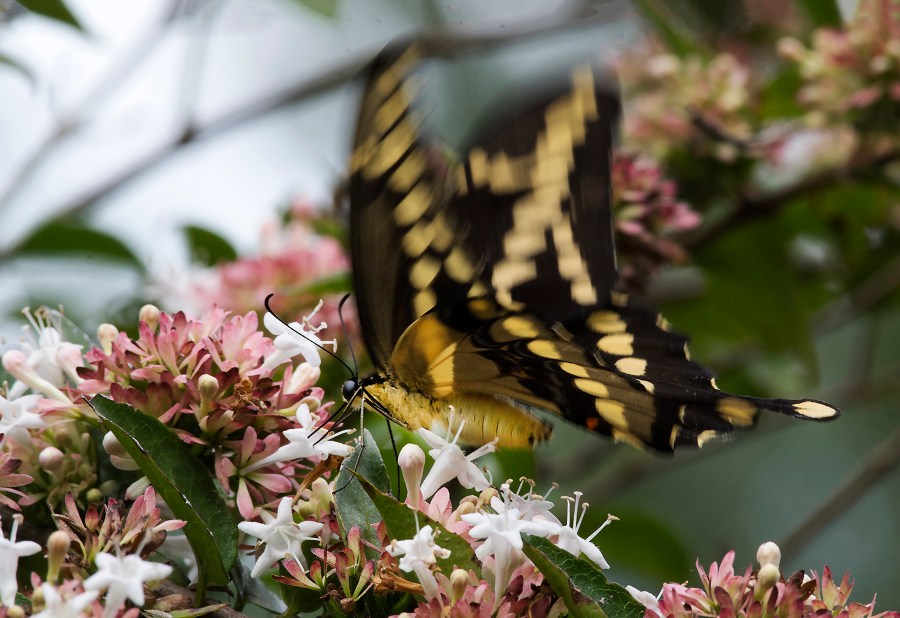
Giant Swallowtail (Papilio cresphontes)
Giant Swallowtail (Papilio cresphontes) at Allen Acres     (photo by Bette J. Kauffman)

Ecosystems & Restoration Ecology

Coming up! Our next certification workshop is scheduled August 4. Dr. Joydeep Bhattacharjee of the ULM Biology program is our workshop leader.

Perhaps you recall from earlier communiques that Dr. Joydeep is on a research trip in the Himalayas this summer. He will return the middle of next week, just a few days before our workshop.

The consequence of this timing is that I have not been able to speak with him to resolve the details of our workshop. Nevertheless, I have emailed him a proposed agenda, in the hope that he has access to email and will take a minute to respond.

In the meantime, here is what I have PROPOSED:

  • Meet at Kiroli Park in West Monroe at 8 a.m. for intro and walking a couple Park trails.
  • Reconvene mid-morning at Ouachita Valley Library on McMillan Rd., WM, for classroom work.
  • Reconvene at 12 noon at Restoration Park, 700 Downing Pines Rd, WM, for lunch in pavilion at entrance and additional field work.

Please bear in mind that this is a DRAFT awaiting Dr. Joydeep’s approval. I have not finalized an agenda for the day for that reason. As soon as I am able to do that, I will distribute it to workshop enrollees via email.

And, of course, if you haven’t enrolled and plan to do so, now is the time. Go to the Certification tab at the top of this website and you will find instructions and links.

IMGP1657 72-25
A white-tailed deer crosses the wetland of Restoration Park.      (photo by Bette J. Kauffman)

Look carefully at the photo above and you will see that the deer is not quite in sharp focus. Nevertheless, it is my favorite of all the photos I have taken at Restoration Park. Remind me to tell you the story sometime!

Odds & Ends

The month of July is going to be a bit of a blur. I will be out of town several times for a few days each, plus other aspects of my life are being particularly demanding right now. So this post consists of a few things you might need to know, the first of which is, you won’t be hearing much from me for the next few weeks!

Certification: Prof. Gerry Click is a geologist at LaTech and is excited to do a workshop for us. No details yet, but it will be scheduled in the fall after school resumes.

The PayPal link for the August 4 Ecosystems & Restoration Ecology workshop with Dr. Joydeep Bhattacharjee is ready. Click on the Certification tab at the top of the page. Dr. Joydeep is out of the country right now, so I can’t give details on that one yet either, but go ahead and get registered.

The species list for our Aquatic Life workshop is in process, but this is an especially hard one! Roselie has provided a list of birds she saw and heard while we are out on the lake. I know a few of the things we saw with the microscopes, but not nearly all.

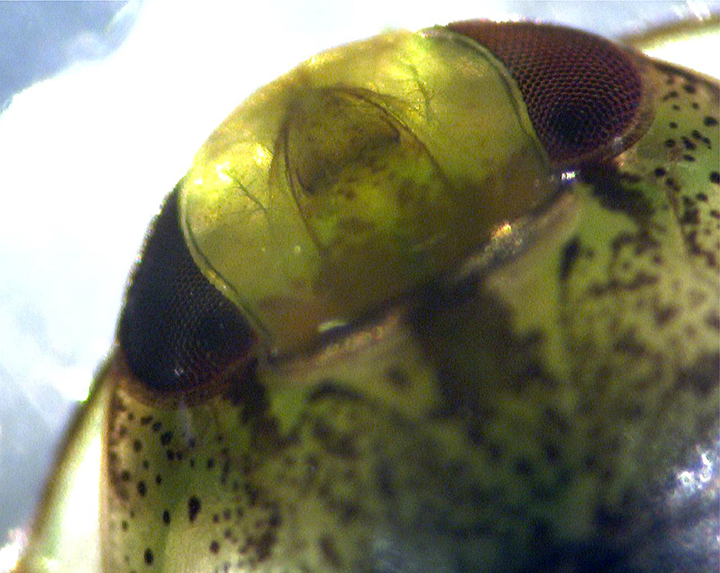
red-eyed beetle 72-10

For example, the above really cool-looking red-eyed beetle: What is it called? Those who participated, please go through your notes and send me a list of what you were able to identify–even if it was not a very specific identification.

3rd Quarter Meeting: I have not had time to work on this much yet. It might have to be in August rather than July, since July has turned into a whirlwind for me.

T-shirt: I really, really hope someone will step up to the plate and take on the t-shirt project. We need someone to figure out the best place to get them made and take on ordering, inventory control, sales and so forth. I thought the idea of making a collage of drawings was interesting, but I’m thinking we need to start simpler.

Fall Celebration: Don’t forget that FoBB’s Fall Celebration is Oct. 13 and we will be there. I hope to have some displays of certification interpretive projects. Let me know if you’re thinking about doing that. And, yes, I do remember promising a blog post with some guidelines, but don’t wait for me to start thinking and planning! 🙂

Stay cool and have a fun July.

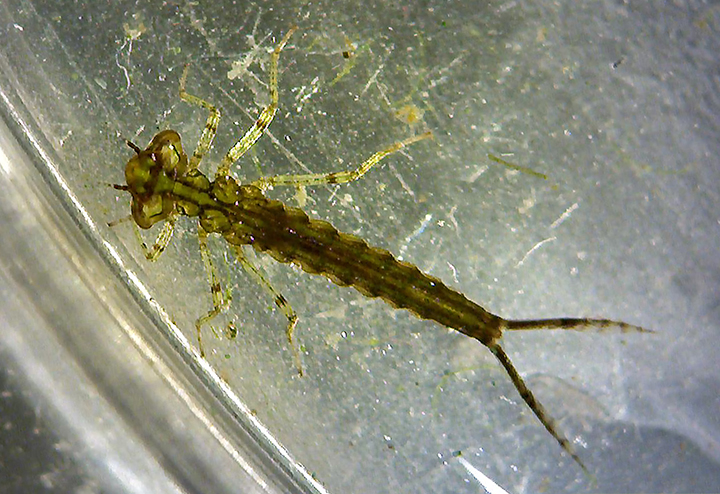
damselfly naiad 72-10
Damselfly naiad missing one of it’s gill appendages but a cool critter nonetheless.

The Awesome Little Things

What is it? Wow, look at that!

That is what you heard, over and over again, Saturday afternoon in the Conservation Education Center at Black Bayou Lake NWR as eleven excited Master Naturalist wannabees went through the contents of their collection pails. Our workshop leader, Dr. Anna Hill, went from microscope to microscope patiently answering our questions.

IMGP0043 adj
Dr. Anna Hill leads our little armada of canoes and kayaks across Black Bayou Lake for our early morning collecting field work.     (photo by Bette J. Kauffman)

At the same time, Kris Kelley of FoBB sat behind a microscope hooked up to a camera and projector. We all took pictures of the critters in our petri dishes and projected on the screen, but the photos Kris took with the microscope camera are excellent. He created a cache of them on Google Docs for us. Click here and enjoy:

MasterNaturalist Aquatic Life June 2018

Note that one of the frames on that page is a video that has been uploaded to YouTube. Here’s a direct link to the video:

Master Naturalist Microscope Video

The point of interest in the video is the white, lacy critter in the upper half of the frame. Not much happens for the first 45 seconds, but then you will see the entire critter convulse as it responds to something in the petri dish environment–food, most likely! And from there to the end of the video, various parts of the “ciliate colony” react every few seconds in similar fashion. I hope it was having a good meal!

A species list will be forthcoming, but be forewarned that most of what we saw we could not identify to the species level. Nevertheless, we learned some categories, I satisfied my long-time desire to see dragonfly and damselfly naiads in living color, and all the critters were truly amazing to behold.

IMG_6995 72-10
A predacious diving beetle larva (Dytiscidae sp.) appears to threaten a fishing spider.      (iPhone photo by Bette J. Kauffman)

As we were preparing to empty our collection pails in the pond in front of the Education Center, I captured a little drama happening in mine. I had collected a fishing spider and a predacious diving beetle larva–a critter that looks about as scary as its name. It had kept its pincers closed throughout its several minutes of fame under the projecting microscope, but now they were open and the creature was turning its head toward the spider, which was on the surface of the water nearby. Of course, I have no idea what was actually going on in that pail, but it sure looked sinister!

And here’s a link to another cache of photos from the day, created by Charles Paxton:

Aquatic Life Photos on Facebook

Important Note: Black Bayou Lake is a National Wildlife Refuge. Collecting specimens from the lake requires a permit, which our workshop leader had gotten for us. To do this without a permit is strictly against the law. (BTW, Dr. John Carr also had to have a permit for his work with us a few weeks ago.)