3rd Quarter Outcomes

What a treat it was to meet in the Union Parish Library in Farmerville and see the shocking and compelling anti-littering campaign art exhibit produced by Treasurer Stephanie Herrmann and her patrons! It was an eye-opener. As  member of the Ouachita Parish Library Board of Control, I plan to make sure it comes to Monroe after it’s next stint at Black Bayou Lake.
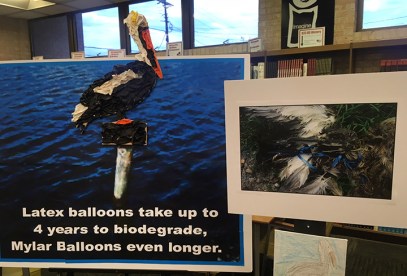
Balloon Pelican

Kim Paxton’s minutes are linked below. I offer here some highlights of the meeting.

>Board of Directors – Suzanne Laird was nominated in absentia and was voted in to a seat on the Board by acclamation, pending the president asking if she was willing to serve. She said “yes”! Thanks, Suzanne. So glad to have you on the Board.

>T-shirts – Kim Paxton is working on designs and Suzanne Laird offered to help with the non-design aspects. Hooray! I hereby appoint Kim and Suzanne to be the t-shirt committee. If anyone else wants to help, please contact them. I will distribute designs via email so everyone can comment.

>Membership dues need to be renewed by the end of the year. A blog post will be devoted to that later this month. It was suggested and approved that we add a button to the website for people to donate an additional $5 when they renew so that we can make a donation to rebuilding the alligator exhibit at Black Bayou Lake.
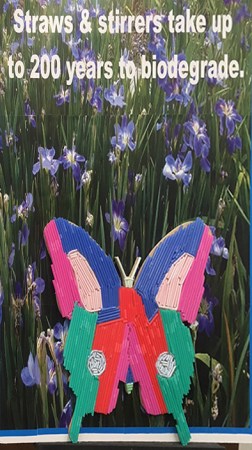
Straw Butterfly cropOur guest speakers, Leslie Albritton and Micha Petty, engaged us thoroughly with their experiences as wildlife rehabilitators. We heard funny stories, heroic stories and sad stories, as not all injured animals can be saved.

The most shocking thing I learned was that wildlife rehabilitators receive no monetary support from the state for the critical work they do–not even to cover direct expenses like vet bills and food. We all need to help when we can. Check out Charles Paxton’s blog for more details.

Here’s a few more links you might want to use:

Leslie Albritton’s FB page

Micha Petty’s Indiegogo fundraiser

LMNaturalists-NE-3rd Quarter Meeting-8.28.18

Bottle Cap Owl

Members Meeting May 20

As posted a couple weeks ago, our 2nd Quarter Members Meeting is Sunday, May 20, 4:30 – 7 p.m. I have scheduled two and a half hours because we have the exquisite privilege of spending the first two hours learning about and hiking in the upland forest that surrounds the home of Kelby & Amy Ouchley.

The Ouchley’s live at 106 Heartwood Dr. The mailing address is Farmerville, but the location is Rocky Branch. Here are Kelby’s directions:

“Turn west off of Hwy. 143 in Rocky Branch beside the closed community store on Rocky Branch Rd. Go 1.5 miles and our driveway is on the right across from a red brick house. There is a “Heartwood” street sign at the driveway.”

For those so inclined, the GPS coordinates are 32°40’41”N, 92°13’24”W.

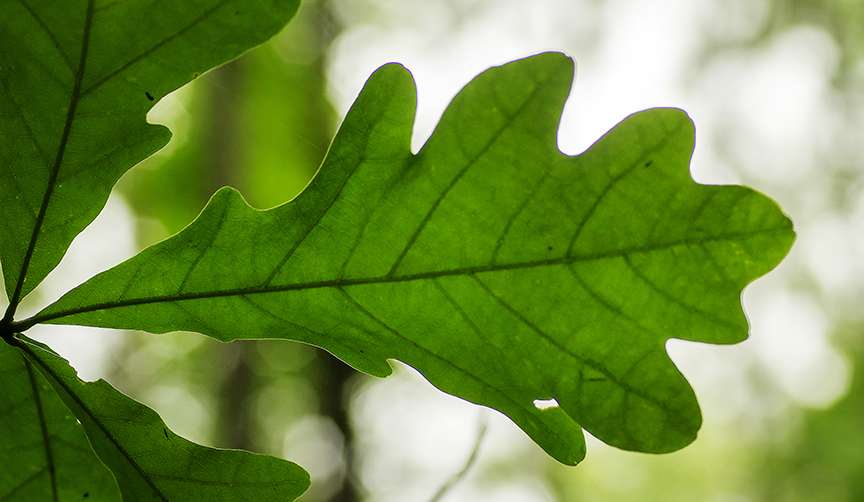
White Oak (Quercus alba)
White Oak (Quercus alba) is one of the trees of the upland forest.     (photo by Bette J. Kauffman)

We will reconvene on the porch about 6:30 for a half-hour meeting. Here’s the tentative agenda:

Agenda 5-20-18

My main thought in scheduling as I did was to be sure we had daylight to explore the forest, but would not be in the noonday sun. However, this particular timing does raise a couple of issues that require forethought:

1. We will be outdoors at dusk and there’s a swamp nearby. Mosquitoes are likely to be on our species list! Come prepared.

2. We are scheduled to meet over what is typically a meal time and the Ouchleys have promised we can linger on the porch. If you would like to be able to do that but expect to be hungry after two hours of exploring the forest, please bring snacks and finger foods to share. As always, bring your own water or other non-alcoholic beverage.

See you there!

Rendezvous 2018

Yes, it was cold and rainy, but…. what a blast! It would take much more than 37 degrees F and drizzle to ruin Rendezvous for me!

IMGP9608 72-12

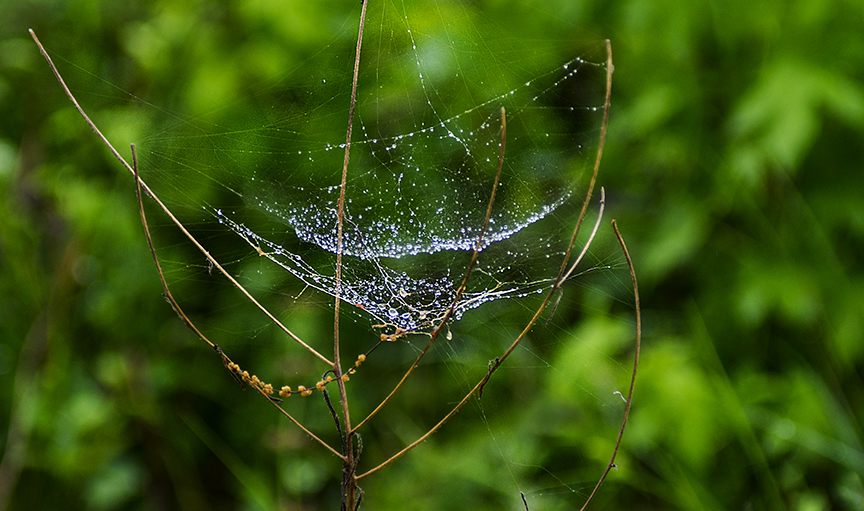
In fact, rain makes beauty, not only like that above, but in terms of what requires wet conditions to grow. This year’s Rendezvous was at Camp Hardtner near Pollock, La., a place I have been many times. But I have never seen sundews all over the place as we did this weekend.

IMGP9609 72-12
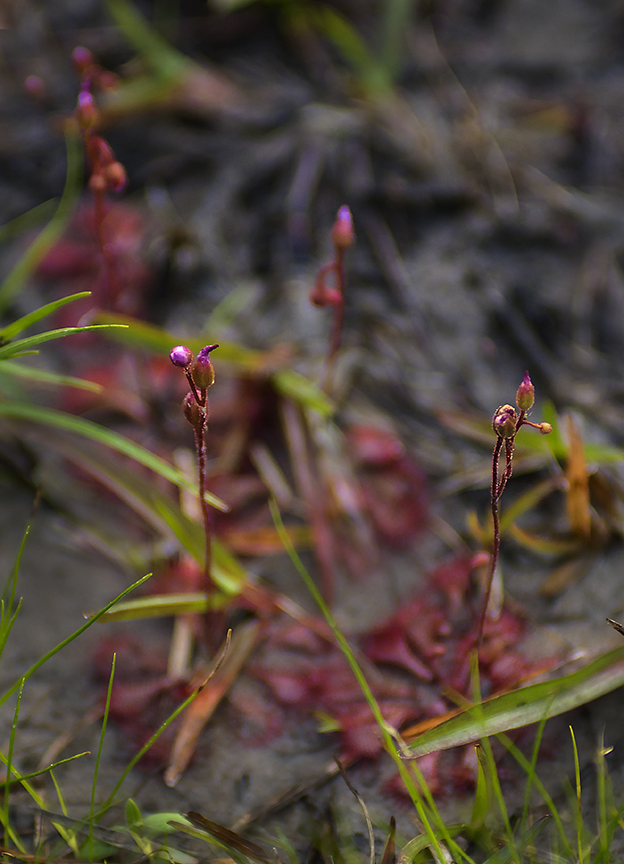
Sundew (Drosera)     (photo by Bette Kauffman)

Sundew is a tiny omnivorous plant of bogs and seeps. The red basal leaves are about the size of a quarter. They are hairy and at the tip of each hair is a drop of sticky liquid that catches ants and other small crawlers for the plant to eat. The plants had flower spikes this weekend, with tiny pink buds about to open.

Because of the weather, we did not spend as much time in the field as is typical for Rendezvous. The Board meeting Saturday afternoon also kept some of us in. However, Sunday dawned cool and beautiful, so the remaining diehards went out for about two hours. Kim Paxton and a person from another chapter are both working on species lists, which will ultimately be integrated and put on iNaturalist.

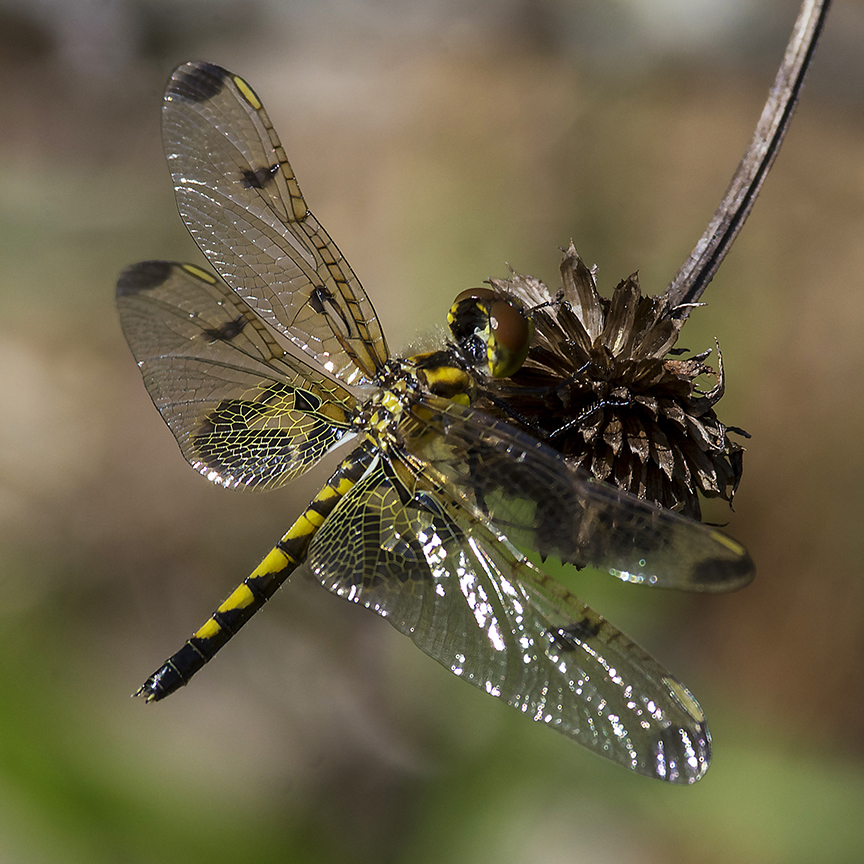
The speakers were excellent, but probably the highlight of the entire weekend for me was the return of the calico pennant dragonflies. I have only seen and photographed this species here at Camp Hardtner. They are a small dragonfly with wings that look like gold filigree in the sun. We saw two, both females. I was ecstatic!

Calico Pennant (Celithemis elisa)
Calico Pennant (Celithemis elisa) (female)     (photo by Bette J. Kauffman)

Update: Certification

I wouldn’t want you to go too long without hearing from me! And I want you to know what I’m working on so you can be thinking ahead and getting excited.

Certification Workshop #2 is scheduled: April 28, 9 – 3, with Dr. Charles Allen, “Plants of Northeast Louisiana.” Location: Kisatchie National Forest in the Georgetown vicinity. Registration is open on the Certification tab of this website and registrations are rolling in. Make sure you have a seat! Dr. Allen and I are working out details.

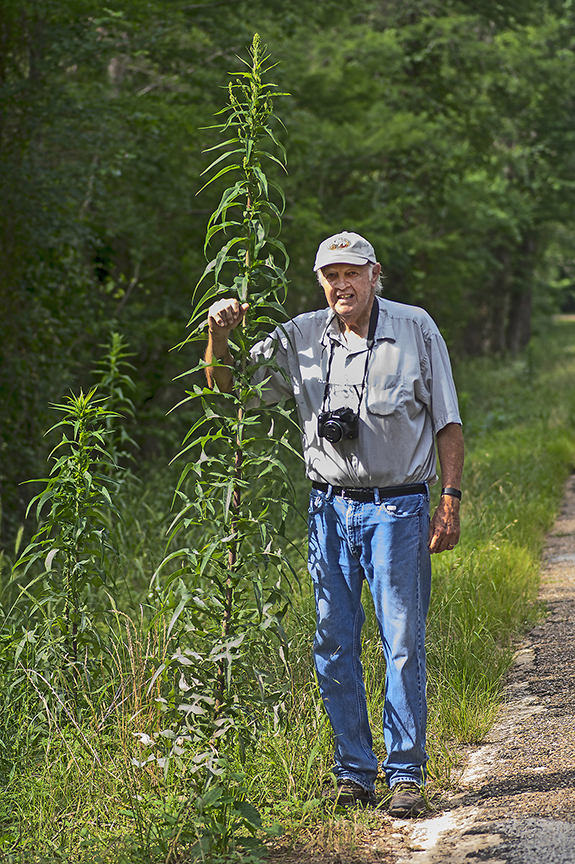
Wild Lettuce (Lactuca virosa)
Dr. Charles Allen with wild lettuce (Lactuca virosa) of a field trip at Bundick Lake.     (photo by Bette J. Kauffman)

Certification Workshop #3: tentatively a Saturday in early June, 9 – 3, with Dr. John Carr, herpetologist. The classroom portion will be done in a lab on the ULM campus. The field site is yet to be decided.

Certification Workshop #4: tentatively a Saturday in late June, 9 – 3, aquatic life with Dr. Anna Hill. This one will involve field observing and collecting specimens at Black Bayou Lake, then going to a lab on the ULM campus to examine what we have and learn more.

Certification Workshop #5: tentatively a Saturday in July, 9 – 3, with Dr. Joydeep Bhattacharjee, plant and restoration ecologist. This one will begin at Kiroli Park in West Monroe, then caravan to Restoration Park in West Monroe for more field observation.

No certification workshop in August, but we will have our 3rd quarter meeting at the Union Parish Library in Sterlington. I plan to invite a couple of people who do wildlife rescues and rehabilitation.

Sept, Oct., Nov.: very tentative plans: Watershed Dynamics (hoping for Kelby Ouchley); Birds (Dr. Terri Maness, La Tech); Mammals (perhaps Dr. Kim Tolson, I hope at Tensas NWR); Bugs (????); wrap-up session.

December: Graduation for those who made it to at least 8 of these 10 workshops!!

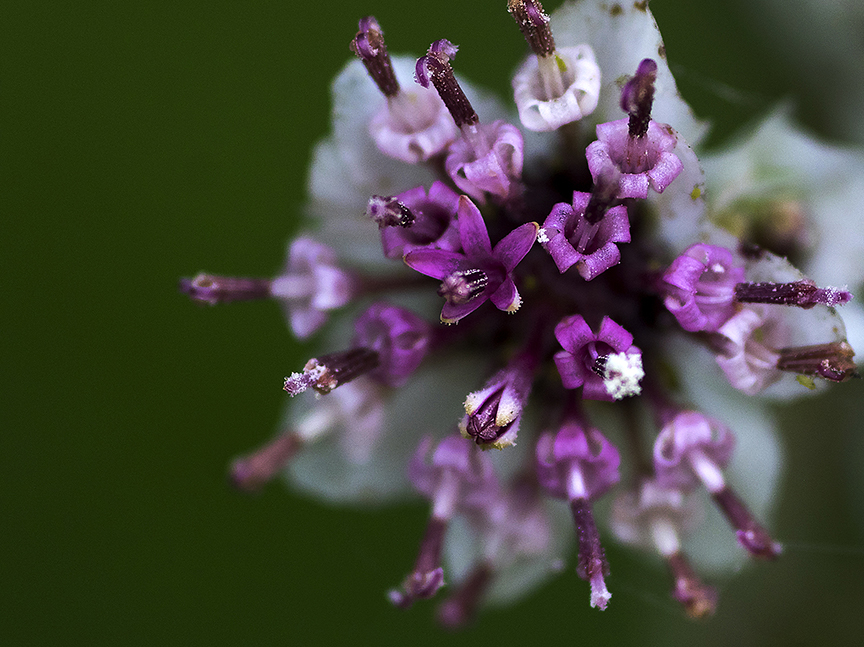
Carolina Woolly White (Hymenopappus scabiosaeus)
Carolina woolly white (Hymenopappus scabiosaeus) from the same field trip at Bundick Lake.     (photo by Bette J. Kauffman)

Success!

I have identified the damselflies we saw at Black Bayou Lake NWR on the field hike for our first certification workshop. Of the several photos I took, only one is in sufficiently sharp focus to show anyone! Nevertheless, the others were good enough to know that all I photographed were the same species.

Fragile Forktail (Ischnura posita)
Fragile Forktail (Ischnura posita)     (photo by Bette J. Kauffman)

The key identifying feature of this damselfly is the division of the shoulder stripe into a line and dot “exclamation point,” which you can clearly see in the photo. If I hadn’t been at the right angle to get that in the photo, I would not be able to make a positive identification.

Fragile forktails look quite similar to citrine forktails, and that’s what I thought it was in the field. But the unmistakable exclamation point on the shoulder makes this a positive ID.

The species list for workshop one is now complete. I have uploaded a pdf here:

1. Basic Field Skills Species List

Don’t forget to register for workshop two, Plants of Northeast Louisiana with Dr. Charles Allen. The link is ready on the Certification tab of this website.

I haven’t generated an agenda yet. I have to go to Alexandria this coming Tuesday, and I will swing by the site on my way home. I need to check out several things that I want to put on the agenda, e.g., where we’ll meet, best directions to the field site, etc.

But you don’t need to wait to register! We do need to know how many as soon as possible, as Dr. Allen always provides handouts and I will need to get them photocopied.

And for this workshop, my task will be to put down the camera for a change, stay close to Dr. Allen and come home with an accurate list of the plant (and other) species we identify in the field. We did well at Black Bayou, but I’ve been in the field with Dr. Allen. I’ll bet we’ll have more!

Western Ribbon Snake (Thamnophis proximus)
Western Ribbon Snake (Thamnophis proximus)     (photo by Bette J. Kauffman)