A day spent birding…

is always a good day. And we saw a Belted Kingfisher (Megaceryle alcyon), a male perched on a wire over a pond. As one of my counting companions noted, seeing a Kingfisher always makes it a good day!
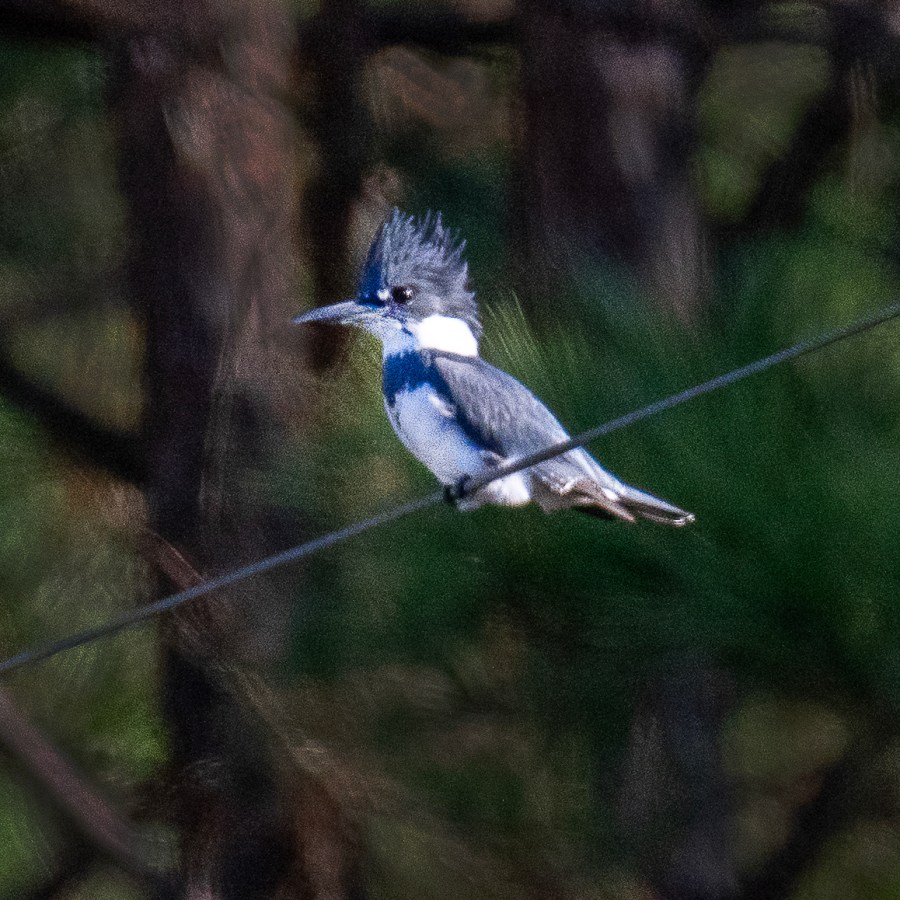
Belted Kingfisher (Megaceryle alcyon)

Saturday, December 20, was the Audubon Christmas Bird Count at D’Arbonne NWR. My counting partner and the expert of our team was Certified Naturalist Roselie Overby, who astounds me with her ability to identify birds by their call.

She was already standing in the parking lot listening and jotting down bird names when I pulled in a few minutes late. Day was still dawning and it was cold. By early afternoon after a short lunch break, we were shedding the layers we had needed that morning.
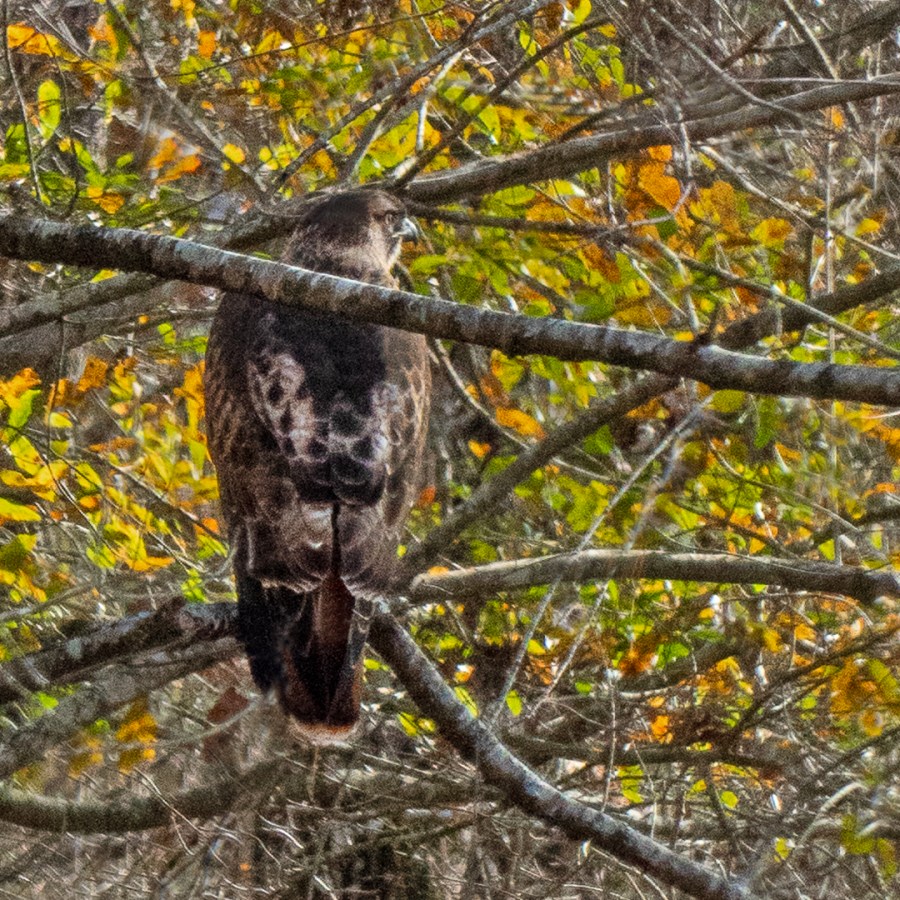
Red-tailed Hawk (Buteo jamaicensis)

The Red-tailed Hawk (Buteo jamaicensis) was a second highlight of the day. We spotted it in a small wooded area between houses and it did not immediately fly away when we pulled to the side of the road. It seemed to be interested in something on the ground we could not see. But it sure knew how to make life hard for the photographer! Finally, it turned its head just right for one decent click.
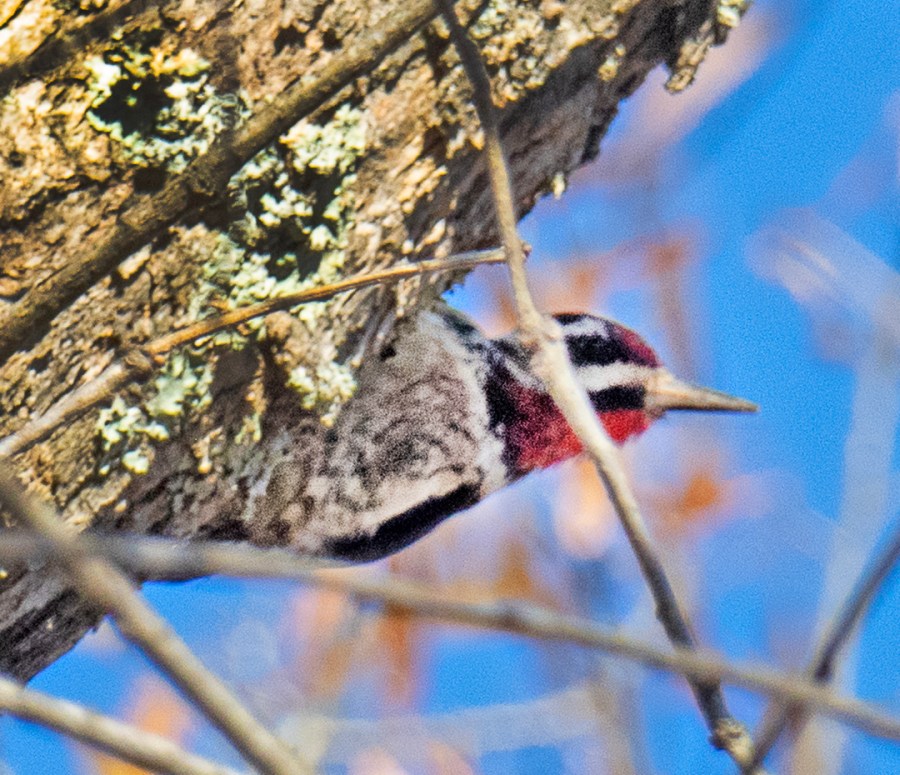
Yellow-bellied Sapsucker (Sphyrapicus varius)

Likewise, the Yellow-bellied Sapsucker (Sphyrapicus varius) knew just exactly how to foil the photographer by staying behind a branch. But it too turned its head just right for a split second!

Overall, it was a glorious day to be out birding, but results were mixed. Roselie and I counted 35 species. Not bad, but not particularly good either. We’ve had as many as 40 previous years.

More noticeably, the numbers of individual birds were down. For example, we saw exactly 3 Dark-eye Juncos (Junco hyemalis), a typically plentiful bird. Roselie counted a few White-throated Sparrows (Zonotrichia albicollis) she heard but did not see, but we neither saw nor heard any of the several other species we expected to see.

At the end of the day, we joined another 5 or 6 teams of counters at Heartwood Natural Area to “call the count.” The tentative total number of species was 91, and that’s a pretty good number. The bird of the day was a Broad-winged Hawk (Buteo platypterus), a new species for this count. Yay!

In spite of the good number of species, all of the teams reported numbers of individual birds to be down. One count does not a trend make, of course. But it certainly is in keeping with national and global trends, and cause for concern. Most humans profess to love birds. We must match our love with decisive conservation action.
4Q Meeting & Holiday Party

I hear its supposed to rain, but we’ll have a good time anyway!

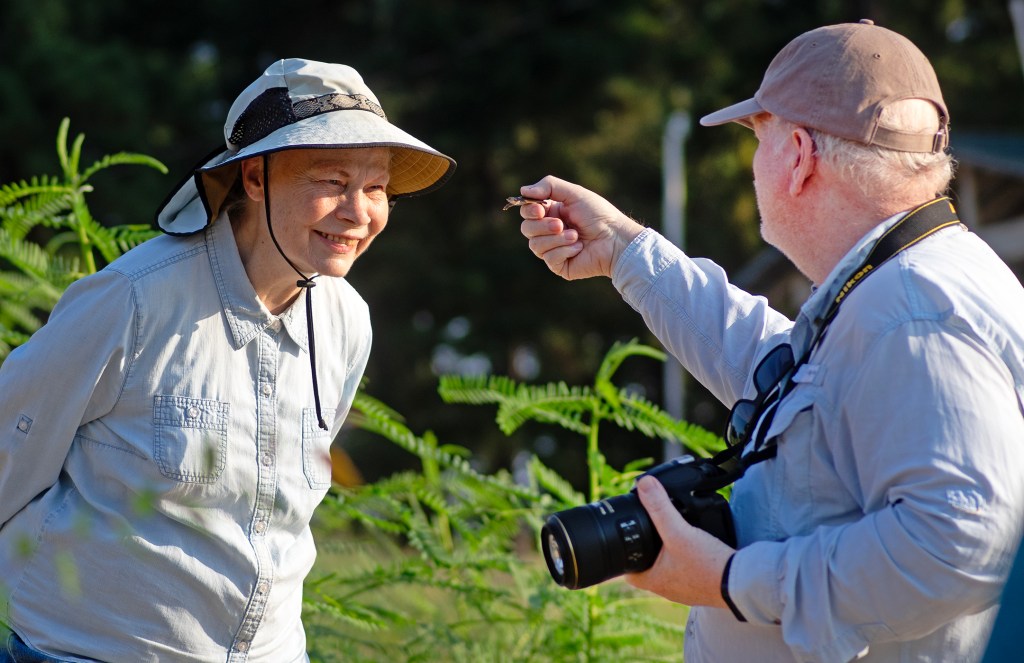
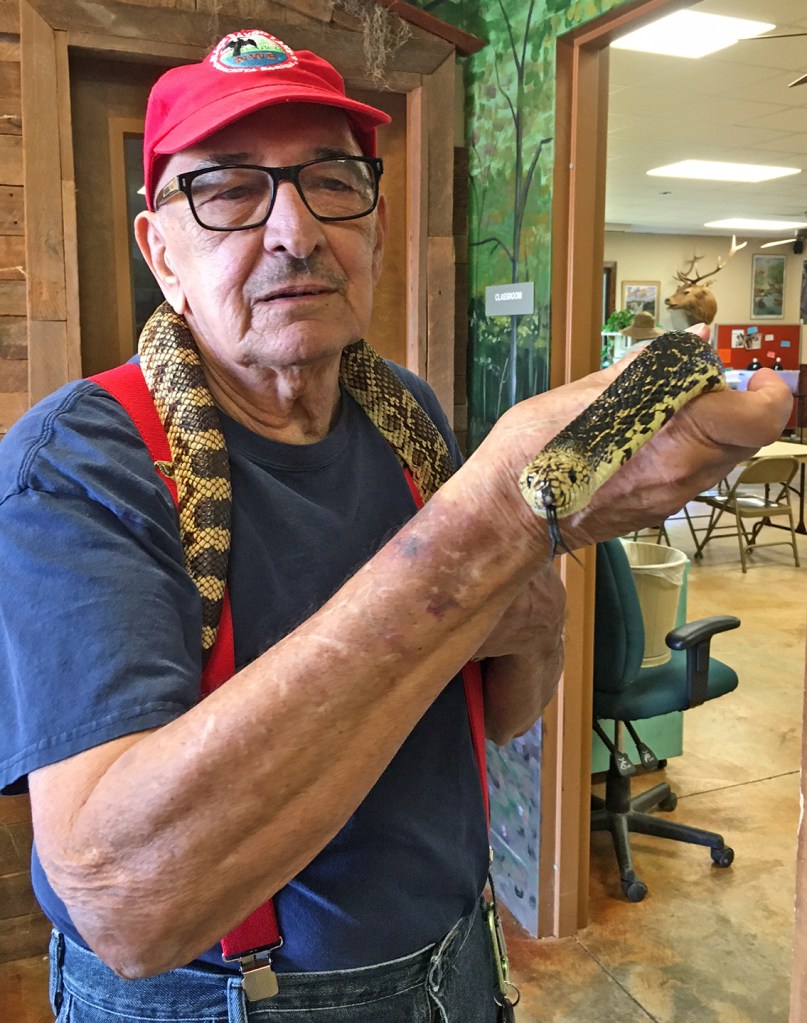
Jim volunteers at the Refuge. We’ll invite him to the party and maybe he’ll let us play with the resident Louisiana pine snakes!

This Saturday, Dec. 9, we will convene for our 4th Quarter Meeting and our annual holiday party at Black Bayou Lake NWR in the Conservation Learning Center. Members and friends are invited.

Our speaker for the 4Q meeting is Alexandra Noel, meteorologist for NBC 10 News and FOX 14 News in West Monroe. She will talk about “NELA Severe Weather–Prepared, Not Scared.” What a timely and interesting subject!

The holiday party will follow. It is a potluck, and the offerings are typically delicious and plentiful. (Bringing food is not required.) We will also have an optional gift exchange. If you wish to participate, bring a gift in the $15-$20 range and enter it into the drawing.

This will be an opportunity to become a member if you wish, but that is not required. Come if you’re just interested in learning more about us and what we do.., and want to have a good time!

If weather allows, I’m guessing some of us will get outdoors at some point in the afternoon.

Please RSVP to LMNAOutreach@gmail.com.

An Afternoon Well Spent

First we heard Johnny Armstrong talk about his restoration project at our 3rd Quarter Meeting, then we took him up on his offer to show it to us. Last Sunday afternoon, a handful of Louisiana Master Naturalists, Northeast Chapter, meandered through the restored shortleaf pine, oak, hickory woodland on Wafer Creek Ranch northwest of Ruston, La.

Johnny Armstrong and Opal lead a tour of the restored shortleaf pine, oak, hickory woodland on Wafer Creek Ranch near Ruston, La. Also pictured: Kim & Charles Paxton, John & Ann Frazer. Photo by David Hoover.

What a delight! Johnny has invested decades in this project and not for naught. The result is a woodland, indeed, but one characterized by relatively open spaces covered with a diverse array of grasses and wildflowers.

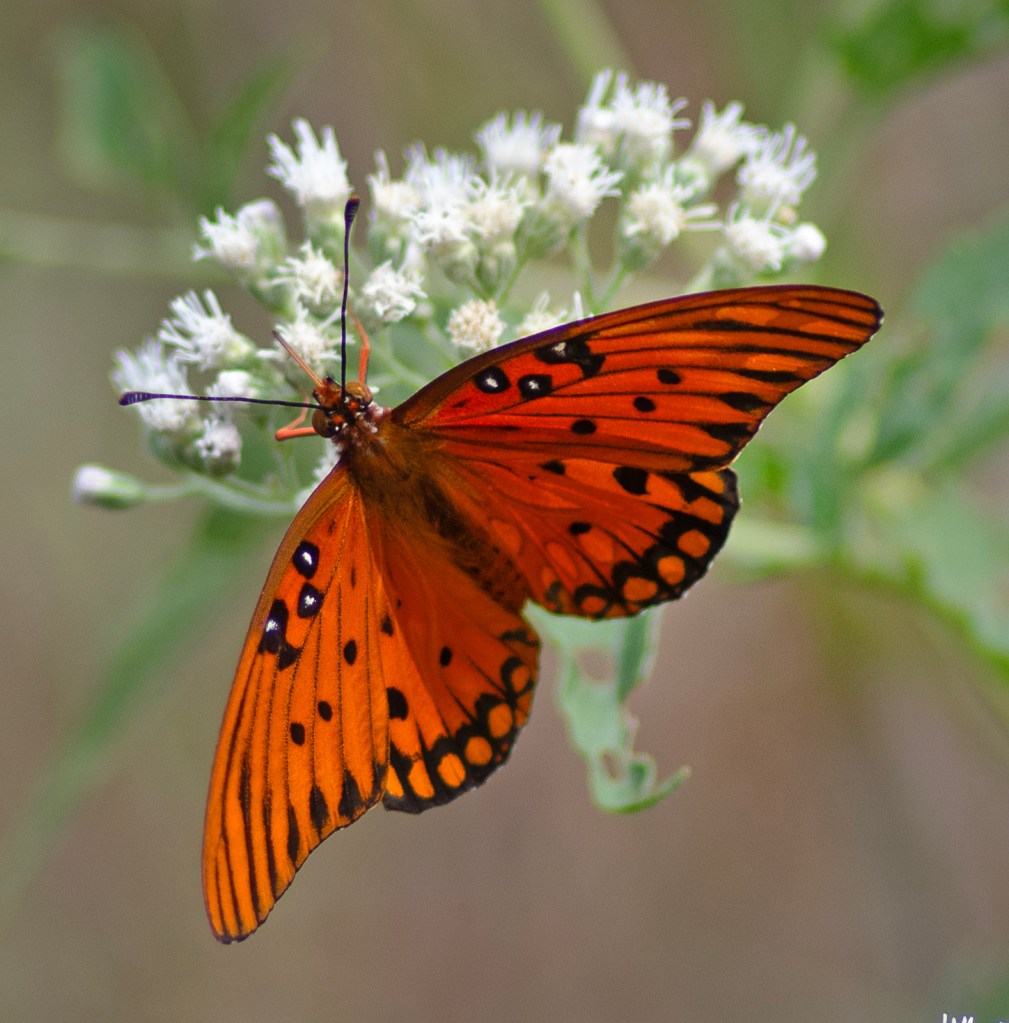
Gulf Fritillaries were all over the Thoroughwort (Eupatorium).

What was blooming this late October day? More than you might think! Narrowleaf Sunflower (Helianthus angustifolius), Gayfeather Blazingstar (Liatris elegans), White Snakeroot (Ageratina altissima), several species of Goldenrod (Genus Solidago), and a couple of species of Thoroughwort (Genus Eupatorium), to name just a few.

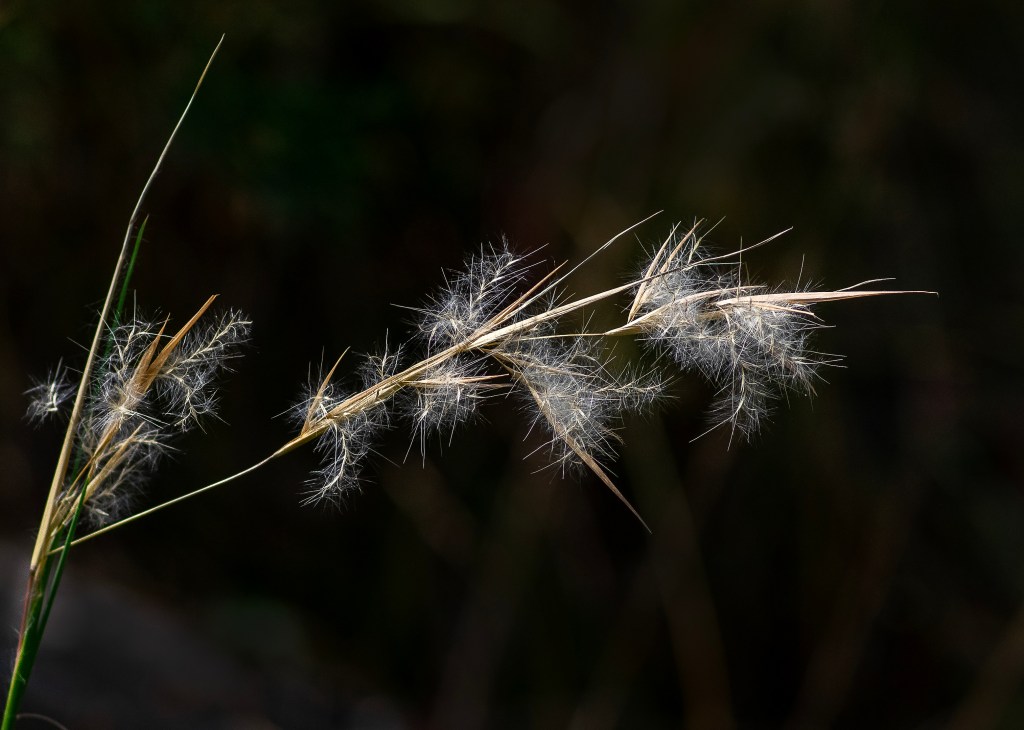
Split-beard Bluestem (Andropogon ternarius) releases its seeds to the wind.

As one who has struggled to learn to identify grasses, I appreciated both Johnny’s descriptions of the grasses on Wafer Creek Ranch in his book, and his gentle quizzing and generous sharing of characteristics on site. Of course, grasses bloom too, but at this point in the year, the grasses were finished blooming and were heavy with seed or already releasing seeds to the wind.

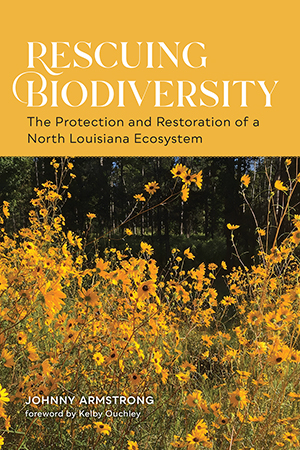
Speaking of his book, I highly recommend it. It is both enjoyable to read and visually attractive, with many fine photographic illustrations. The title is Rescuing Biodiversity and Johnny begins it with a compelling discussion of just why that is necessary. It is available from LSU Press.

Thank you, Johnny, not only for an afternoon well spent but for your powerful example of how to steward our rich natural heritage.

A Great Way to Begin a Day!

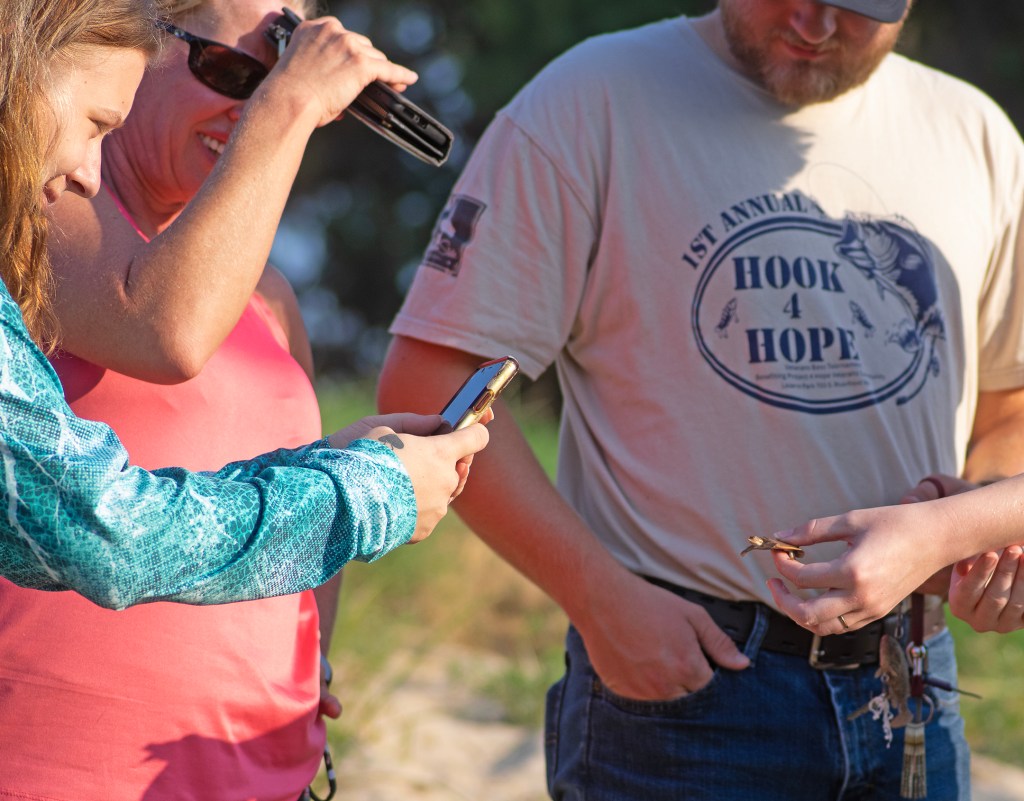
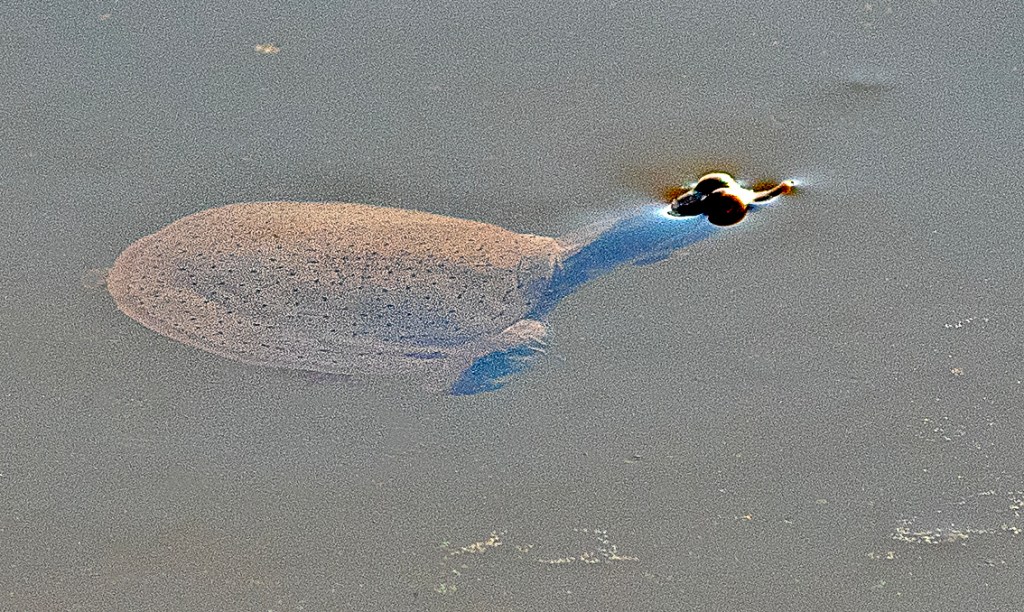
That was the general sentiment at Lazarre Park in West Monroe this Saturday morning. We had just watched the last of a clutch of about 2 dozen Smooth Softshell Turtles (Apalone mutica) scurry down the beach and bury themselves in the sand of the Ouachita River bed.

Dr. John Carr, professor emeritus of biology at the University of Louisiana Monroe, made a career of studying, writing and teaching about turtles and turtle conservation. He and his graduate students have a permit from Louisiana Department of Wildlife & Fisheries to gather turtle eggs from the river bank, incubate them in his lab, and release the hatchlings back into the river, thereby saving the eggs from predation by raccoons and giving the turtles a chance to thrive.

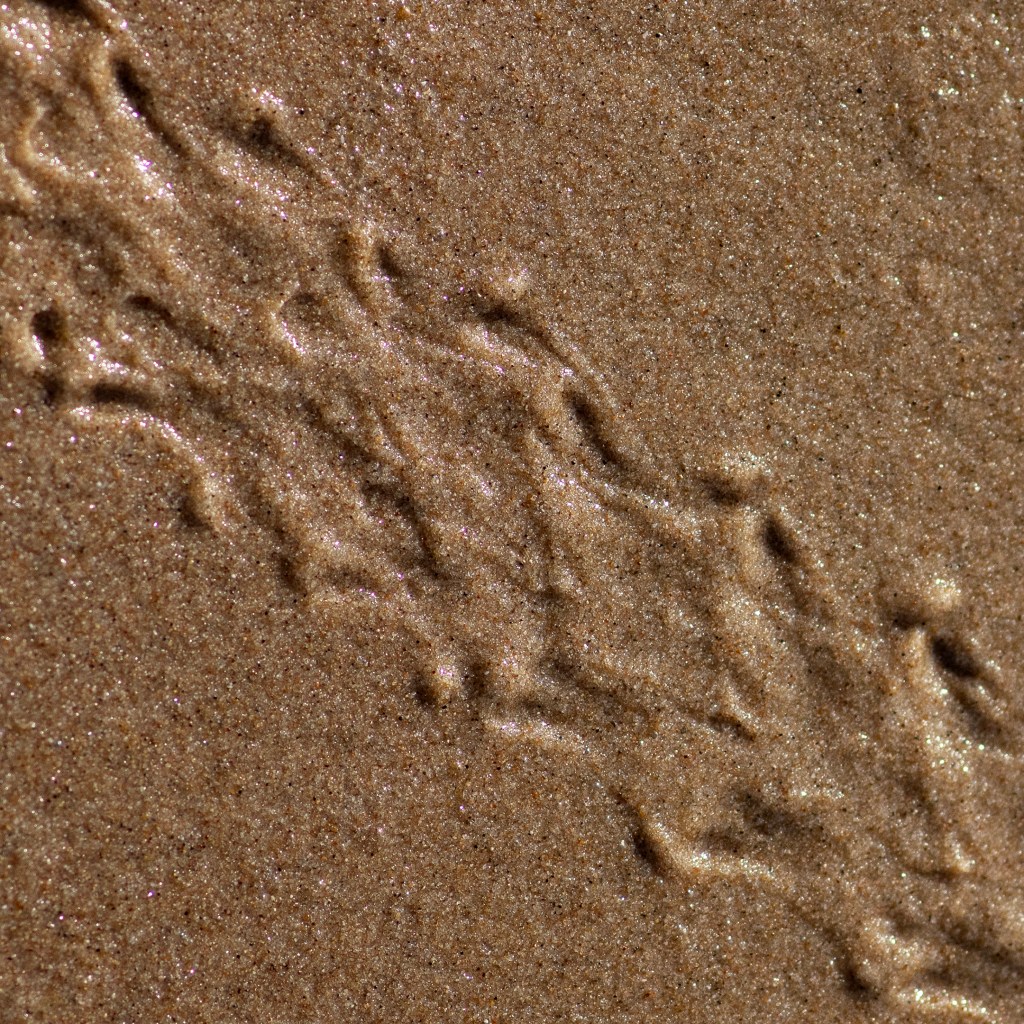
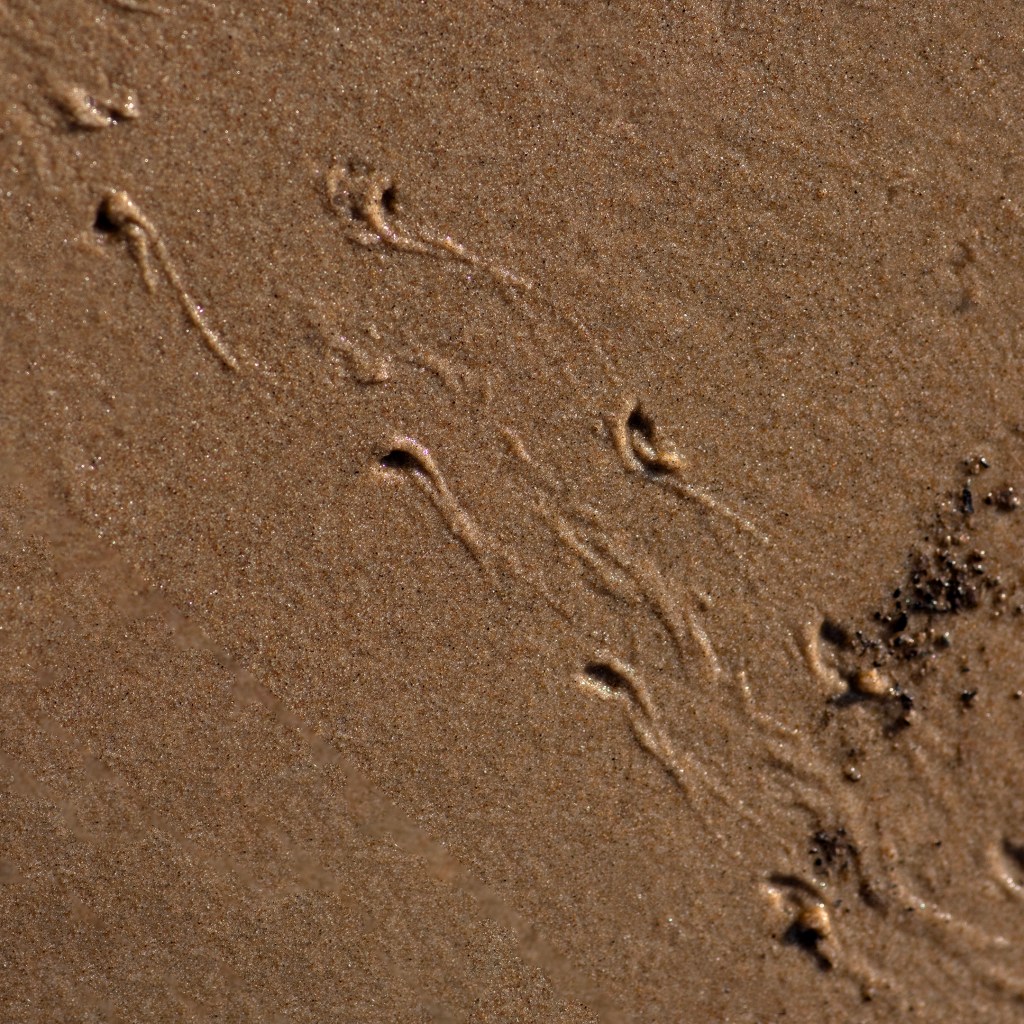
The proper way to release a turtle hatchling is to place it on the sand 12–18 inches from the water. Most of the babies make a beeline for the water, swim in a few inches, take a gulp of air at the surface with their snorkel like snout, then dive to the bottom. With just a couple of shimmies, they bury themselves in the sand. It is their best defense against big fish and other predators that would love a turtle snack.

Here’s what’s fascinating. Carr and his students put the hatchlings in shallow water back in the lab so they can practice holding their breath, swimming and diving. But… they never experience sand until they are released on the beach. How, then, do they know all about burying themselves in it? Such are the wonders of nature!

Then there was “Pokey.” Pokey moved to his/her own drumbeat. Whereas most of the hatchlings were in the water and buried in the sand in less than a minute after release, not Pokey. According to the meta-data on my camera, from the moment Pokey was placed on the sand to the moment he/she dove toward the bottom was 8 minutes, 51 seconds!

Yes, standing in the water near the bank of the Ouachita River cheering baby turtles charging down the bank and into their natural habitat is a great way to start the day.

BTW, although spiny softshell turtles (Apalone spinifera) are plentiful in Bayou DeSiard and most anywhere, smooth softshells occur naturally in our area only in the Ouachita River.

Special note: Just a few months ago, Southern Naturalist released a special issue titled “Biology and Conservation of Alligator Snapping Turtles (Machrochelys).” It was co-edited by John L. Carr (ULM), Ethan J. Kessler (University of Illinois), and Gerald R. Johnston (Santa Fe College). It is the single largest source of information on this uniquely southeastern USA group of turtles, which are the largest in North America and currently under consideration for listing as “Threatened” under the Endangered Species Act.

First Ever!

The heat index was over 100 F, but we persisted. A hardy handful of Louisiana Master Naturalists-Northeast completed the first ever official North American Butterfly Association count at Black Bay Lake NWR Saturday, July 1.

Craig Marks came all the way from Lafayette to instruct us and lead the count. Craig is the author of the definitive guide to Louisiana butterflies* and a member of NABA. He leads counts across Louisiana and in Arkansas every summer.

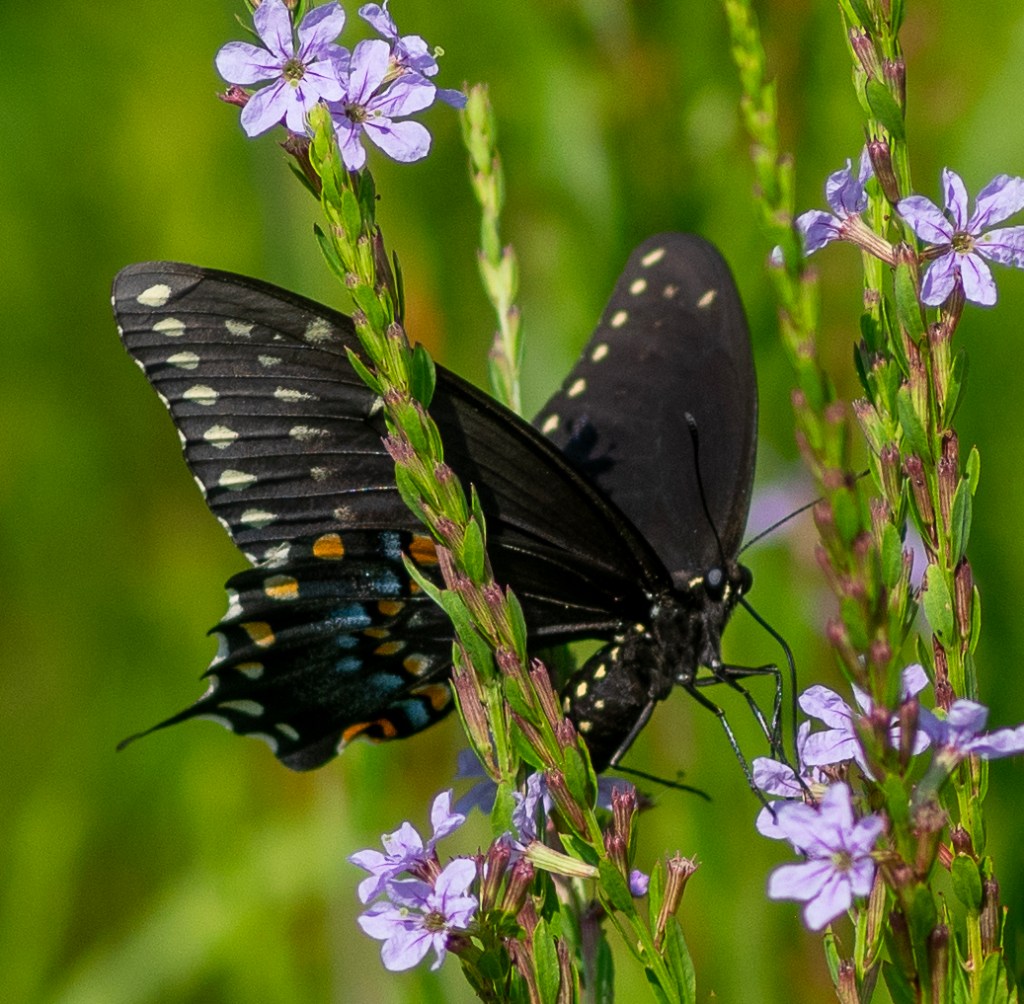
This beautiful female black swallowtail was counted while nectaring on loosestrife on the prairie in front of the BBL Visitor Center.

Royal Tyler, Shreveport, and Annette Parker, Opelousas, both experienced counters, also came to Monroe for the noteworthy occasion. We are grateful for the fun learning experience they helped provide.

Here’s the official results from the count, turned into NABA by Craig:

Species: Black Swallowtail 2, Eastern Tiger Swallowtail 4, Cloudless Sulphur 4, Little Yellow 1, Gulf Fritillary 1, Variegated Fritillary 5, Pearl Crescent 27, Question Mark 5, Red Admiral 11, Common Buckeye 4, Red-spotted Purple 3, Viceroy 9, Gemmed Satyr 8, Carolina Satyr 5, Monarch 2, Silver-spotted Skipper 1, Horace’s Duskywing 2, Least Skipper 1, Fiery Skipper 7. Unidentified: dark grass skipper 1. Total: 20 species, 103 individuals.

Field Notes: The day chosen was very hot and humid. Because of that heat and the lack of butterfly activity, the count was stopped at 2:30. Although the habitat looks proper for significantly more species than were actually counted, the high heat clearly was a major factor in the low numbers recorded. Our plan is to do the next count in mid-August and then in early June to hopefully better explore what species are present here.

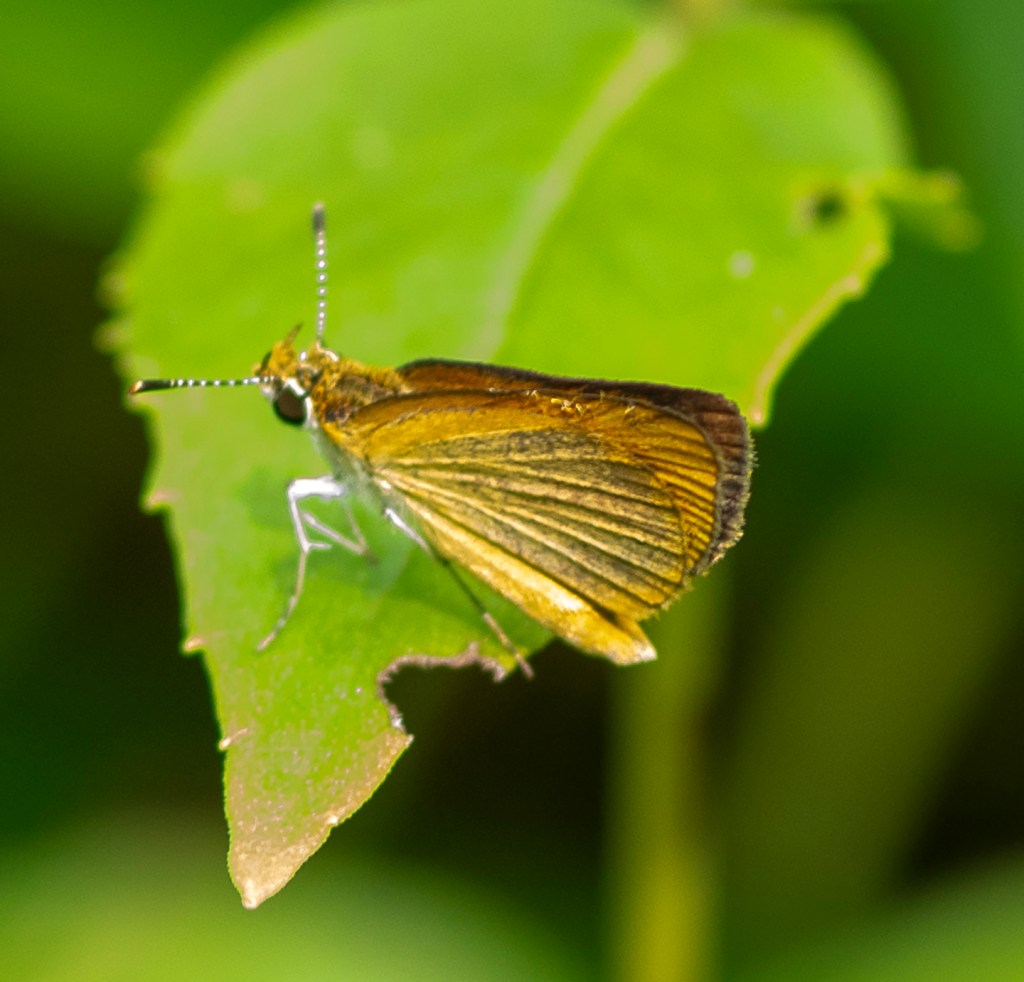
This tiny least skipper was a first for me, and the only one counted that day!

As you can see from Craig’s field notes, we plan to repeat this count at least two more times over the next two years, once in August and again in early June. The habitat at BBLNWR is right for a much higher numbers of species and individuals.

So keep your eye on this space! We’ll announce the next time here and we hope you will join us.

*Butterflies of Louisiana, by Craig Marks. Available from LSU Press and from Amazon.com.