Blog

Wading In to Watershed Dynamics

report & photos by Charles Paxton

As the dominant terrestrial species on this planet we naturally have a rather grounded perspective on our environment. We named our home “Earth” despite the fact that about 70% of its surface is covered with water.
Patterson & map
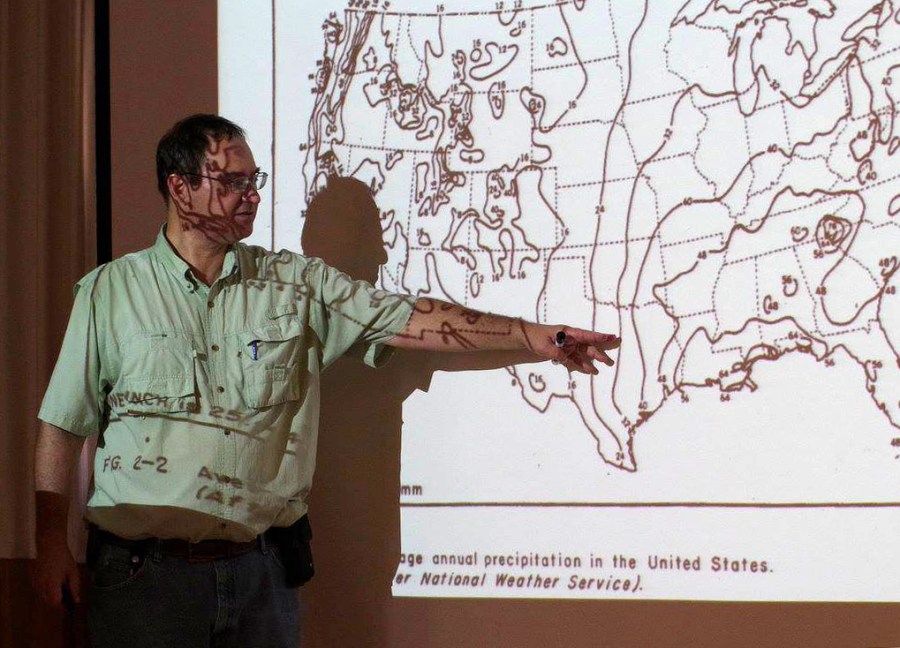
Prof. Bill Patterson of LaTech talks about how climate change is causing arid conditions to creep eastward across Texas.

Saturday, Sept. 25, 12 members of  Louisiana Master Naturalists – Northeast learned more about the crucial relationship between earth and water in a workshop on Watershed Dynamics delivered by Dr. Bill Patterson, Associate Professor of Forest Soils and Watershed Management at Louisiana Tech University.

We gathered at Louisiana Tech University’s Reese Hall, where we met Prof. Patterson unloading boxes of scientific equipment from a sleek minibus and accompanied him to a classroom for an illustrated presentation and discussion.
Redwine checkpoint 1
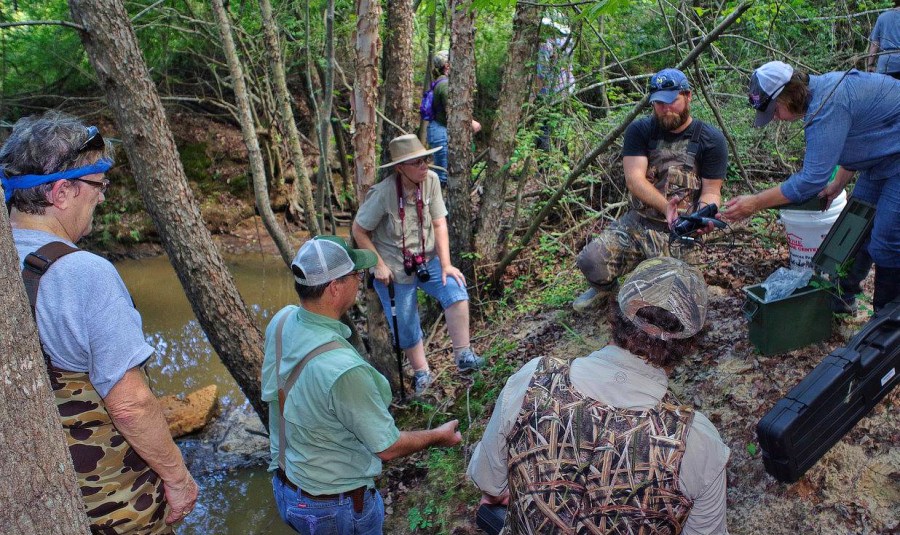
The lecture and discussion continue on the banks of Redwine Creek in Grambling.

He began with a basic introduction to the concept of a watershed, defining the term as any area of land that drains water into lakes and rivers. Watersheds are crucial sources of clean freshwater.

We learned how relatively scarce and precious, clean, fresh, liquid water is on planet Earth. Less than 2.5% of our water is fresh (that is, not saltwater), and of the 2.5%, 68.7% is locked up in glaciers and pack ice. Very little of the remaining surface water is clean enough to be potable.
Laird & crawfish
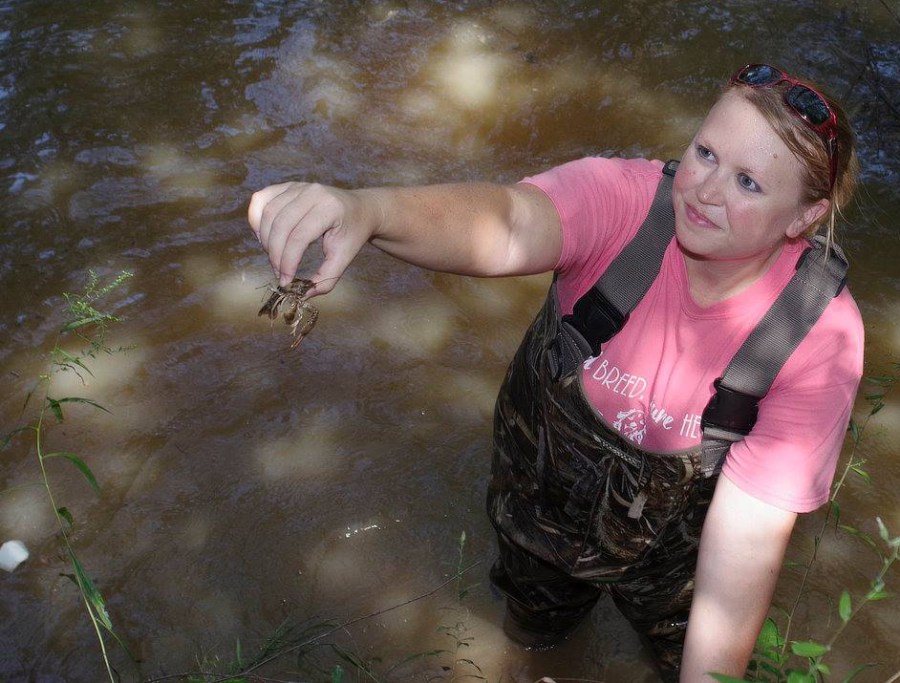
Procambarus clarkii for our species list, captured and released by Suzanne Laird.

Here in northern Louisiana we are blessed with, and dependent upon, the Sparta Aquifer — a pressurized body of fresh groundwater which overlays ‘fossil’ saltwater from our marine pre-history.

The forest soil to the northwest of the twin cities in Webster, Bienville and Winn Parishes, with its natural mixture of invertebrates, bacteria, and fungi underlain by porous sandy soil, makes an excellent watershed to feed the Sparta aquifer. Two thirds of our drinking water is organically filtered through forest.
 

Searching for Life
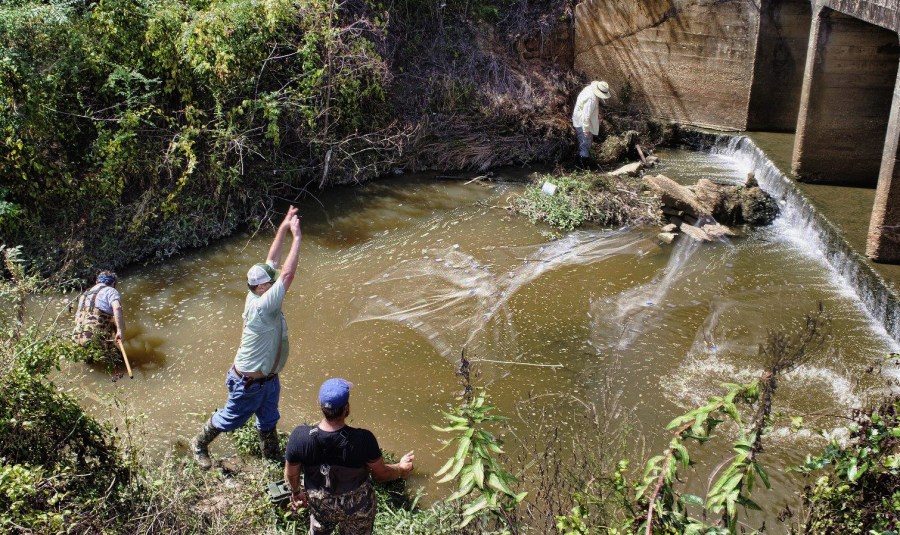
Searching for life at Redwine Creek checkpoint 2. Prof. Patterson has just thrown a cast net.

Nevertheless, the Sparta Aquifer is stressed. Fifteen to twenty years ago, industrial and commercial activities in the twin cities used more water than domestic households, but now domestic use exceeds industrial use. Overall, we are drawing upon the Sparta at an unsustainable rate; the level is dropping two feet per year.
Kauffman et al
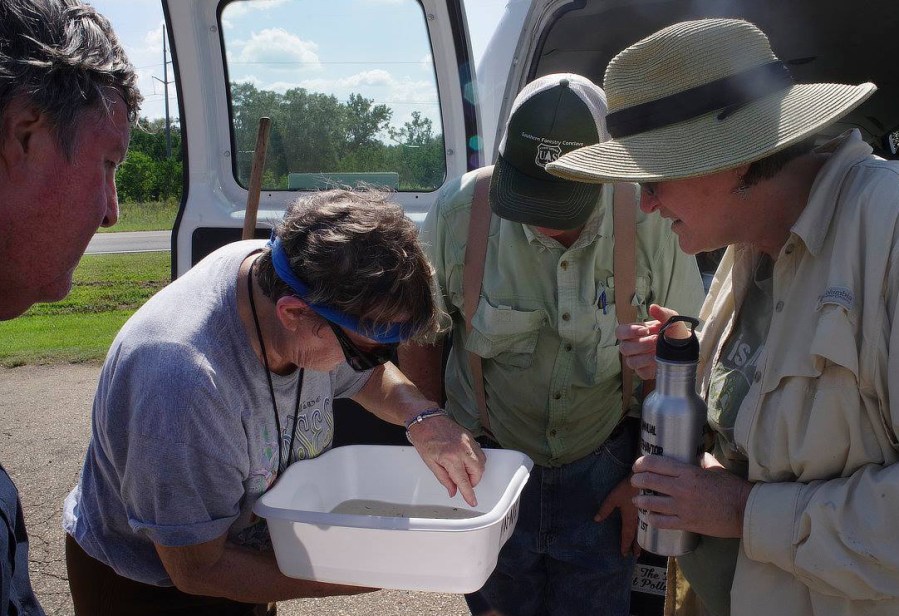
Bette Kauffman shows dragonfly and damselfly naiads she collected from under foliage in the water at Redwine Creek checkpoint 2. Prof. Patterson, Terri Maness and Jeff Barnhill look on.

After soaking up information for two hours, we loaded gear and ourselves into the minibus and headed for Redwine Creek in Grambling. There we waded in, testing water quality and searching for marine life at two checkpoints, one above and one below the water treatment plant.

Some had waterproof chest waders. Others just got soaked when their waders leaked! All in all, it was another glorious certification workshop adventure.
3rd Quarter Outcomes

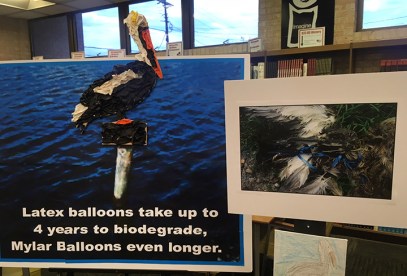
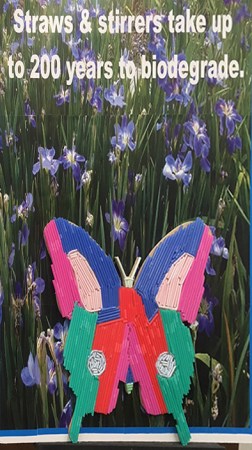
What a treat it was to meet in the Union Parish Library in Farmerville and see the shocking and compelling anti-littering campaign art exhibit produced by Treasurer Stephanie Herrmann and her patrons! It was an eye-opener. As  member of the Ouachita Parish Library Board of Control, I plan to make sure it comes to Monroe after it’s next stint at Black Bayou Lake.

Balloon Pelican

Kim Paxton’s minutes are linked below. I offer here some highlights of the meeting.

>Board of Directors – Suzanne Laird was nominated in absentia and was voted in to a seat on the Board by acclamation, pending the president asking if she was willing to serve. She said “yes”! Thanks, Suzanne. So glad to have you on the Board.

>T-shirts – Kim Paxton is working on designs and Suzanne Laird offered to help with the non-design aspects. Hooray! I hereby appoint Kim and Suzanne to be the t-shirt committee. If anyone else wants to help, please contact them. I will distribute designs via email so everyone can comment.

>Membership dues need to be renewed by the end of the year. A blog post will be devoted to that later this month. It was suggested and approved that we add a button to the website for people to donate an additional $5 when they renew so that we can make a donation to rebuilding the alligator exhibit at Black Bayou Lake.

Straw Butterfly cropOur guest speakers, Leslie Albritton and Micha Petty, engaged us thoroughly with their experiences as wildlife rehabilitators. We heard funny stories, heroic stories and sad stories, as not all injured animals can be saved.

The most shocking thing I learned was that wildlife rehabilitators receive no monetary support from the state for the critical work they do–not even to cover direct expenses like vet bills and food. We all need to help when we can. Check out Charles Paxton’s blog for more details.

Here’s a few more links you might want to use:

Leslie Albritton’s FB page

Micha Petty’s Indiegogo fundraiser

LMNaturalists-NE-3rd Quarter Meeting-8.28.18

Bottle Cap Owl

Watershed Dynamics

Our next certification workshop is scheduled September 15. Dr. Bill Patterson, Associate Professor of Forest Soils and Watershed Management at Louisiana Tech University, is our workshop leader.

I have sent Dr. Patterson a draft of an agenda for the day and will distribute it via email as soon as I hear back from him. In the meantime, here’s the outline of the day:

> 9 a.m. Convene in Reese Hall 219 on the Tech campus for classroom instruction. Topics include the hydrologic cycle, stormflow, land use factors, methods to measure water quality, and more.

> 11:30 a.m. Travel to Redwine Creek in Grambling for field work, which will include measuring streamflow, temperature, turbidity, etc., collecting and identifying fish, assessing water quality, and more.

Those who have chest waders or rubber boots should bring them. However, getting into the stream is optional. Those who wish to work from the bank with dip nets and collection buckets, or to observe plant and animal life along the stream will have plenty to see.

Of course, given that the predicted high for the day is 89 degrees, some of us might opt to just get wet! If you do, please make sure you have some kind of footwear safe for stream wading.

This sounds like another fabulous experience! Registration is open on the Certification tab above.

Chemin 3
This is Chemin-A-Haute Creek, NOT where we’re going for this workshop, but a lovely photo by Jeff Barnhill that I’ve been looking for an opportunity to share.

3rd Quarter Meeting

Coming right up! Tuesday, August 28, 6 p.m., at the Union Parish Library, 202 West Jackson St., Farmerville.

Our focus will be wildlife rehabilitation. Leslie Albritton of Downsville and Micha Petty of Shreveport will be our guest speakers. Both are Louisiana Wildlife & Fisheries trained wildlife rehabbers.

29186371_10210812135611814_1829471075264626688_o
Leslie Albritton

Leslie rehabilitates furry critters. Check her out on Facebook and you will find photos of baby possums, skunks, raccoons and more.

21371360_114491985958746_629295988494398708_n
Micha Petty

Micha rehabilitates herps. You can find him on Facebook as well. I hope Micha will show you a short video of his recent release of a big alligator snapper back into the wild.

Here’s the plan for the evening: At 6 p.m. Stephanie Herrmann and the Union Parish Library will kick off their anti-littering campaign. Beginning at 6:30 p.m. Leslie and Micha will each have about 20 minutes to talk about what drew them to wildlife rehab, their view of the LDWF program and their favorite critter rehab stories. That will leave up to 20 minutes for our questions.

I will provide a handout about the next wildlife rehab training scheduled by LDWF this fall.

At 7:30 p.m. we will have a business meeting. Among the items on our agenda: a treasurer’s report, membership renewal, need for one more board member, some terrific t-shirt design ideas from Kim Paxton, additional certification workshop plans, etc.

And to you patient folks from the east side of our service area: I promise we will come your way for the 4th Quarter Meeting. I’m thinking a Sunday afternoon at Poverty Point.

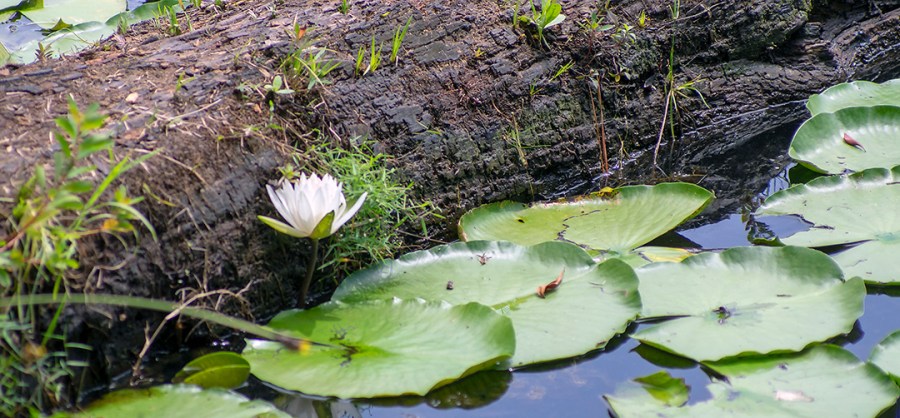
Water Lilies
Restoration Park, West Monroe, La.

1 Ecologist, 2 Parks, 16 Naturalists

And it all added up to a fabulous Ecosystems and Restoration Ecology certification workshop!


IMGP3237 72-12
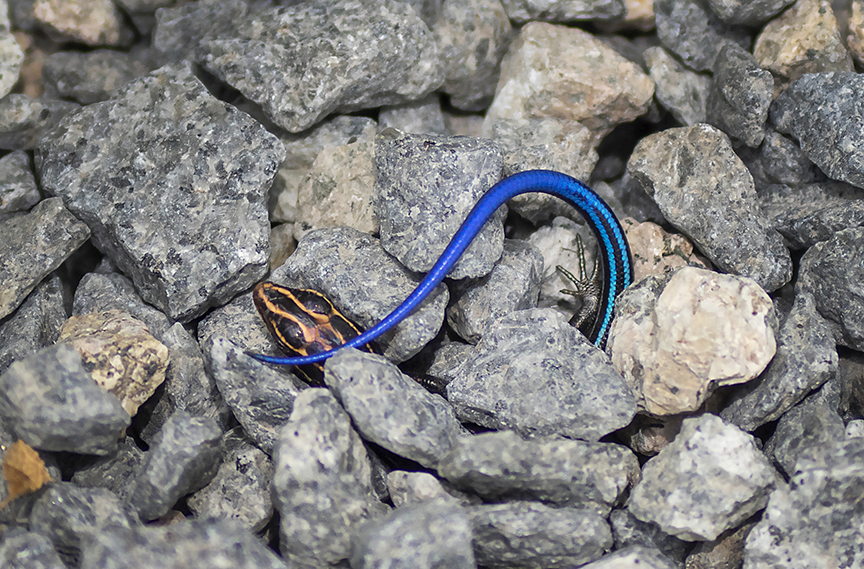
A baby skink (Plestiodon sp.) tries to hide in the gravel of the path in Restoration Park. Sorry, not enough info here for a species ID.     (photo by Bette J.Kauffman)

We met Dr. Joydeep at Kiroli Park and hiked the Wildflower Trail, then went to the Ouachita Valley Branch Library to learn some basics of ecology, and ended the afternoon at Restoration Park just south of I-20, all in West Monroe.

And we came away with new questions to ask about the natural world. What happens over time when a hole opens in the forest canopy and shrubs and vines are allowed to grow unchecked? How does a beaver dam affect not only the flow of water but the plant and animal life that surrounds it?

Netted Chain Fern
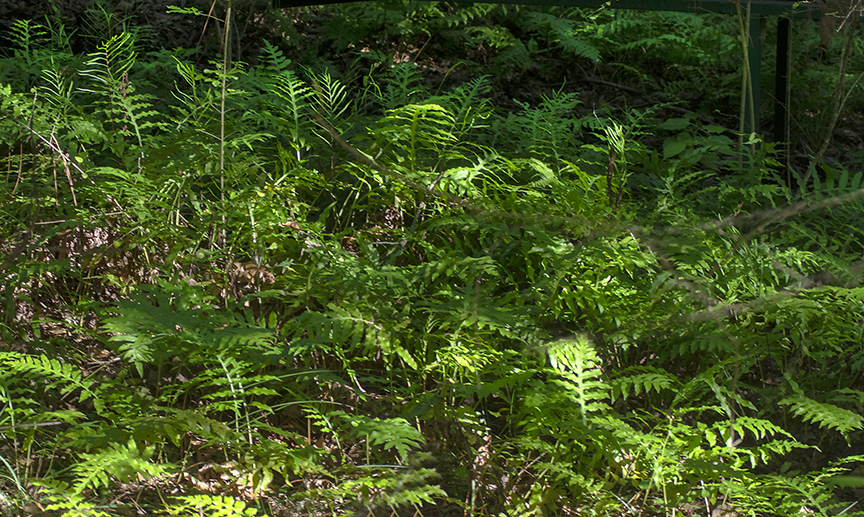
Netted chain fern (Woodwardia areolata) in Kiroli Park.     (photo by Bette J. Kauffman)

Most specifically, why is Kiroli Park experiencing an “invasion of ferns”? It’s not that they are an invasive species, although Kiroli does have some of the dreaded Japanese climbing fern (Lygodium japonicum). But the “invasion” is by the native and lovely netted chain fern (Woodwardia areolata). We saw several large patches of this fern that has not historically been a feature of Kiroli Park.

These are the kinds of questions ecologist asks. And along with the questions came a barrage of new terms and concepts: canopy gap dynamics, canopy shyness, arrested succession, edge effect, and more.

Horse Nettle (Solanum carolinense) w bee
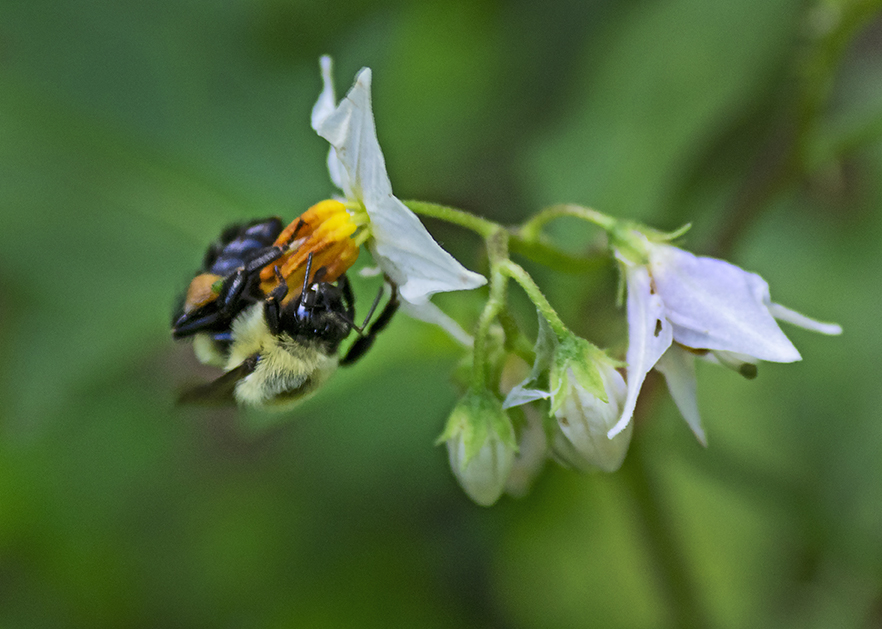
Horsenettle (Solanum carolinense) being ravaged by a bee. Note the “saddlebag” full of pollen on the bee.    (photo by Bette J. Kauffman)

Ecology is about how organisms interact with their neighbors. And they do. No creature is an island. Everything is interconnected and interacting. Here’s one of my fave John Muir quotes to illustrate the point: “When we try to pick out anything by itself, we find it hitched to everything else in the universe.”

BTW, all of this sounded a little familiar to a communication scholar! I think I know the topic of my certification final interpretive project. Now to identify an “ecological niche” to focus on…

And, yes, we saw many plants and critters. There will be two species lists, one for each location. I’m counting on Suzanne Laird and Roselie Overby to send me bird lists, and I’m still going through my photos.

Red-spotted Purple
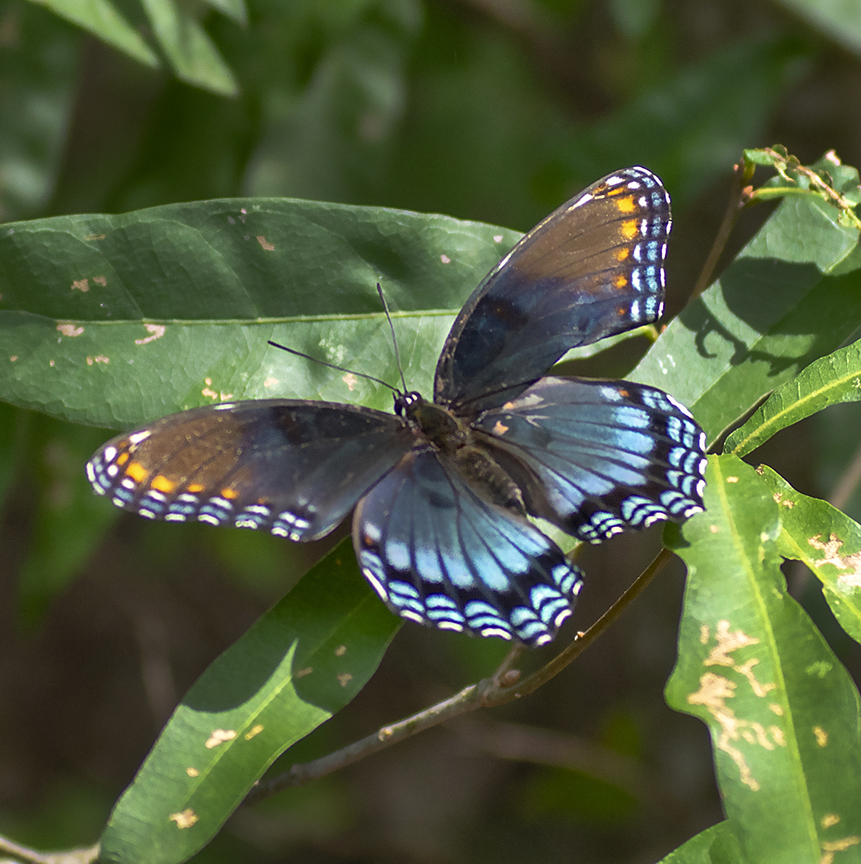
Red-spotted purple (Limenitis arthemis) in Restoration Park.     (photo by Bette J. Kauffman)