Birds, Birds, Birds!

In fact, we saw thirty-six species in about two hours of birding, with several unexpected treasures among them: An American Bald Eagle (Haliaeetus leucocephalus) and a squadron of American White Pelicans (Pelecanus erythrorhynchos) did fly-overs.
imgp7578 72-15
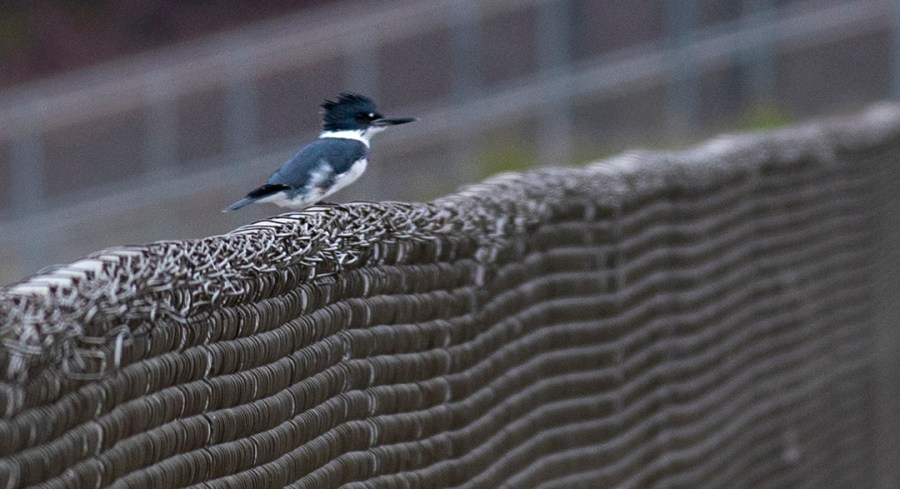
We were met by this Belted Kingfisher (Megaceryle alcyon) sitting on the fence along the top of the Lake D’Arbonne spillway.

A somewhat chill wind drove us off the spillway after awhile, but we then moved along the tree line surrounding the parking area. The little birds were there: juncos, sparrows, nutchatches and more.
imgp7683 72-13
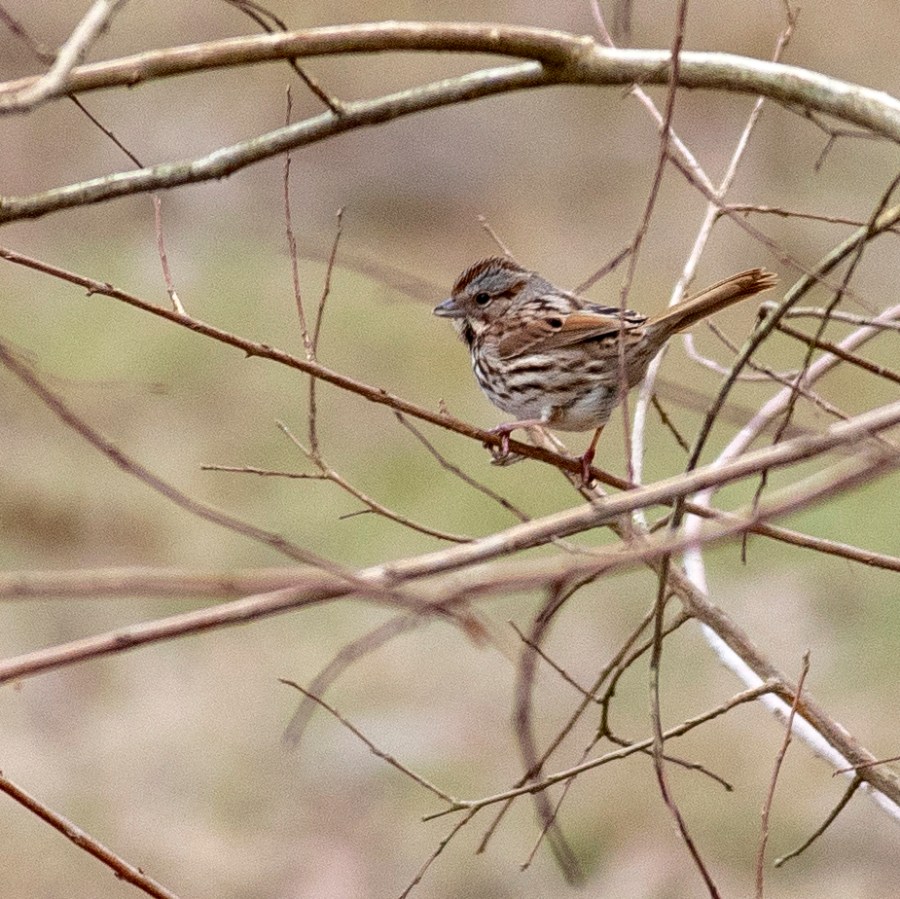
Song Sparrow (Melospiza melodia)

Here’s the list:

bird species list

Thanks, Kim Paxton, for keeping a list in the field.

Our two hours at the spillway came after a super-informative morning in a LaTech classroom where Terri Maness walked us through an intimidating diagram of bird taxonomy in an impressively coherent, easy-to-follow fashion.

I enjoyed the taxonomy, at least as much as one can enjoy taxonomy! But the physiology discussion that followed was fascinating. Birds are truly amazing creatures. Did you ever wonder how ducks stand on ice in their bare feet and don’t freeze to death? I did, and Terri explained it today.

How about migratory birds traveling long, long distances without getting lost? They can see magnetic fields and navigate by them! How do birds get enough oxygen to not pass out, indeed, to fly at great altitudes? They have a 2-stage breathing system that enables them to take a much higher percentage of the oxygen out of the air they breath than we can.

Bird brains are much more densely packed with neurons than those of other critters, so go ahead, call me a “bird brain”! But don’t tell me I eat like a bird because if I ate as much of my body weight per day as a bird does, I’d soon be dead from morbid obesity.

Terri ended her classroom presentation with a few words about conservation. At some level we know this, but… we need to become more vocal and active. Cats–domestic cats–and plastic are two hazards birds face that we all should do whatever we can about.

It was a glorious day, but a frustrating one for me photographically. These are okay, but I have a folder full of “not quite sharp” ones, among them the eagle, the red-shouldered hawk, and many more.

imgp7658 72-15
Zoom in on the lead pelican and you will see that it has a bump on top of its bill. It’s a male and that’s a breeding bump.


Birds Saturday!

All systems are go for the Birds Workshop this Saturday, January 12. Here’s the flyer:

workshop 7 flyer

Please print as needed. I won’t repeat everything below, but here are the highlights:

We convene on the LaTech Campus at 9 a.m. for classroom instruction.

Over the lunch hour, we will travel to Lake D’Arbonne Spillway for field work, and if we want to see more birds, we’ll go to nearby Lake D’Arbonne State Park for more birding. It costs $3 to get into the park. Be prepared!

You can register online through PayPal by clicking on the “Certification” tab above then on the PayPal button provided. If you want to pay on site, please come 15 minutes early and please let me know your plan.

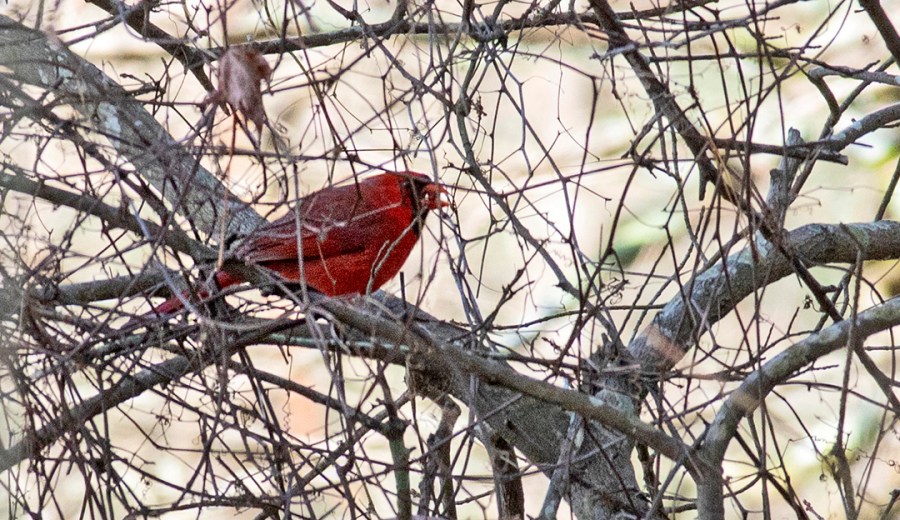
And here’s a gorgeous cardinal from the 1st Day Hike at D’Arbonne State Park. He just wouldn’t come out of the thick stuff for me!

Northern Cardinal (Cardinalis cardinalis)

See you Saturday!


Workshop 7: Birds

Workshop 7 Birds with Dr. Terri Maness is scheduled January 12, 9 am – 3 pm. The link to sign up via PayPal is now active on the Certification page of this website. I am running a bit late getting this done, so please do not delay. Register now!

As a reminder, we decided in the beginning that the 7th workshop each member attends would be free to that member. The three people for whom this is the 7th workshop are Kim and Charles Paxton and Bette Kauffman. I will definitely be there. Kim and Charles, even though you need not pay, please do let me if you will attend.

For a few more people, Workshop 8 Mammals in February will be their 7th. I will publish those names when I post that link.

Please note that the flyer link on the certification page is not yet active. Terri and I have a draft of a flyer close to ready. I’ll let you know when it is up.

The drill will be familiar. The workshop commences at 9 a.m. We’ll spend the morning in a classroom and the afternoon “birding” in the great outdoors.

You might be wondering where. You might be remembering that we had hoped to go to the Upper Ouachita NWR for the field work, but it is under water. So…

Plan B is that we will meet at Black Bayou Lake NWR in the education center for the indoor part and stay at BBL for the field work. We already know from experience that a good variety of birds is usually available at BBL.

However, that might be stymied by the stalemate in Washington D.C. Indeed, I have a Plan C, but Terri has not approved it as of this writing. I will announce that if/when we must.

In any case, I will do everything possible to avoid postponing this workshop. Our first cycle of workshops really needs to wrap up. It should not take more than a year to complete a cycle, and people are waiting for the next cycle to begin. Postponing now just creates greater scheduling problems in the future.

Moreover, I have gotten in trouble with at least several people every time I have changed the date of something, and many have pleaded for more advance notice. You are busy, involved people. I totally get that, and my own calendar is a big headache. SO… please plan to do a birds workshop January 12, one way or another!

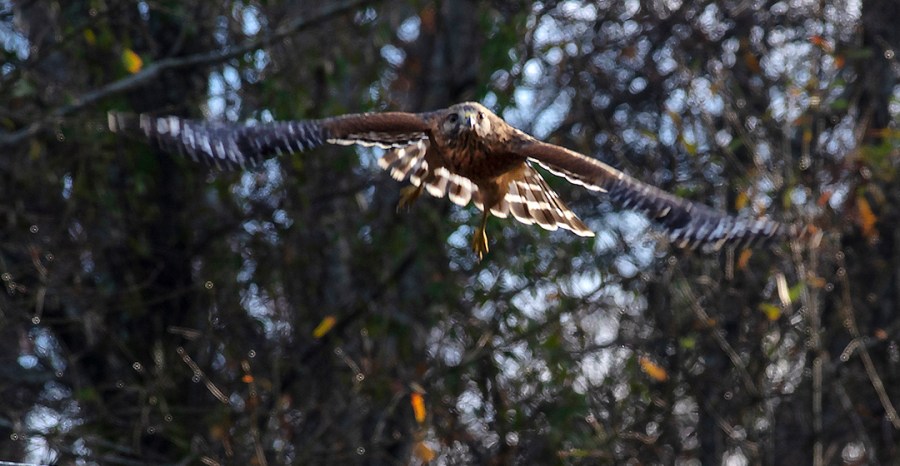
And… speaking of birds, I had this wonderful encounter with a red-shouldered hawk on my way to D’Arbonne State Park January 1 for the 1st Day Hike. I love this shot!

Red-shouldered Hawk (Buteo lineatus)
Red-shouldered Hawk (Buteo lineatus)     (photo by Bette J. Kauffman)

1st Day Hike

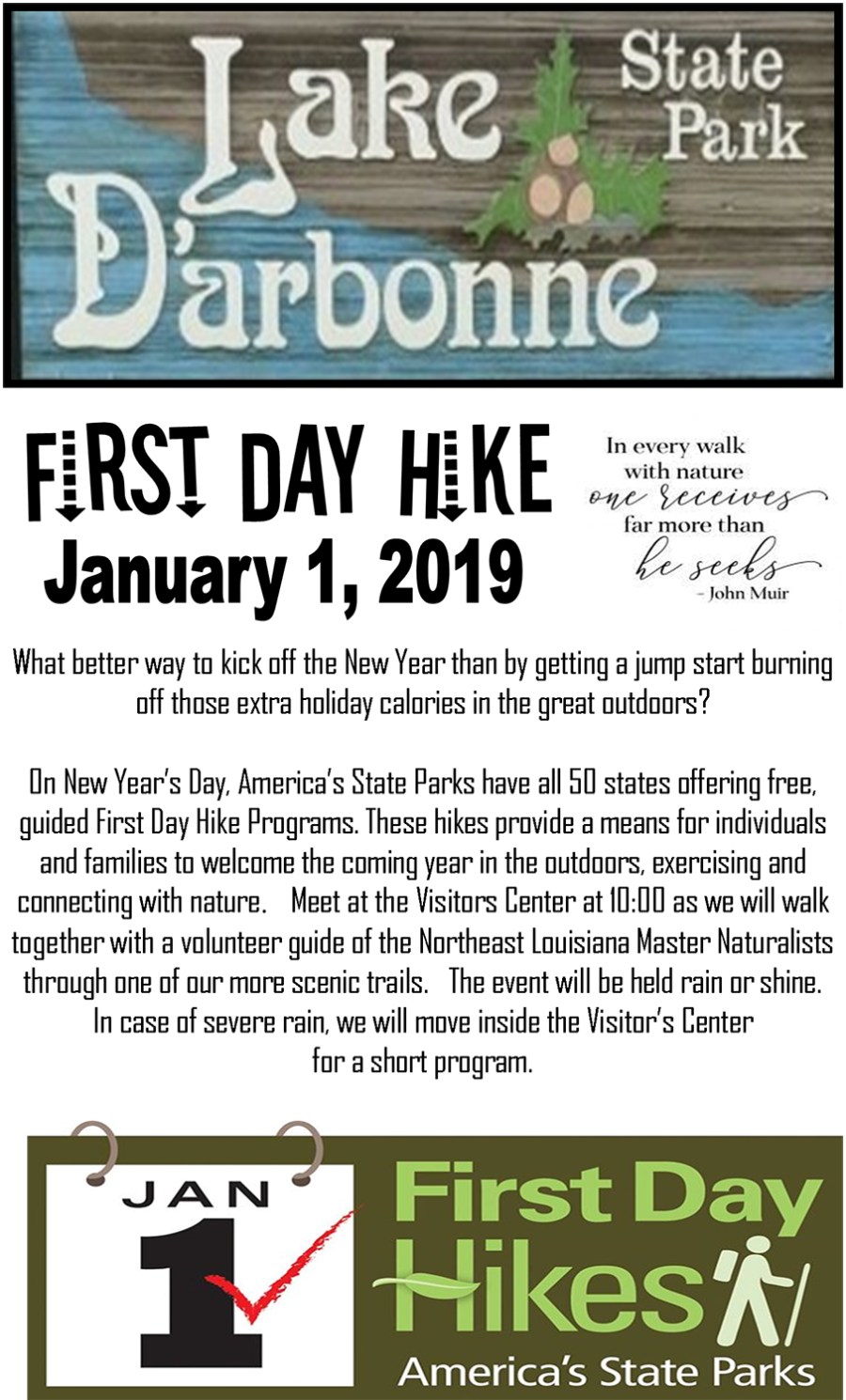
As promised! Lake D’Arbonne State Park is hosting a 1st Day Hike and Louisiana Master Naturalists – Northeast is invited. In fact, we’re kind of co-hosts, as yours truly will be a volunteer guide for the hike.

As the flyer below indicates, we will meet at the Visitor’s Center in the Park at 10 a.m. and hike for about 2 miles. Park staff member Penny Wainwright tells me the trail is a bit hilly but not difficult, and although it might be a bit muddy, we should not encounter standing water.

1st Day Hike Flyer

Please be sure to bring your own water and snacks if you need them. Penny also said we are welcome to gather in the Visitor Center to “debrief” and snack or eat lunch at the end of the hike.

I will have some of our LMN-NE brochures and will take this opportunity to do a little recruiting for us. That will be all the more effective if some of YOU are along to share the good times we’ve been having.

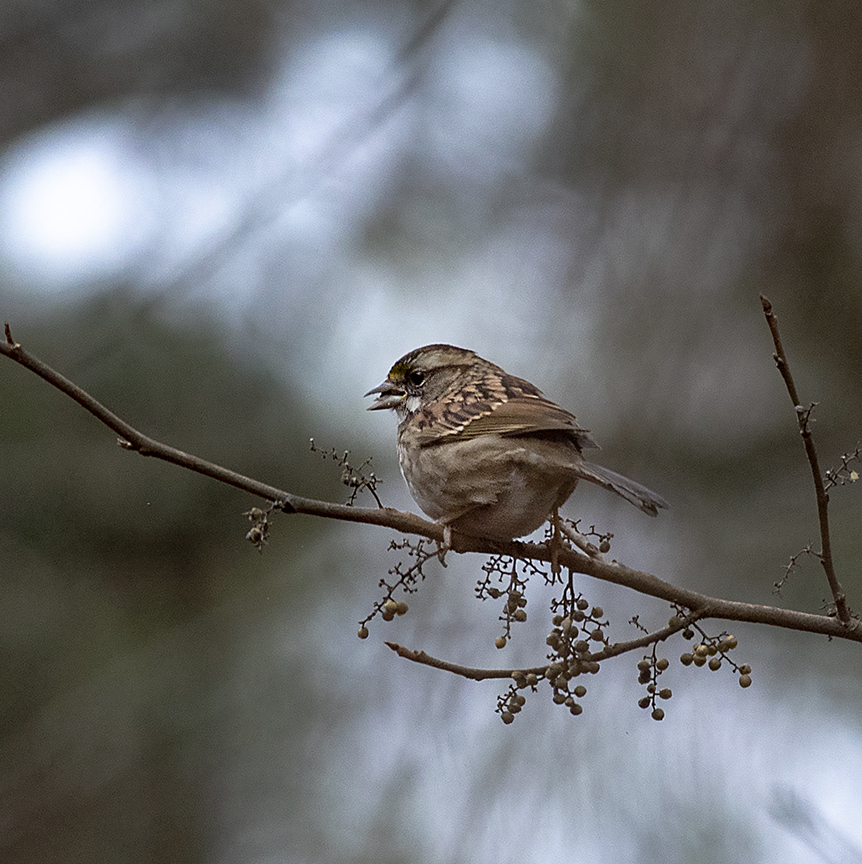
Now here’s a little treat: My best photo from the Christmas Bird Count last Saturday, taken in the D’Arbonne NWR.

IMGP6329 72-12
White-throated Sparrow (Zonotrichia albicollis) feeding on Poison Ivy berries (Toxicodendron radicans).     (photo by Bette J. Kauffman)

Gloomy Weather, Great Fun

We were all so glad we stayed the course and conducted our quarterly meeting at Poverty Point today! Yes, it was a tad cold, but it didn’t rain. A little muddy, but we were wearing boots. And the grey skies did not dampen our spirits.

The staff at Poverty Point was awesome. Eric in the museum demonstrated  the technique whereby the ancient people of Poverty Point drilled holes in all kinds of things–including rocks to be tied to fishing nets to facilitate casting.

IMGP6195 72-15
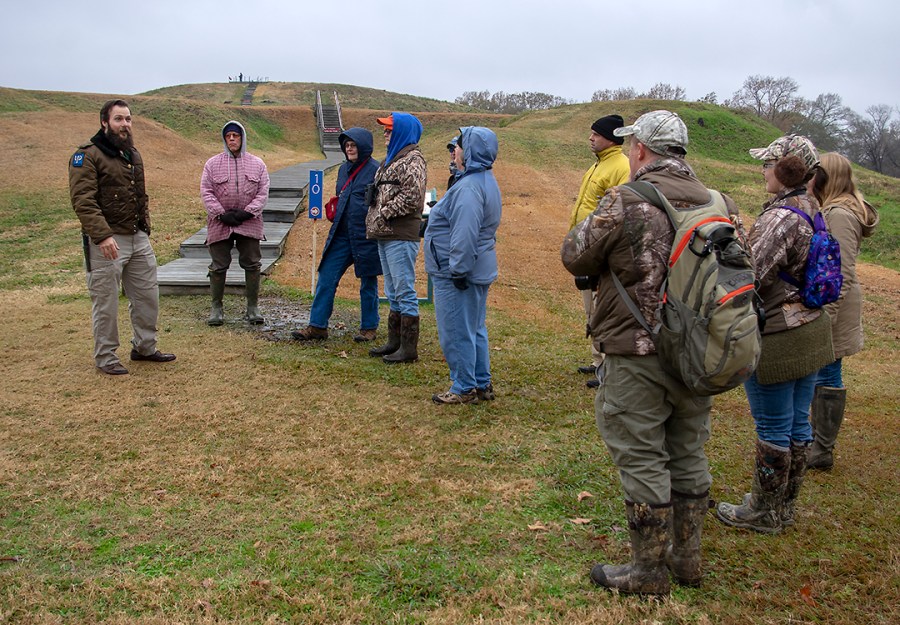
About to lead us to the top of the biggest mound, Ranger Mark explains that we really don’t know why the people worked so hard to move all that dirt in such a short period of time to build the mound.     (photo by Bette J. Kauffman)

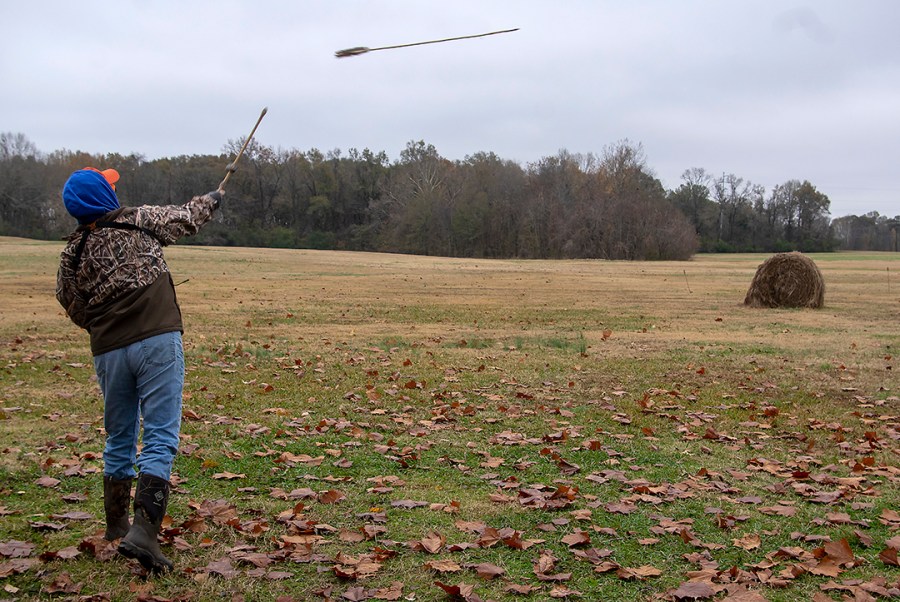
Ranger Mark taught us to throw a spear using an adle-adle, then took us on a hike around the mounds, explaining what we think we know about the people, what they did and why they might have done it.

IMGP6177 72-15
Terri Maness’ great arm action makes good use of the adle-adle and her spear soars toward but falls a bit short of the target.     (photo by Bette J. Kauffman)

Here are a few highlights from our meetings:

!. We will join the Louisiana Association of Nonprofit Organizations. This will enable us to get a discount on liability insurance to protect our officers and board members in the event of a lawsuit.

2. We decided to keep the logo given us by the statewide association and put it on the front of our t-shirt in the breast pocket position. We chose two back designs, the Louisiana waterthrush and the bear sniffing fire pinks. Kim Paxton and Suzanne Laird-Dartez will now research t-shirt printing options.

3. We agreed that the same officers should continue for another year for the sake of continuity, given we are such a young organization. However, Stephanie Herrmann asked to be replaced as Treasurer due to time pressures and Charles Paxton agreed to take that position.

4. We formed a Certification Committee consisting of Bette Kauffman, Charles Paxton and Suzanne Laird-Dartez. This committee will address the issue of interpretive project requirements/guidelines and will plan the next cycle of certification workshops.

5. We would like to form a Program Committee to help plan our quarterly meetings and family fun outings–anything else we want to do. One person was nominated to work with the president but has not been asked yet. Anyone interested in working on this committee, please respond to the president ASAP!

Good meeting! I’ll be working on updating the calendar with a host of upcoming events. Look also for a blog post soon on a 1st Day Hike opportunity.

IMGP6206 72-15
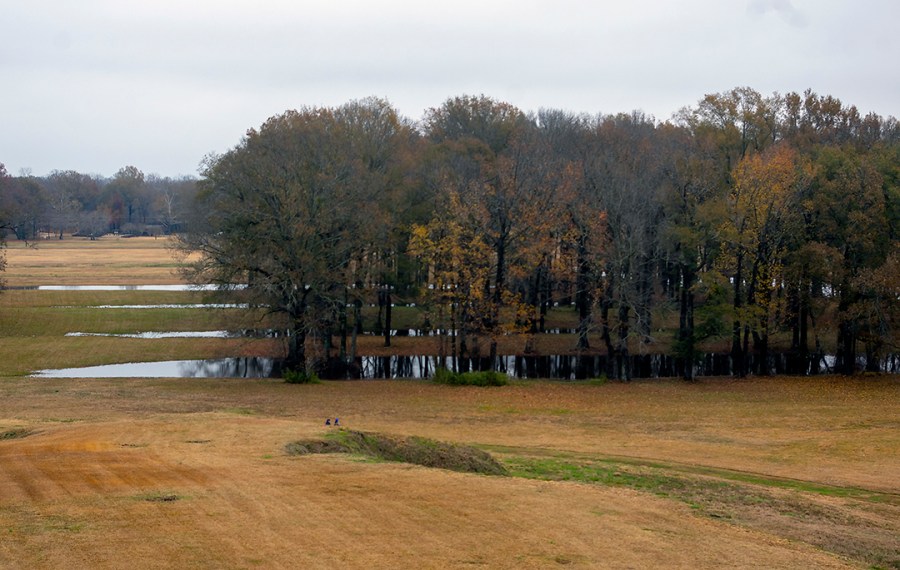
Standing near the top of the largest mound, I suddenly realized that the heavy rains of the last few days had done us a huge favor. The shallow ridges constructed in concentric arcs oriented toward the mound were made visible because the lower areas between them held several inches of standing water. The people lived on these shallow ridges.     (photo by Bette J. Kauffman)`